I’m going to say something upfront that most people in my position wouldn’t say. Writing a piece called ‘best bespoke wedding tailor in Liverpool’ when I am a bespoke wedding tailor in Liverpool is an obvious conflict of interest, and I think you should know that I know that.
So let me try to make this useful rather than promotional. If you’re looking for a bespoke wedding suit in Liverpool and you’re trying to figure out who to trust and what questions to ask, here’s what I’d actually tell you.
Some of it will lead you to my door. Some of it might lead you somewhere else. Either way, you’ll have a better suit.
First: What Bespoke Actually Means
The word is everywhere and it means almost nothing anymore. I’ve seen it on high street suit shops. On websites for brands that are offering a size adjustment and calling it a custom experience. On made-to-measure services that are perfectly decent but are not bespoke in any meaningful sense of the word.
True bespoke starts with a blank piece of paper. A pattern is drafted from scratch, to your specific measurements, your posture, your body. Not adapted from a standard block, not ‘customised’ from a template. Made for you, from the beginning. From there, a basted shell, essentially the rough structure of the suit in its earliest form, goes through a fitting. You put it on. I look at how it sits. We make changes. The pattern gets corrected. Another fitting. More refinement. By the time the suit is finished, it’s been built and rebuilt around your body several times over.
That process takes time. It costs more than off-the-rack. And it produces something that genuinely cannot be replicated any other way.
If a tailor is offering you bespoke at a price or a timeline that doesn’t allow for multiple fittings, ask them to explain the process. The answer will tell you everything.
What to Look for When You’re Choosing a Tailor
Do they ask about the wedding before they ask about the suit?
The first thing I want to know when a groom sits down with me is not his chest measurement. It’s where the wedding is. What time of year. What the venue looks like. What his partner thinks about what he should wear. What the day is going to feel like.
All of that shapes the suit. The fabric weight, the silhouette, how formal the cut should be, what colour makes sense in that specific room at that specific time of year. A tailor who goes straight to the tape measure is telling you something about how they work. They’re making a suit. You need someone making your suit.
Can they tell you exactly where the cloth comes from?
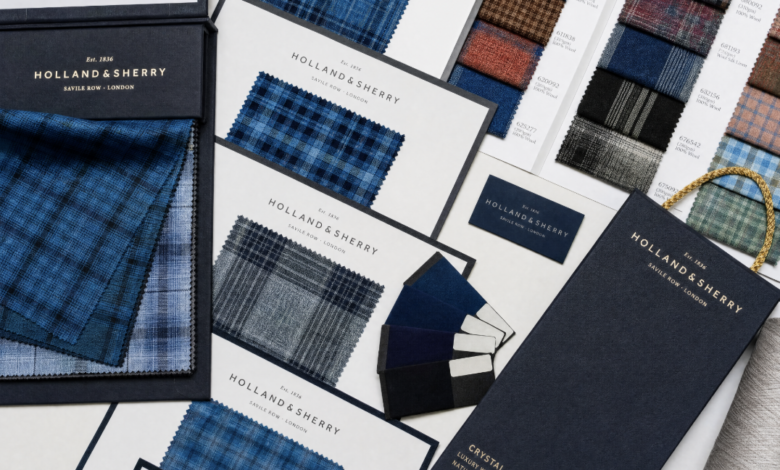
The fabric is half the garment. More than half, some days. A good tailor should be able to tell you not just the cloth house but the specific fabric, the weight, the composition, why they’re recommending it for your particular commission. I work with cloth from Holland & Sherry, Loro Piana, Dormeuil, Zegna, and a few other houses I’ve used long enough to know exactly what they do well. That’s not a credentials list. It’s the shorthand for: I know what I’m putting on your body and why.
If a tailor can’t tell you where the cloth comes from, or gets vague when you ask, that’s worth noting.
How many fittings are they including?
Minimum two. Ideally three. The first is the basted shell fitting, which is the suit in its rough structural form before any finishing work. It looks a bit startling if you’ve never seen one. That’s normal. The second fitting is the refined garment, close to finished. The third, if it’s needed, handles anything that requires a final pass.
One fitting is not bespoke. One fitting is a very attentive alteration service.
Does their work look like it belongs to someone?
Every tailor worth talking to has a point of view. A way they cut a shoulder. An opinion about how a lapel should sit. A silhouette that’s distinctly theirs. You should be able to look at a range of their work and feel a consistent sensibility running through it. Generic suits from a tailor are a warning sign, not a comfort.
Why Liverpool Grooms Are Moving Toward Bespoke
When I started here, the majority of grooms I spoke to were hiring suits. A significant portion of the rest were buying off-the-rack and having them altered. The conversation around bespoke was mostly limited to men who’d already spent time in London or who had a specific reason to want something made properly.
That’s changed a lot. I’d say most grooms I speak to now come in already decided that they want to own the suit. The question is what kind of suit, not whether.
Part of that is a broader shift in how men think about clothes. There’s a generation of grooms now who’ve become genuinely interested in quality, in understanding what they’re wearing, in not just buying something because it’s on a mannequin. Part of it is also practical: a well-made bespoke suit that you love wearing doesn’t just sit in a wardrobe after the wedding. It goes to work. It goes to funerals and christenings and the kind of events where you actually need to look right. The cost per wear, spread across ten or fifteen years, is not what it seems on the day you pay for it.
I came to this from engineering, which is not a typical route into tailoring. What it gave me is a way of thinking about a suit as a system. Every component is in a relationship with every other component. Change the shoulder and the chest changes. Change the chest and the waist changes. Change the waist and the seat changes. You can’t adjust one thing in isolation and expect everything else to stay put. That’s not how bodies work and it’s not how suits work.
That thinking is what I built the Michael Method around. It’s a structured process for getting to a garment that’s genuinely right for the person wearing it, not just technically well-made.
Here’s the section with em dashes removed and replaced with natural alternatives:
Liverpool Weddings Have Their Own Logic
Liverpool has a stronger sense of its own style than most cities its size, and that shows up in weddings. Grooms here tend to have opinions. They know what they want to look like. They’ve thought about it. That makes the consultation easier in some ways and more exacting in others.
The venues shape the suit more than most people expect going in.
St George’s Hall is the most demanding room in the city to dress for. It’s vast, it’s classical, and it’s unforgiving of anything that reads as casual or underworked. A suit for St George’s needs weight and structure. A lighter cloth or a relaxed silhouette gets swallowed by the room.
The Titanic Hotel and the Rum Warehouse at Titanic are different. They have industrial bones, exposed brick, a rawer aesthetic. Suits that work there tend to have a bit more personality. A stronger colour. A textured cloth. Something that holds its own against the setting rather than trying to compete with it formally.
Sefton Park is its own category entirely. Outdoor or semi-outdoor summer weddings in Liverpool come with a specific problem that doesn’t get talked about enough: the weather. June on Merseyside is not the same as June in the Cotswolds. You need a cloth that can handle being warm when the sun comes out and not look wretched when it doesn’t. A mid-weight fresco or an open-weave wool sits in that range well.
For waterfront weddings, whether at the Dock, the Titanic Quarter, or anywhere facing the Mersey, there’s wind to think about. Lighter fabrics can look wrong in motion outdoors in a way they never do in a fitting room. It’s a detail that only comes up when you’re building a suit for a specific day in a specific place, which is exactly why it should come up in the consultation.
The other thing worth saying about Liverpool specifically is the culture around dressing. This is a city that takes clothes seriously in a way that’s different from Manchester, different from London. There’s a pride in presentation here that runs across generations. Grooms who come to me aren’t usually dragging their heels about the suit. They’re engaged with it. That shapes what’s possible in the process.
My Studio, and How It Works
I see Liverpool clients at the Royal Albert Dock. It’s a private space, by appointment. There’s no shop floor, no wandering browsers, no one trying to upsell you on accessories while you’re trying to think. Just the consultation, the cloth books, and the conversation.
Most grooms book an initial consultation six to nine months before the wedding. That gives us enough time to do the process properly, which means at least two fittings with real time between them for the suit to be worked. If your wedding is closer than that, get in touch anyway. Depending on what’s involved and what’s already committed on the calendar, I can sometimes move faster. It’s always worth asking.
For grooms who want to fit the wedding party as well, I can come to you. Getting four or five men into the studio at the same time is usually a logistical headache. It’s often easier for me to travel, and I’m happy to do that for larger commissions.
Book a consultation at michaelfrackowiak.com or call +44 7726 206814.
A Straight Answer on Cost
A bespoke wedding suit from a tailor who’s doing the process properly starts at around £1,500 in the UK. It goes up from there depending on the cloth and what’s involved. That’s not a number designed to filter people out. It’s the honest cost of the labour, the fittings, and the quality of cloth I’m willing to put my name on.
If that number feels steep, the comparison I’d invite you to make isn’t bespoke versus a suit from a department store. It’s bespoke versus a decade of buying suits that almost fit. Most of the men I work with stop buying suits elsewhere. Not because they’ve become loyal to me specifically but because they’ve worked out that a suit made for their body is a solved problem. The next ten suits don’t need to happen.
If the budget is tight, say so in the consultation. I’ll tell you honestly what I can do at what price and what that means for the cloth options. What I won’t do is promise something I can’t deliver to get the commission. The suit has to be right or there’s no point in making it.
About Michael
Michael Frackowiak is a bespoke tailor with private studios in Liverpool and Riyadh. He trained alongside Savile Row cutters and holds a background in electrical engineering. He takes a limited number of commissions each year, working with grooms, founders, and executives who want a garment made specifically for them rather than adapted from a standard pattern.
FAQs: Best Bespoke Wedding Tailor in Liverpool
What is the difference between bespoke and made-to-measure?
Made-to-measure starts from a standard pattern block that is adjusted to fit your measurements. Bespoke starts from a blank pattern drafted specifically for your body, with multiple fittings to refine the fit as the garment is built. The results are meaningfully different.
How far in advance should I book a bespoke wedding suit in Liverpool?
Six to nine months is the ideal window. This allows enough time for at least two fittings with proper intervals between them. If your wedding is closer than that, it is worth getting in touch anyway as some tailors can accommodate shorter timelines depending on their schedule.
How many fittings should a bespoke suit involve?
A minimum of two, ideally three. The first fitting is the basted shell, the rough structure of the suit before any finishing work. The second is the refined garment close to completion. A third fitting handles any final adjustments needed.
What should I expect to pay for a bespoke wedding suit in Liverpool?
A bespoke wedding suit from a tailor doing the process properly starts at around £1,500 in the UK. The final cost depends on the cloth selected and the complexity of what is involved.
Can a bespoke tailor fit the whole wedding party?
Yes, though logistics vary. Some tailors will travel to fit a larger group rather than bringing several people into a private studio at the same time. It is worth asking about this during the initial consultation.