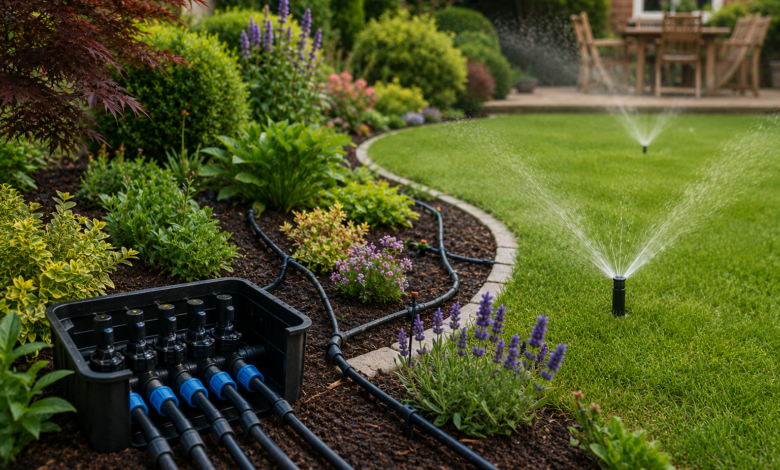
A well-designed watering system can make a garden easier to manage, especially during dry spells, which is why experienced garden irrigation installers can be valuable when a homeowner wants reliable coverage rather than a temporary hosepipe fix. In the UK, where gardens often combine lawns, borders, pots, hedging and newly planted areas, irrigation needs to be planned around the way each part of the space actually uses water.
Many people only think about irrigation when plants are already struggling. Brown lawns, wilting shrubs and dry borders often appear after a run of warm weather, but the planning should ideally happen earlier. A good system is not just about getting water into the garden. It is about applying the right amount, in the right place, at the right time.
Every Garden Has Different Watering Needs
No two gardens behave in exactly the same way. Soil type, sun exposure, drainage, planting style and wind all affect how quickly moisture disappears. A south-facing border against a wall may dry out far faster than a shaded lawn. Raised beds and containers often need more frequent watering because they lose moisture quickly, while established shrubs may need deeper, less frequent watering.
This is where proper design matters. A single sprinkler placed in the middle of the garden rarely solves the problem. Some areas may need drip irrigation, others may need pop-up sprinklers, and some may need dedicated zones so water can be controlled separately.
UK gardens can also be awkwardly shaped. Narrow side returns, terraces, sloping lawns, large borders and mixed planting areas all need careful layout. Irrigation works best when it follows the structure of the garden rather than forcing one approach across the whole space.
Installation Is About More Than Pipework
A professional irrigation installation is not simply a matter of laying pipes and connecting a timer. The system needs to be designed around pressure, flow rate, coverage, valve control and future maintenance. If the water supply cannot support too many outlets at once, the garden may need to be divided into zones.
Good installation also considers how the garden is used. Lawns need even coverage without soaking paths, patios or buildings. Borders need water delivered close to the root zone. Pots may need individual emitters. Vegetable beds may benefit from steady, controlled watering rather than overhead spraying.
Poorly designed systems can waste water, leave dry patches or overwater certain areas. In some cases, they can even encourage shallow rooting if plants receive light surface watering too often. A properly planned system should support healthy growth while using water sensibly.
Water Efficiency Matters In The UK
Although the UK has a reputation for rain, water efficiency has become increasingly important. Summer hosepipe restrictions are a regular concern in some regions, and prolonged dry periods can put pressure on gardens, especially in the South and Midlands. Even in wetter areas, rainfall is not always consistent enough to support ornamental planting, lawns and new landscaping without extra help.
Irrigation can support better water use when it is installed correctly. Drip systems, for example, deliver water directly to the soil, reducing evaporation and avoiding unnecessary spray onto hard surfaces. Timers and controllers can also prevent forgetful overwatering, particularly when set to run early in the morning or later in the evening.
A good system should not encourage waste. It should make watering more targeted and predictable.
New Planting Needs Particular Care
Recently planted shrubs, hedges, trees and borders are especially vulnerable during their first growing seasons. Their roots have not yet spread widely into the surrounding soil, so they can struggle during warm weather even when established plants nearby look healthy.
For new gardens or landscaping projects, irrigation is often best considered before planting is complete. This allows pipework and emitters to be installed neatly, without disturbing finished beds later. It also helps protect the investment made in plants, soil preparation and landscaping work.
A new border can look impressive on day one, but without consistent watering, gaps and failures may appear quickly. Irrigation helps reduce that risk.
A System Should Be Easy To Live With
The best garden irrigation system is one that works quietly in the background. It should be straightforward to control, easy to maintain and suited to the owner’s lifestyle. Some people want a simple timer-based setup, while others prefer more advanced controls that can adjust around weather conditions.
Planning also needs to allow for seasonal changes. Systems may need checking in spring, adjusting during the growing season and preparing before winter to protect components from frost.
A well-installed irrigation system gives a garden a stronger foundation. It supports healthier plants, reduces manual watering and helps homeowners manage dry periods with less stress. The key is proper design from the start, based on the garden’s layout, planting and real watering needs.
READ ALSO: We Almost Moved Instead of Doing London House Extensions, Here Is Why We Stayed