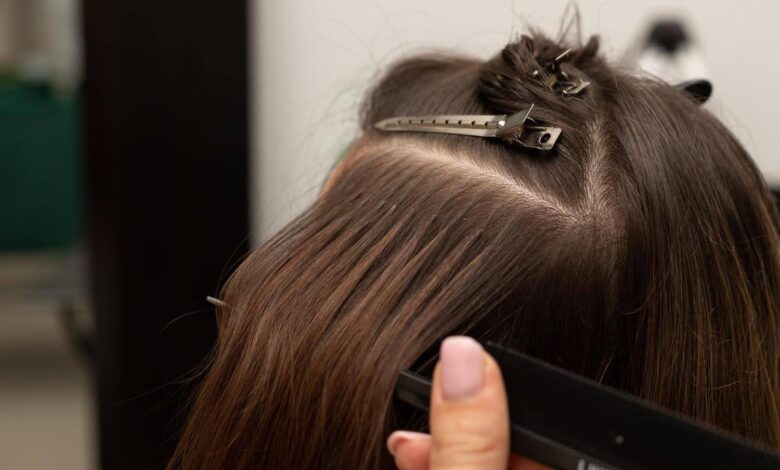
Have you ever noticed that hair still looks thin even after consistent use of volume-focused care and styling products? The reason is often not related to surface care alone. Hair density, strand structure, and distribution across the scalp play a larger role than most expect.
When internal strength and coverage are limited, styling support only creates short-lived lift. This is why the same routine can feel effective one day and flat the next. In such cases, a structural approach is needed rather than repeated product layering.
This is also where solutions like micro rings begin to stand out, as they work beyond surface appearance and support natural flow.
Understanding Real Hair Density Gaps
Thin-looking hair is not always about hair loss. In many cases, it is about uneven density or weaker strands in key visible areas such as the crown and sides.
Daily styling may temporarily lift roots, but it does not change how hair naturally falls. When light passes through sparse areas, scalp visibility increases, making hair appear even finer.
Some individuals explore micro rings when they want a method that adds natural-looking volume without heavy bonding methods. The placement allows controlled fullness while maintaining movement.
Why Temporary Volume Does Not Last
Root sprays, mousses, and heat styling tools can create short-term lift. However, they do not address underlying density concerns. Once humidity, sleep, or daily activity affects the style, volume tends to collapse.
This cycle often leads to frustration, as repeated effort does not deliver consistent results. At this stage, structured strand support becomes more relevant than cosmetic lifting.
This is where micro rings are often introduced as part of a long-term approach to improve visible fullness in a more stable way.
The Role of Strand Placement in Natural Appearance
Strand placement plays a major role in how natural and full hair appears, beyond just thickness or product use. Proper distribution and blending can significantly change visible density and overall balance.
- Even distribution helps create the appearance of fuller hair
- Gaps between strands can make hair look thinner
- Professional placement follows natural growth patterns
- Blending reduces contrast between scalp and hair movement
- Micro rings support strand-by-strand controlled placement
- This method maintains flow without harsh attachment lines
These techniques are often chosen for a subtle, natural-looking improvement. The goal is balanced movement and improved visible density in everyday styling.
Why Blending Matters More Than Length
Adding length alone does not always solve the issue of thin appearance. If color tone and strand thickness are not matched carefully, extensions can become visible and draw attention to gaps.
A refined approach looks at tone variation, strand direction, and density balance. These details influence how natural the final result appears under different lighting conditions. When applied correctly, micro rings help integrate added strands in a way that follows natural fall and texture. This reduces visible separation and supports a more cohesive finish.
When proper blending aligns color tone, strand thickness, and natural movement, the added hair integrates smoothly and creates a consistent, natural-looking finish. This results in an effortless appearance in real life at Tatiana Karelina.
Confidence, Comfort, and Everyday Wear
Confidence and comfort play a major role in how hair solutions are experienced in daily life. These concerns often extend beyond appearance and influence overall ease in social and professional settings.
- Hair concerns can affect confidence in public situations
- Thin hair may lead to constant styling adjustments
- Comfort is essential for long-term wearability
- Lightweight methods support easier daily styling
- Micro rings are often chosen for reduced strain on natural hair
- Flexible application helps maintain natural movement
A balanced approach improves both appearance and comfort. This creates a more natural and manageable experience in everyday routines.
A Closer Look at Natural Integration
A natural result depends on how well the added hair integrates with existing strands. This includes direction, spacing, and density mapping across the scalp. When integration is done carefully, movement remains fluid and consistent. The goal is not to hide hair, but to enhance what already exists in a subtle and balanced way.
In advanced application work, micro rings are used to support this integration by allowing controlled strand addition without heavy bonding agents. This supports a more seamless finish in everyday light conditions.
Conclusion
Thin-looking hair after volumizing routines is often linked to density gaps rather than styling failure. Surface products provide only temporary lift and cannot correct the underlying imbalance.
Understanding how strand placement, blending, and density work together helps in choosing a more suitable approach. It allows better clarity when deciding between short-term styling and structural solutions.
For those exploring controlled, natural-looking enhancement, micro rings offer a structured method that supports daily wear and balanced appearance. This approach focuses on long-term visual harmony rather than temporary volume effects.