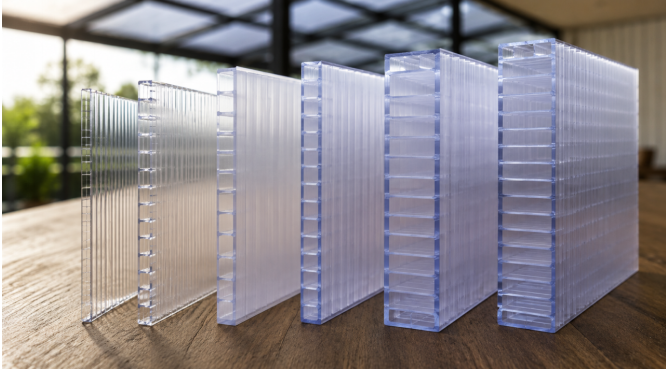
Polycarbonate thickness ranges from 4mm to 25mm and beyond. The right thickness depends entirely on your project. For example, thin 4mm sheets suit cold frames and greenhouses. On the other hand, thick 25mm sheets suit conservatory roofs that need insulation.
Pick too thin and the roof sags or loses heat. Pick too thick and you pay for insulation you do not need. This guide matches each polycarbonate roofing sheets’ thickness to the job it does best.
What Does Sheet Thickness Actually Change?
Thickness affects three things:
- Insulation
- Strength
- How far the sheet spans between supports
A thicker sheet holds more heat, carries more weight, and bridges a wider gap without bowing.
Most polycarbonate roofing sheets are multiwall. Hence, hollow channels run through them. More thickness usually means more internal walls. It adds both stiffness and insulation.
When you order polycarbonate roofing sheets cut to size, the sheets arrive ready to fit, with the flutes running down the slope. That precise fit matters more as the sheet gets thicker and heavier.
Which Thickness Suits Greenhouses and Cold Frames?
For greenhouses and cold frames, 4mm to 6mm is the standard, since these structures need light and basic weather protection rather than heavy insulation. The thin sheet lets plenty of daylight through to the plants.
Twinwall polycarbonate sheets at 4mm are the classic greenhouse glazing. They diffuse light evenly, which reduces scorching on delicate leaves.
A 4mm clear twinwall cut to size panel replaces broken greenhouse glass cleanly and safely. It weighs far less than glass, so it puts no strain on a light aluminium frame.
Keep the support spacing close on thin sheets, since 4mm bends easily over a wide gap. On a greenhouse frame, that spacing is rarely a problem.
Which Thickness Suits Carports and Lean-To Roofs?
For carports and lean-to roofs, 10mm to 16mm gives the strength and modest insulation these structures need. The sheet has to shed rain and carry some snow, so it needs more body than greenhouse glazing.
A 10mm clear twinwall cut to size panel suits most carports on support spacing up to 700mm. It lets light through to the space below while keeping the weight manageable.
Step up to 16mm where snow load runs higher, or the span is wider. The extra thickness stops the roof from sagging under a winter build-up.
Polycarbonate roof sheets in this range strike a good balance between cost and performance. You get a bright, dry space without paying for conservatory-grade insulation.
Which Thickness Suits Conservatory Roofs?
For conservatory roofs, 25mm is the standard, because a room you sit in needs to hold heat through winter. The multiple air gaps in a thick sheet sharply reduce heat loss.
Multiwall polycarbonate sheets at 25mm carry several internal walls, which trap warmth and cut your heating bills. The room stays usable through the colder months.
A 25mm opal multiwall cut to size panel softens the light and reduces glare. This suits a room you spend time in. Opal also cuts solar heat gain in summer. Hence, the conservatory stays cooler.
When Do You Need Solid Polycarbonate Instead?
You need solid sheets where strength and a clear, flat surface matter more than insulation. Solid polycarbonate roofing sheets have no hollow channels, so nothing traps water and nothing clouds the view.
An 8mm solid polycarbonate sheet suits glazing, canopies, and low-pitch roofs over a room. It sheds water cleanly and resists a heavy point load, like a foot or a fallen branch.
Solid sheets also handle vertical glazing and secondary windows well. The clarity comes close to glass, while the impact resistance far exceeds it.
The solid polycarbonate sheets cost more per square metre and insulate less than multiwall. You choose it for strength and clarity, not for warmth.
How Do the Thicknesses Compare?
Here is a quick reference matching thickness to application:
| Thickness | Type | Best for |
| 4mm to 6mm | Twinwall | Greenhouses, cold frames |
| 10mm | Twinwall | Carports, porches |
| 16mm | Multiwall | Lean-tos, wider carports |
| 25mm | Multiwall | Conservatory roofs |
| 8mm to 10mm | Solid | Glazing, canopies, low pitch |
Use this as a starting point, then check the supplier’s span table against your own support spacing. The safe thickness depends on both the sheet and the spacing between your rafters.
What Else Affects Your Choice?
Beyond application, three factors increase your thickness: wider spans, heavier snow, and more exposed sites. Any of these means stepping up a grade for safety.
Colour plays a part too. Clear passes the most light, opal softens it and cuts glare, and bronze reduces heat on a south-facing roof.
Polycarbonate roofing sheets UK suppliers stock all these thicknesses and colours as standard. Ordering cut to size means you fit the roof once, with no trimming and no open flutes.
Get Your Thickness Right!
Match the thickness to the job, and the roof performs for years.
- Thin twinwall for greenhouses, mid-range for carports
- Thick multiwall for conservatories
- Solid polycarbonate sheetswhere you need strength
Check your span table, factor in your snow load, and order cut to size for a clean fit. Get the thickness right from the start, and you avoid both sagging and wasted spend.
FAQs
What is the most common polycarbonate roofing thickness?
For general roofing, 16mm and 25mm multiwall are the most common. Thinner 4mm to 10mm suits greenhouses and carports, where insulation matters less.
Can I use thin polycarbonate on a conservatory roof?
You can, but the room will feel cold in winter. A 25mm multiwall sheet holds heat better, making the space usable year-round.
Which thickness is strongest?
For a flat, clear surface, an 8mm solid polycarbonate sheet resists impact better than hollow sheets. Among multiwall, thicker sheets span wider and carry more.
Does thickness affect how much light comes through?
Yes, thinner sheets let slightly more light through, while thicker multiwall trades a little brightness for warmth. Colour affects this more than thickness in practice.
How do I know which thickness my roof needs?
Match the thickness to your application, then check the span table against your rafter spacing. Order polycarbonate roofing sheets cut to size once you have confirmed both.