Cooker and Hob Splashbacks: Heat, Clearances and What UK Kitchens Actually Need Behind the Burner

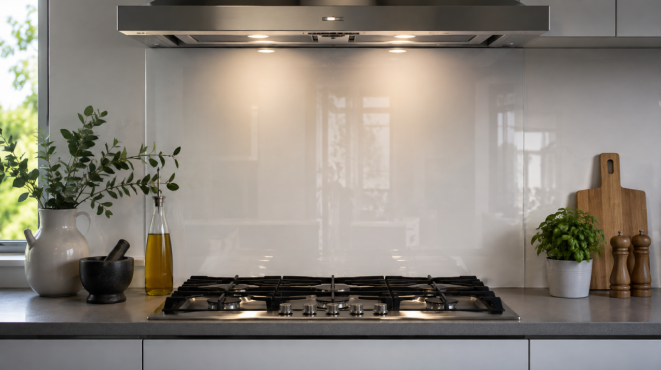
The right splashback for kitchen walls behind a hob depends entirely on your heat source. A gas flame demands a different material from an induction hob, and getting this wrong risks a cracked or melted panel.
Choose the wrong material behind a burner, and it warps, discolours, or fails. This guide sets out what belongs behind each hob type, and the clearances that keep your kitchen safe.
Match the Material to Your Heat Source
Your hob type determines the material, since each type throws off heat differently. A gas flame radiates intense direct heat, while an induction hob heats the pan and barely warms the surrounding surface.
For a gas hob, safe choices include toughened glass, stainless steel, tile, or stone, all installed according to manufacturer guidelines. A 3mm black aluminium composite panel also handles heat well away from the direct flame zone, and it gives a sleek, modern finish.
For electric, ceramic, and induction hobs, you have far more freedom. Acrylic and laminate both work here, provided you keep the clearance your supplier sets.
The rule is simple. The hotter and more direct the heat, the tougher the material behind it has to be.
Why Acrylic Belongs Away From the Flame
Acrylic is popular for its colour range and easy fitting, but heat is its limit. Acrylic softens at around 80°C, so it cannot sit directly behind a gas burner.
That does not rule acrylic out of the kitchen. It works beautifully across the rest of the wall, and many homeowners fit glass behind the burners and acrylic everywhere else.
An acrylic splashback behind an induction or electric hob performs well with the right gap. Keep it clear of direct heat, and it stays flat, glossy, and true for years.
For a gas hob, put a heat-resistant panel in that one spot. You still get acrylic’s colour across the rest of the run, which keeps the look consistent.
The Clearances Your Hob Needs
Clearance is the gap between the hob edge and the bottom of the splashback, and it protects both the panel and your wall. Each material and hob pairing sets its own minimum.
Here are the commonly cited UK clearances:
| Hob type | Material | Minimum clearance |
| Gas | Toughened glass | 75mm to 150mm from the flame |
| Gas | Acrylic | Not suitable directly behind |
| Electric or ceramic | Acrylic | 60mm from the hob edge |
| Induction | Acrylic | Around 50mm, since it radiates little heat |
Always check your hob’s installation manual first, since the manufacturer’s figure overrides any general guide. Gas regulations also require combustible materials near a burner to be fire-resistant or shielded.
Glass Behind a Gas Hob
Glass is the go-to for the area directly behind a gas hob, as long as it is genuinely toughened. Standard float glass cracks under the repeated heating and cooling that a hob puts it through.
Toughened glass splashbacks withstand high temperatures and resist the thermal shock of a gas flame. Fit them at the clearance your hob sets, and seal the edges against moisture.
The finish suits any scheme too. You can have glass in almost any colour, printed, or mirrored, so safety does not cost you style.
Stainless Steel and Aluminium for High Heat
Stainless steel sits flush behind a gas hob without any clearance worry, which makes it a professional favourite. It shrugs off heat, wipes clean, and never discolours.
A stainless steel splashback gives a commercial-kitchen look that suits range cookers well. It reflects light and pairs cleanly with modern units.
An aluminium splashback offers a similar metal finish at a lighter weight. It handles heat away from the direct flame and fixes easily to the wall.
For anyone wanting a coloured metal look, an acrylic cut to size panel in a metallic finish works across the cooler parts of the wall. Keep the true heat zone in steel or glass, and use the metallic acrylic to carry the style around the rest.
Choosing a Heat Resistant Splashback
Start with your hob, then pick the material that suits the heat it produces. Gas needs glass, steel, tile, or stone directly behind the burner, with no compromise there.
A heat resistant splashback in toughened glass or steel handles the flame zone safely. Around it, you can use acrylic or laminate for colour and lower cost.
Keep these points in mind when you choose:
- Confirm your hob type before buying any panel
- Check the manufacturer’s clearance in the hob manual
- Use toughened glass or steel directly behind a gas flame
- Keep acrylic clear of direct heat by the set gap
- Seal all edges to stop moisture getting behind the panel
Bringing It All Together!
The safest kitchen behind the burner pairs the right material with the right clearance. Put glass or steel where the heat is fiercest, and use acrylic or laminate for the rest of the wall.
A splashback behind hob areas fails only when the material cannot take the heat, so match the two from the start. Get that pairing right, and the panel protects your wall and looks good for years.
Well-chosen kitchen splashbacks cover both jobs at once, guarding the wall and setting the colour of the room. Measure carefully, check your clearances, and order a sample before you commit.
FAQs
Can I put an acrylic splashback behind a gas hob?
No, acrylic softens around 80°C and cannot take a direct flame. Use toughened glass or steel behind the burner, and acrylic across the rest of the wall.
What clearance does a glass splashback need behind a gas hob?
Sources commonly cite between 75mm and 150mm from the flame. Always check your hob’s manual, since the manufacturer’s figure takes priority.
Which splashback is best for an induction hob?
Induction radiates little heat, so acrylic works well with a small gap. Around 50mm from the hob edge is generally enough.
Is stainless steel safe directly behind a gas hob?
Yes, stainless steel handles direct heat and can sit flush behind a gas hob. It wipes clean and never discolours, which suits heavy cooking.
Do I legally need a splashback behind my hob?
No regulation forces one, but materials near a hob must meet fire-resistance standards. A heat-resistant panel keeps you compliant and protects the wall.