What if one of the most fun forms of exercise you could do was actually good for your heart? For many, a trampoline is for kids and playtime only, but it’s quickly gaining popularity as a fitness workout for adults who are looking for a way to stay in shape that is easy on the joints. If you are having trouble finding a workout you actually enjoy that doesn’t wear down your body, you may have found your answer.Heart disease continues to be one of the biggest killers in the world, and leading an inactive lifestyle is a major risk factor. Thankfully, you don’t need to hit the pavement for miles and miles or break a sweat at the gym to improve your cardiovascular fitness. In fact, an effective best trampoline workout can raise your heart rate, strengthen your cardiovascular system, and keep you coming back for more since it feels more like a workout that will leave you breathless but smiling.This guide is going to explain to you just how trampoline workouts enhance your heart health, why they work to benefit cardiovascular fitness, who should be jumping, and how you can safely get started.
Understanding Heart Health and Cardiovascular Fitness
Your heart is the key to good health. Every single minute, it pumps blood rich in oxygen to all your organs and muscles, feeding them with the nutrients they require to perform. Regular exercise keeps your cardiovascular system in shape and lowers your chances of developing common cardiovascular diseases.
Before we jump into how trampolining is such a great choice for a happy heart, let’s look at what actually makes the heart happy and healthy.
Why the Heart Needs to Stay Strong?
Keeping your heart healthy is crucial because your heart, just like every muscle in your body, strengthens and gets more efficient with exercise. The stronger your heart, the more efficiently it pumps blood, and therefore, the less effort it has to put in throughout your day-to-day activities. Bouncing on a trampoline rectangle leads to lower blood pressure over time, better circulation, and more stamina all around. Plus, regular cardiovascular exercise can significantly decrease other risk factors for heart disease, such as inactivity, extra body weight, and bad circulation. Coupled with good eating habits, regular activity is an essential piece of the heart health puzzle.
While a stronger heart is important, building cardiovascular fitness is a whole different game.
Role of Cardiovascular Fitness
Cardiovascular fitness means how well your heart, lungs, and blood vessels work together to get oxygen into your muscles while you exercise. When you’re in better cardiovascular shape, you’ll be able to do more things throughout the day, and you’ll be able to do them longer before you tire yourself out.
Trampoline workouts challenge this system by requiring constant movement that gets your heart pumping without taking a toll on your joints. Over time, as you get more fit, your body becomes better at taking up oxygen, recovering after you work out, and going longer without getting tired.
This all helps with endurance and improves the health of your heart.
How Trampoline Workouts Activate the Cardiovascular System?
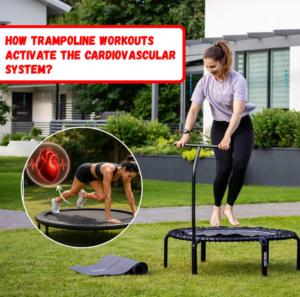
The outdoor trampoline exercise is more than just going up and down. With each bounce, your heart, lungs, and muscles have to work together to balance, fuel, and move your body properly. The consistent activity combined with the controlled impact makes trampolining a terrific cardiovascular exercise to maintain a healthy heart and improve your fitness.
Moving on, let’s dive deeper into how trampoline workouts help improve cardiovascular health.
Continuous Movement Increases Heart Rate
Every jump makes your heart beat a bit harder, sending oxygenated blood through your working muscles. Because trampolining doesn’t involve frequent stops and starts, you’re able to keep your heart rate high for longer periods than you might with other forms of exercise.
Over time, your heart gets more effective at circulating blood. This cardiovascular enhancement allows you to complete your everyday tasks more easily and with less exhaustion.
You might be tempted to think that simply jumping and increasing your heart rate is the only benefit, but you would be wrong! When you jump on a trampoline, your whole body is working out.
Full-Body Engagement
Unlike other types of cardio, which often focus on lower-body exercises, trampoline exercise workouts target muscles throughout your entire body. Legs drive you up, core stabilises, and arms come naturally into play. When many muscle groups are firing at the same time, your body needs to breathe more, forcing your heart to pump more blood. This is what gets you into the workout groove.
Rhythmic Intensity
Your regular rebounding will get into a smooth rhythm of motion, keeping your cardiovascular training at an even pace. Trampolining provides you with a series of smooth bounces in place, rather than having bursts of exertion, followed by a rest period. Jumping on an exercise trampoline regularly gives you rhythmic intensity and keeps your heart safe.
Trampolining can be ideal for beginners and more advanced exercisers, and you can modulate the pace to meet your own fitness levels. Consistent movement helps your body use oxygen efficiently while exercising.
Improved Oxygen Utilisation
Breathing is deeper and more controlled with a trampoline workout, as your body needs more oxygen. As your heart and lungs become more efficient in transporting oxygen to your muscles, you can exercise for longer before getting breathless. This allows your body to have better endurance, to recover more quickly, and for better cardiovascular function overall.
Your body uses oxygen better, leading to increased stamina, quicker recovery time from exercises, and stronger cardiovascular health overall. All of this happens because another process takes place – that process is healthy blood circulation.
Enhanced Blood Circulation
Every bounce promotes healthy blood flow to the rest of your body. With more circulation, oxygen and nutrients reach your muscles while waste products are removed more readily.
Your body’s tissues benefit as well, and muscles recover faster post-workout, and your cardiovascular health improves in the long run.
With better circulation, your heart will also pump more efficiently with each beat.
Increased Cardiac Efficiency
With trampolining, you condition your heart to pump more blood each time it contracts. That way, it’s more capable of delivering all the oxygen to your body. It can also do so without working as hard when you’re exercising or moving through your daily life.
A more efficient heart also means you might have better stamina, better overall physical performance, and a healthier cardiovascular system.
Aerobic and Anaerobic Conditioning
Your trampolining workout will be able to enhance both your aerobic and anaerobic fitness levels, depending on how hard and fast you’re bouncing. Slow and steady bounces will boost your aerobic capabilities.
Bursts of rapid jumps can train your anaerobic system and increase your power.
Activation of Stabilising Muscles
Each jump takes your muscles through constant balance and coordination. While you jump, your core, glutes, lower back and ankles all work to maintain your balance on an unsteady surface.
All of these stabilising muscles help create a better posture, movement control, and body alignment, which in turn will make your cardio session a much safer and more effective one.
When you engage more muscles in a workout, your body will consume more calories naturally.
Sustained Energy Expenditure
A workout session on a trampoline uses energy continuously instead of periodically. When bouncing and balancing yourself while keeping a straight posture, you use a wide variety of muscle groups simultaneously. These continuous calorie expenditures are a key to good weight maintenance, and weight maintenance is a factor for lowering future risk of cardiovascular diseases.
Ultimately, trampolines workout provide another benefit of increased activity frequency for people.
Reduced Sedentary Time
These days, many adults spend several hours a day in their seats, whether they’re at their desks working or lounging in front of a TV. So how can you increase your daily movement? Simply replace just 20 to 30 minutes of sedentary behaviour with a workout on an underground trampoline.
If you want to develop the habit of moving regularly, make it a fun activity instead of a monotonous chore. If you do this and cut down on time spent sitting, then trampoline workouts can positively impact your heart health in the long term.
Now that we know how trampolining is good for your heart, let’s discuss what heart-health benefits to expect from regular trampoline workouts.
Who Can Benefit from Trampoline Workouts?
The beauty of a trampoline workout is how varied and flexible it is. Whether you’re beginning on a journey to a more active you, or simply want to shake up your workout routine, rebounding is a suitable workout for a wide variety of ages, abilities and fitness levels. In the right style, it’s a fun and rewarding method to boost your heart health, making your exercise feel like fun rather than a chore.
Beginners Starting Fitness Routines
Starting a new fitness routine can feel daunting if you’re nervous about high-impact, intense exercises. Trampoline fitness is a more forgiving way to get started, as you can ease in and out of jumping at your own pace, allowing you to build confidence and endurance over time.
Beginner movements like basic jumping will still get your heart rate up without complex skills or costly gear. As you become more comfortable, you can expand your routine by trying new movements and making jumps longer. This helps make staying on track easier.
Trampoline exercises aren’t just for the newbies! People who need a lower-impact alternative can also benefit from the fun of jumping.
Individuals Seeking Low-Impact Exercise
While the repeated impact from some activities isn’t for everyone, trampoline fitness is a great option for those with slightly achy joints or who want a lower-impact workout. The springy surface of the trampoline will absorb a lot of the force as you land, thus alleviating the pressure on your hips, knees and ankles. This means you can get an excellent cardio workout without putting the same impact on your body as you might if you went out for a run on the road.
However, although it’s a low-impact form of exercise, it’s always advisable to speak to a medical professional before beginning a new workout routine, especially if you have any pre-existing conditions or injuries. Although it is great for kids to get into structured sports and exercise, unstructured activity during the day is equally valuable. When visiting an indoor play centre like Wonderland Play, your kids can run and play in a safe, creative, and interactive space.
Adults Focusing on Heart Health
When it comes to fitness, you can find a good cardio routine while engaging your entire body by jumping on a trampoline. Rebounding helps you boost blood circulation, builds your endurance, and gets you moving more often throughout the week.
Many adults consider rebounding a fun alternative to repetitive exercises and an easy way to stick with a routine over time. Over time, you’ll notice positive changes to your fitness, energy, and overall lifestyle.
Trampolining can be for more than just young adults! In fact, it can have incredible benefits later in life, when safely performed.
Older Adults Improving Balance and Mobility
For many people, keeping your balance, coordination, and mobility are crucial for remaining independent and avoiding falls as we age. Trampoline exercises, especially when supervised, can help strengthen your balance and postural muscles, improving stability. If you’re new to rebounding, an older adult should start slowly, perhaps with the help of a support bar and trampoline socks if needed, and gentle bouncing as opposed to jumping high.
With increased confidence and strength, trampoline workouts can become a fun and rewarding part of an active lifestyle and a good way to support cardiovascular health.
Now, let’s discuss how to start on the right foot to enjoy trampoline workouts, regardless of your age or fitness level.
Safe Ways to Begin Trampoline Workouts
You don’t need to be a pro or spend countless hours working out to start a trampoline fitness routine. The main things are getting comfortable, using the right form and training at your own speed. Read on for a few simple tips to experience the cardiovascular benefits of rebounding safely and developing a healthy routine.
Start with Short Sessions
For those who are just starting out trampolining, start on a 14ft trampolines, try to resist the urge to exercise for an extended time right away. Instead, you should start by exercising for about 10 to 15 minutes so your body can get used to bouncing.
Focus on Control
To achieve a good workout with your trampoline, you should avoid jumping up high and erratically. Instead, focus on controlled, purposeful jumps. Land with a bounce in the middle of your mat.
Maintain Posture
Hold proper posture during every bounce to get the most out of your workout. Lift your chin, relax your shoulders, and keep your core activated while slightly bending your knees.
Increase Gradually
One of the best methods for long-term fitness improvement. Instead of adding too much intensity all at once, gradually increase the duration of your workouts or incorporate new exercises.
If you are totally new to rebounding, begin with a beginner workout session and work your way up. It’ll build your confidence as well as your cardiovascular stamina.
Conclusion
Keeping your heart in shape doesn’t mean endless gruelling workouts and hours of time in the gym. Trampoline workouts are a fun, energetic, low-impact way to get your heart rate up and boost your cardiovascular health while building stronger circulation, improving endurance and strengthening your heart at the same time. Rebounding engages numerous muscles and keeps you moving throughout, which means you get a full-body workout with real long-term benefits.
Whether you’re an adult aiming to ramp up your cardio, a novice who’s ready to take the first steps toward becoming more active, or someone seeking a gentler alternative to traditional cardio, a trampoline workout is a worthwhile addition to any routine. Used in conjunction with other activities such as cycling, walking, strength training and stretching, trampoline workouts are a healthy and balanced part of a fit lifestyle. Trampoline maintenance is also necessary, you need to check the net, frame pads, and other trampoline spares from time to time for a safer and healthier bounce.
All you need to do is get started. Take a few minutes to do a low-impact bouncing workout in a short, controlled period of time. As you gain confidence and experience, you’ll find you can expand to more vigorous workouts. Taking it easy and working your way up slowly is how we all learn to keep our hearts happy. Make it part of your routine, and before you know it, you’ll be reaping the rewards one bounce at a time.