Summary: This guide explains the practical differences between gas and electric boilers, helping homeowners choose the right system based on property size, hot water demand, energy use and long-term performance.
Introduction
Choosing a new boiler is no longer just a like-for-like replacement decision. Homeowners now need to think about efficiency, fuel prices, carbon impact, hot water demand, installation requirements and the future direction of home heating in the UK. Gas and electric boilers can both provide dependable warmth, but they are designed for different situations and have very different long-term cost profiles.
A gas boiler burns natural gas to heat water for radiators, taps and showers. An electric boiler uses internal heating elements to warm water without combustion. This simple difference affects almost every part of the decision, from servicing needs and installation complexity to running costs and environmental performance.
How Gas Boilers Work
Gas boilers remain the most common heating option in many UK homes because mains gas is widely available and usually cheaper per unit than electricity. When heating or hot water is requested, the boiler ignites gas inside a sealed combustion chamber. Heat is transferred through a heat exchanger, and the warmed water circulates around the central heating system or is supplied to hot water outlets.
Modern condensing gas boilers are far more efficient than older appliances. They recover heat from flue gases that older boilers would have lost outside the property. This makes them particularly effective for family houses, larger radiator systems and properties with higher daily hot water use.
However, a gas boiler requires a safe gas supply, suitable flue position, correct ventilation, annual servicing and Gas Safe installation. These requirements make professional installation and regular maintenance essential, especially in older homes where pipework, controls or radiators may have been upgraded at different times.
How Electric Boilers Work
Electric boilers heat water using electrical resistance elements. There is no gas burner, no flame and no flue. This makes the appliance compact, quiet and easier to position in some properties. Electric boilers are often considered for flats, smaller homes, off-grid properties, extensions and homes where installing a flue or gas supply is impractical.
Because almost all the electricity entering the appliance is converted into heat, electric boilers are technically very efficient at the point of use. They also remove the direct carbon monoxide risk associated with combustion appliances. This can make them appealing for compact living spaces and properties focused on reducing direct fossil fuel use.
The main limitation is running cost. Electricity normally costs more per unit than gas, so an electric boiler can become expensive in larger homes or households with heavy heating and hot water demand. For this reason, property size and usage pattern must be assessed carefully before choosing an electric system.
Many homeowners compare options by asking Gas Boiler vs Electric Boiler: Which Is Better? because they want a clear answer. In practice, the best system depends on how the property is built, how much hot water is used, how well the home is insulated and whether the owner is prioritising lower running costs, simpler installation or reduced on-site emissions.
Quick Comparison: Gas Boiler vs Electric Boiler
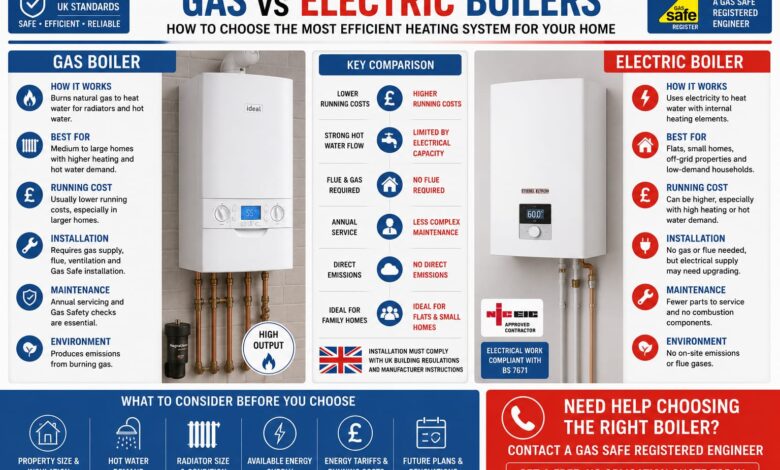
| Factor | Gas Boiler | Electric Boiler |
| Best suited to | Medium and larger homes with strong hot water demand | Small homes, flats and low-demand properties |
| Installation | Needs gas supply, flue and Gas Safe work | No flue or gas pipe, but may need electrical capacity checks |
| Running cost | Often lower in high-demand homes | Can be higher if electricity use is heavy |
| Maintenance | Annual gas safety and performance checks are important | Usually fewer combustion-related checks |
| Environmental impact | Produces direct emissions from burning gas | No direct emissions at the property |
Efficiency and Real-World Running Costs
Efficiency figures can be misleading if they are viewed without context. An electric boiler may convert nearly all incoming electricity into heat, but electricity prices usually make each unit of heat more expensive. A gas boiler may lose a small amount of energy through the flue, yet it can still be cheaper to operate where heating demand is high.
The true cost of heating depends on the property rather than the appliance alone. A well-insulated flat with moderate hot water use may operate comfortably with an electric boiler. A large family house with several bathrooms may be better served by a gas or system boiler because it needs stronger output and better hot water recovery.
Homeowners should consider radiator size, insulation, heating controls, occupancy, shower use, tariff type and future renovation plans. A poorly insulated home will waste energy regardless of boiler type, while smart thermostats and thermostatic radiator valves can improve performance for either system.
Installation Requirements and Practical Considerations
Gas boiler installation involves combustion safety, gas pipe sizing, flue routing, condensate drainage, ventilation checks and compliance with manufacturer instructions. If an old boiler is being replaced, engineers may also need to inspect the existing pipework, flush the heating system and confirm that radiators and controls are compatible with the new appliance.
Electric boiler installation can be simpler because there is no flue and no gas supply. Even so, it is not always a straightforward swap. Some homes need electrical upgrades, dedicated circuits or checks to ensure the supply can safely support the additional load. The wider central heating system must also be assessed for pressure, flow and radiator performance.
A proper survey is essential before either type of boiler is installed. Choosing based only on appliance price can lead to poor performance, higher bills or costly changes after installation.
Safety and Maintenance
Gas boilers are safe when installed and serviced correctly, but they must be maintained because they burn fuel. Annual servicing helps check combustion quality, flue condition, seals, safety devices and internal components. Carbon monoxide alarms are also strongly recommended in homes with gas appliances.
Electric boilers do not produce combustion gases, so they do not carry the same carbon monoxide risk from the appliance itself. They still require safe wiring, correct circuit protection and professional installation. The heating system around the boiler, including radiators, valves, pumps and controls, should still be checked periodically.
Maintenance is not only about safety. It also protects efficiency. A boiler connected to a dirty or poorly balanced heating system may work harder than necessary, increasing energy use and reducing component lifespan.
Environmental Performance
Environmental impact is becoming a bigger part of boiler selection. Gas boilers release carbon emissions because they burn fossil fuel. Modern condensing models are cleaner and more efficient than older boilers, but they still produce emissions during use.
Electric boilers produce no direct emissions inside the home. Their overall carbon impact depends on how the electricity is generated. As the UK grid includes more renewable power, electric heating may become more attractive for households trying to reduce reliance on fossil fuels.
That said, sustainability must be balanced with heating demand. Installing an electric boiler in a large, poorly insulated property can lead to high electricity consumption. Fabric improvements, zoning, controls and correct sizing are often just as important as the appliance choice itself.
Which Boiler Is Better for Different Property Types?
For larger homes with several bedrooms, multiple bathrooms and high hot water use, gas boilers often remain the practical choice where mains gas is already available. They can deliver strong heat output and support busy household routines more effectively.
For smaller flats, compact homes and properties without mains gas, electric boilers can be a sensible option. They are quiet, compact and often easier to site. They may also be suitable where the household has low heating demand or access to renewable electricity.
For modern homes with excellent insulation, the decision becomes more balanced. Lower heat loss reduces the amount of energy required, which can make electric heating more viable. In older properties, heat loss and existing infrastructure often make gas boilers more cost-effective unless wider improvements are made.
For homeowners looking for Quality Boiler Services in Fulham, a detailed heating assessment can help identify whether a gas boiler, electric boiler or an alternative setup is the most suitable long-term option for the property.
Common Mistakes to Avoid
One of the biggest mistakes is choosing a boiler based only on headline efficiency. A highly efficient appliance can still be expensive to run if it is poorly matched to the home. Another common issue is ignoring water pressure, radiator condition or insulation quality before installation.
Homeowners should also avoid assuming that replacing gas with electric is automatically cheaper or greener. It may be the right decision in some homes, but not all. The correct choice should be based on usage patterns, heat loss, energy tariffs and future plans for the property.
A professional recommendation should include more than a boiler model. It should consider controls, system cleanliness, radiator balancing, pressure stability, warranty requirements and long-term servicing needs.
Final Recommendation
Gas and electric boilers both have clear strengths. Gas boilers usually offer stronger output and lower running costs in larger homes connected to mains gas. Electric boilers offer compact installation, quiet operation, no direct emissions at the property and simpler placement in certain buildings.
The best choice depends on the home rather than a universal rule. Property size, insulation, number of bathrooms, hot water habits, fuel availability, electrical capacity and long-term budget all need to be considered before making a decision.
By comparing both systems carefully and arranging a proper heating survey before installation, homeowners can choose a boiler that provides reliable comfort, sensible running costs and efficient performance for years to come.