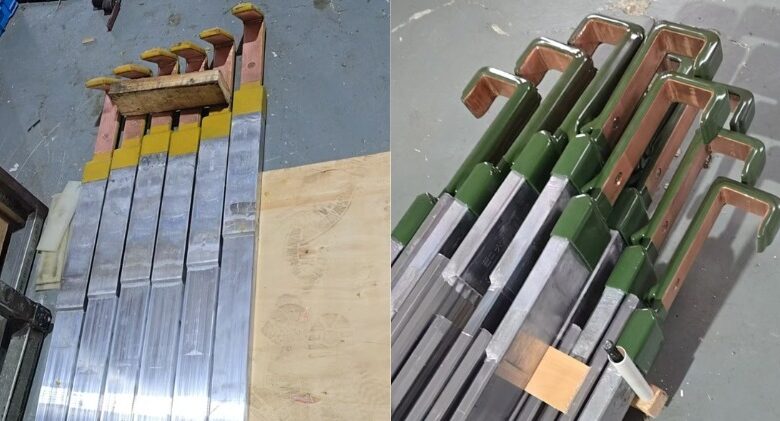
Chrome plating facilities often spend months troubleshooting poor coating adhesion, uneven thickness, unstable current efficiency, or rising maintenance costs without identifying the real source of the problem. Production teams may adjust bath chemistry, replace filtration systems, or recalibrate current settings repeatedly, yet plating quality still refuses to stabilize.
In many industrial operations, the issue is not always the chemistry or even the operator settings. Sometimes, the root problem comes from the anode itself.
The choice of an anode directly affects current distribution, coating consistency, chromium deposition, production downtime, and long-term operating cost. Yet many buyers still choose anode materials based only on price or supplier recommendations without understanding how the material behaves inside a chrome plating tank.
This is where the comparison between an Extruded Lead Alloy Anode and a Casting Anode becomes important.
At first glance, both may appear to serve the same purpose. Both are widely used as a Chrome Plating Anode in industrial electroplating environments, and both can support chromium deposition under controlled conditions. However, their structural properties, manufacturing methods, density, corrosion behavior, and long-term stability can create very different plating outcomes.
For plating engineers, production managers, and facility owners, choosing the wrong anode may lead to inconsistent plating thickness, frequent maintenance, unstable current flow, increased contamination risks, and unnecessary operating expenses.
The better choice depends on production goals, plating scale, process requirements, and equipment setup.
This guide explains the practical differences between Extruded Lead Alloy Anode systems and Casting Anodematerials in real industrial chrome plating environments. Instead of focusing only on technical specifications, we will look at how these materials perform in day-to-day production, how they affect plating quality, and which option makes more sense for different manufacturing conditions.
What Actually Impacts Chrome Plating Performance?
Many people assume chrome plating quality depends mainly on chemical formulation. While bath chemistry is important, it is only one part of a much larger system.
The quality of industrial chrome plating is shaped by how multiple elements work together inside the plating line. Even small inconsistencies in one area can reduce coating quality, waste energy, or create defects that affect product performance.
Anode composition is one of the biggest factors.
Different materials respond differently to harsh chromium plating environments. The composition of an anode influences conductivity, resistance to oxidation, mechanical durability, and current distribution throughout the plating tank. If an anode breaks down too quickly or delivers unstable current, coating quality may become uneven across the plated surface.
Current distribution is another major factor. Chrome plating requires stable and controlled electrical flow. When current spreads unevenly across components, operators often see thickness variation, poor surface appearance, burning, or incomplete coverage.
This is why many facilities carefully match their Chrome Plating Anode setup with the right power equipment. A poorly matched system may create inconsistent plating performance even if bath chemistry is correct.
For example, a stable Electroplating Rectifier helps maintain accurate current delivery throughout the process. When rectifier performance fluctuates, coating consistency often suffers. In high-volume manufacturing environments, even minor voltage instability can create measurable quality problems over time.
The plating bath itself also matters. Temperature control, chromium concentration, contaminants, and electrolyte balance all influence how effectively the anode performs. A strong anode design may still underperform if bath stability is poor.
Equipment selection further affects process reliability. Many industrial facilities now use advanced DC Electrolytic Power Supply systems to improve electrical efficiency and reduce fluctuations during operation. Better electrical precision often means smoother coating quality and less process variation.
When buyers compare anode materials, they should avoid evaluating them in isolation. The best-performing anode is usually the one that works effectively with the entire plating system rather than simply having stronger material specifications on paper.
Understanding Extruded Lead Alloy Anodes
An Extruded Lead Alloy Anode is designed for demanding electroplating environments where long-term stability and structural strength matter.
Unlike conventional cast alternatives, extruded anodes are manufactured using a controlled forming process that compresses lead alloy material under pressure. This production method improves density, internal uniformity, and structural consistency.
The difference may sound technical, but it has very practical effects inside industrial plating tanks.
In chrome plating environments, anodes operate under continuous chemical and electrical stress. Weak spots in material structure can eventually lead to cracking, uneven wear, distortion, or performance decline. Because extrusion creates a denser and more uniform material profile, many facilities experience better long-term durability.
This structural density often gives extruded anodes an advantage in harsh plating conditions.
In large-scale manufacturing, downtime creates real financial pressure. Production interruptions caused by replacing worn-out anodes can increase labor costs and reduce output efficiency. A stronger material structure may help reduce these interruptions.
This is one reason industrial facilities increasingly consider high density lead anode solutions when designing long-term plating systems. Dense material structures often maintain performance stability for longer operating cycles, especially where chrome plating runs continuously.
Another important advantage involves corrosion resistance.
Chrome plating environments are chemically aggressive. Over time, weaker materials may degrade faster, affecting bath cleanliness and plating consistency. Extruded lead alloy materials are generally valued for their ability to maintain stability under demanding operating conditions.
For buyers managing high-volume plating operations, maintenance is often just as important as performance.
Frequent cleaning, replacement schedules, and unexpected downtime all contribute to total ownership cost. Although some buyers initially focus on purchase price, experienced engineers often evaluate long-term operating expenses instead.
This is where durable extruded lead alloy anodes can become attractive for industrial facilities operating around the clock.
Facilities searching for an experienced industrial electroplating anode manufacturer often prioritize consistency, material quality, and dimensional precision because these factors directly influence process reliability over time.
In applications where stable current distribution matters, dense material construction may also improve plating consistency. Uniform current flow can help reduce thickness variation, surface irregularities, and quality defects.
However, despite these strengths, extruded lead alloy systems are not automatically the right solution for every production environment. Their value depends heavily on production volume, maintenance priorities, and investment expectations.
Understanding Pb-Sn Anodes and Where They Perform Best
A casting anode is another widely used material option in chrome plating systems.
As the name suggests, this anode combines lead with tin to improve performance characteristics for electroplating applications. The ratio between lead and tin may vary depending on process requirements, supplier specifications, and intended industrial use.
Pb-Sn materials have been widely adopted across electroplating sectors because they can deliver dependable plating performance while remaining relatively practical for many operating conditions.
In many chrome plating facilities, a casting anode works effectively because of its conductivity characteristics and compatibility with chromium electrolytes. It is commonly selected for applications where production requirements remain relatively stable and process conditions are predictable.
One advantage of Pb-Sn materials is their operational familiarity.
Many plating engineers already understand how these anodes behave inside production environments. Existing system configurations are often already optimized for them, making implementation straightforward.
This can reduce the learning curve for operators and maintenance teams.
In moderate production environments, Pb-Sn materials may provide acceptable performance while keeping upfront investment manageable. Facilities operating smaller plating lines sometimes prioritize practical cost efficiency over maximum durability.
However, operational conditions matter.
Pb-Sn materials may experience wear differently depending on bath chemistry, current density, and production intensity. In highly demanding plating environments, some operators report increased maintenance requirements or shorter operational lifespan compared with denser extruded alternatives.
This does not necessarily make one option universally better than the other.
Instead, it highlights the importance of matching anode material to production demands.
A plating line operating at high volume with continuous operation may prioritize durability and long-term stability. A facility handling smaller production batches may place greater importance on flexibility and manageable replacement cost.
Many suppliers now offer different casting anode products tailored for industrial chrome plating applications, giving buyers more flexibility based on operational priorities.
The key is understanding not only how the material performs initially, but how it behaves after months of continuous production.
Extruded Lead Alloy Anode vs Casting Anode: A Practical Comparison
| Factor | Extruded Lead Alloy Anode | Casting Anode |
| Durability | Higher structural density supports longer service life | Generally reliable but may wear faster in demanding conditions |
| Current Efficiency | Often more stable during continuous industrial operation | Effective but can vary depending on operating environment |
| Corrosion Resistance | Strong resistance in aggressive chrome plating baths | Good performance but depends on alloy composition |
| Maintenance Needs | Usually lower due to material consistency | May require more frequent monitoring |
| Cost Efficiency | Higher upfront investment but potentially lower long-term operating cost | Lower initial investment in many cases |
| Chrome Plating Consistency | Often preferred for stable thickness and uniform deposition | Suitable for standard production environments |
| Long-Term Industrial Performance | Strong fit for heavy-duty industrial use | Effective for moderate and controlled applications |
The comparison above shows why there is no universal winner.
An Extruded Lead Alloy Anode often performs better in demanding industrial environments where durability, process stability, and reduced maintenance matter most.
A Pb-sn Anode, on the other hand, may still be a practical and cost-effective choice for facilities with stable workloads or smaller production volumes.
The decision becomes more complex when electrical systems enter the equation, because power supply quality significantly affects how both materials perform in actual production.
How Power Supply Affects Anode Performance
Many buyers underestimate the relationship between anode selection and electrical equipment.
Even the highest-performing anode may struggle if the power system cannot deliver stable and accurate electrical control.
In chrome plating, consistent current flow directly influences deposition quality. Voltage fluctuations can cause coating irregularities, poor adhesion, and inconsistent thickness.
This is why selecting the right Electroplating Rectifier matters just as much as selecting the right anode.
A stable rectifier helps maintain predictable current density throughout the plating cycle. When power delivery becomes unstable, plating defects become more common.
Modern DC Electrolytic Power Supply systems are designed to improve electrical precision while reducing process instability. Facilities upgrading older equipment often notice better process consistency after improving power control.
High-volume manufacturers increasingly adopt IGBT Plating Rectifier technology because of its energy efficiency and precision control. These systems typically offer faster electrical response and improved stability compared with older designs.
When paired correctly with a high-quality anode, stable electrical delivery can significantly improve plating consistency and reduce waste.
For buyers investing in long-term chrome plating anode systems, power supply compatibility should always be part of the conversation rather than an afterthought.