In today’s competitive industrial landscape, process facilities are under constant pressure to optimize capital expenditure without compromising operational integrity. Whether you’re scaling up a chemical plant, retrofitting a pharmaceutical production line, or commissioning a new petrochemical unit, the procurement of core process equipment demands careful financial and technical consideration. One of the most effective strategies gaining traction across the industry is the acquisition of pre-owned process equipment — particularly reactors — as a cost-efficient alternative to purchasing new machinery. This approach, when executed with proper due diligence, can dramatically reduce lead times and capital outlay while delivering equivalent performance outcomes.
Why Reactors Are Central to Process Plant Operations
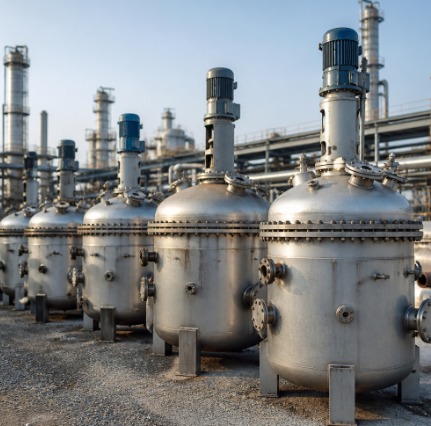
Reactors are the heart of virtually every chemical, pharmaceutical, food processing, and petrochemical operation. They are the vessels in which raw materials are transformed into valuable products through controlled chemical reactions. The design, material, and capacity of a reactor directly influence yield, product quality, safety, and energy efficiency. Given their central role, reactors represent one of the most significant capital investments a process facility will make. This is precisely why the secondary market for industrial reactors has grown substantially — operators recognize that a well-maintained used reactor can perform identically to a new unit at a fraction of the cost.
Types of Reactors Commonly Available on the Secondary Market
The secondary market offers a wide variety of reactor types to suit different process requirements. Continuous stirred-tank reactors (CSTRs), plug flow reactors, batch reactors, and pressure vessels are among the most frequently traded. Stainless steel jacketed reactors are particularly popular in pharmaceutical and food-grade applications, while glass-lined reactors are sought after for processes involving corrosive materials. High-pressure reactors used in hydrogenation and polymerization processes also appear regularly in reputable equipment inventories. Understanding the specific requirements of your process — including temperature ratings, pressure tolerances, material compatibility, and volume — is essential before evaluating any available unit.
The Financial Case for Buying Pre-Owned Process Equipment
New industrial reactors can carry price tags ranging from tens of thousands to several million dollars depending on their specifications. Lead times for custom-built units can stretch from six months to over two years, creating significant delays in project timelines. Pre-owned reactors, by contrast, are typically available for immediate inspection and delivery, and they can be acquired at 30 to 70 percent below the cost of equivalent new equipment. For facilities operating under tight capital budgets or aggressive commissioning schedules, this represents a compelling value proposition. The savings realized can be redirected toward instrumentation upgrades, safety systems, or process automation — all of which contribute to long-term operational efficiency.
Evaluating Total Cost of Ownership
While the purchase price of a used reactor is significantly lower, buyers must account for the total cost of ownership. This includes inspection and refurbishment costs, transportation and rigging expenses, installation and commissioning fees, and any necessary modifications to meet current regulatory or process standards. A thorough mechanical inspection — including weld integrity checks, pressure testing, and assessment of internal coatings or linings — is non-negotiable. Engaging a qualified process engineer or third-party inspection firm before finalizing any purchase ensures that the equipment will perform reliably and safely within your specific operating environment.
Integrating Used Reactors with Broader Plant Infrastructure
Acquiring a used reactor is rarely a standalone decision. It must be considered in the context of the broader plant infrastructure, including utilities, piping systems, heat exchangers, and energy supply. For example, a reactor that requires steam heating must be matched with an appropriately sized boiler system. Facilities that are evaluating their heating infrastructure alongside equipment procurement should consider the implications of their energy source. Understanding the differences between heating technologies — such as those explored in resources covering gas versus electric boiler systems — can help plant engineers make informed decisions about utility compatibility when integrating pre-owned reactors into existing or new process lines.
Pump and Fluid Handling Compatibility
Beyond heating systems, fluid handling infrastructure must also be carefully evaluated when commissioning a used reactor. Feed pumps, recirculation systems, and transfer lines must be sized and configured to match the reactor’s flow requirements. In many cases, existing pumps may need to be rerated or replaced to accommodate the hydraulic demands of the new equipment. Engineers involved in such projects should familiarize themselves with the technical considerations involved in pump system modifications, including the factors outlined in detailed guidance on centrifugal pump hydraulic rerate considerations, which provides valuable insight into how pump performance curves, impeller sizing, and system resistance interact during process changes.
International Process Plants: A Trusted Source for Used Reactors
When it comes to sourcing reliable pre-owned process equipment, the reputation and expertise of the supplier matter enormously. International Process Plants has established itself as one of the most respected names in the global secondary market for industrial process equipment. With an extensive inventory spanning multiple industries and equipment categories, the company provides buyers with access to thoroughly documented, inspected, and competitively priced machinery. For facilities actively seeking used reactors for sale, International Process Plants offers a comprehensive selection of units across a wide range of sizes, materials, and configurations — backed by the technical knowledge and logistical support necessary to ensure a successful acquisition and deployment.
What Sets a Quality Equipment Dealer Apart
Not all used equipment dealers operate with the same level of transparency or technical rigor. A quality supplier will provide detailed equipment histories, including previous operating conditions, maintenance records, and any prior repairs or modifications. They will facilitate on-site inspections and, where applicable, offer refurbishment services to bring equipment up to current standards. International Process Plants exemplifies this approach, combining a vast inventory with deep industry expertise to guide buyers through the selection and procurement process. Their team understands that purchasing used process equipment is a significant commitment, and they work to ensure that every transaction is supported by accurate information and professional guidance.
Conclusion: Making the Right Investment in Process Equipment
The decision to source used reactors and other pre-owned process equipment is not simply a cost-cutting measure — it is a strategic choice that, when made thoughtfully, delivers genuine operational and financial advantages. By working with reputable suppliers, conducting thorough technical evaluations, and ensuring compatibility with existing plant infrastructure, process facilities can achieve their production goals faster and more economically than through new equipment procurement alone. As the industrial sector continues to evolve, the secondary equipment market will remain a vital resource for facilities seeking agility, efficiency, and value in their capital investment strategies.