Sleepstation: A Complete Guide to Digital CBT-I Therapy for Insomnia and Sleep Improvement
Understanding how Sleepstation works, its clinical approach, benefits, and effectiveness for treating long-term sleep problems
 AdminMay 22, 2026Last Updated: May 22, 2026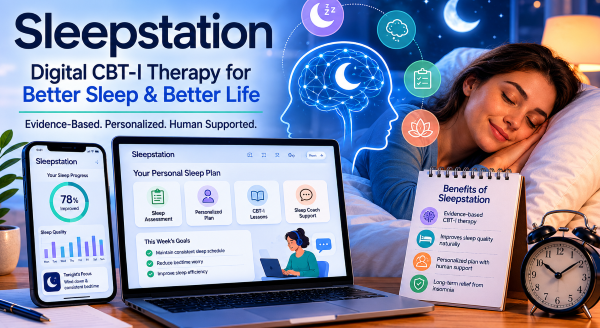
Sleepstation is a clinically validated digital health service designed to help people overcome insomnia using Cognitive Behavioral Therapy for Insomnia (CBT-I). It provides an online, structured program that includes sleep assessment, personalized treatment plans, and ongoing support from trained sleep coaches. The service focuses on changing thoughts, habits, and behaviors that disrupt sleep, making it an effective non-medication approach for chronic sleep difficulties. It is widely used as a first-line treatment for insomnia and is supported by clinical evidence showing significant improvement in sleep quality for many users who complete the program.
Table of Contents
ToggleWhat is Sleepstation
Sleepstation is a digital therapeutic service designed specifically for individuals struggling with insomnia and persistent sleep disturbances. It is built around Cognitive Behavioral Therapy for Insomnia, commonly known as CBT-I, which is considered the most effective non-pharmacological treatment for chronic sleep problems. Unlike general sleep apps that focus on relaxation or sound therapy, Sleepstation offers a structured, medically informed program that addresses the root causes of insomnia.
The service combines clinical expertise with digital accessibility, allowing users to complete assessments, follow treatment modules, and receive professional support entirely online. It is particularly focused on helping individuals who have long-term difficulty falling asleep, staying asleep, or maintaining a consistent sleep pattern.
How Sleepstation Works
Sleepstation operates through a structured multi-step process that begins with a detailed sleep assessment. Users are required to complete sleep diaries that track their sleep patterns over several days. This data is used to understand the individual’s sleep behavior, identify disruptions, and create a personalized treatment plan.
Once the assessment is complete, users are guided through a tailored CBT-I program. This program typically includes weekly modules that focus on sleep education, behavioral changes, and cognitive restructuring techniques. Users are encouraged to follow strict sleep routines, adjust bedtime habits, and challenge negative thoughts associated with sleep anxiety.
Throughout the program, users receive feedback and support from trained sleep coaches. These professionals monitor progress, provide guidance, and help users stay consistent with the program. The combination of structured learning and human support is one of the key features that distinguishes Sleepstation from standard self-help sleep apps.
Understanding CBT-I in Sleepstation
Cognitive Behavioral Therapy for Insomnia is the foundation of Sleepstation’s treatment model. CBT-I is a scientifically validated approach that targets the psychological and behavioral factors that contribute to insomnia.
The therapy works on two main components. The first is cognitive restructuring, which helps individuals identify and change negative thought patterns related to sleep. Many people with insomnia develop anxiety around bedtime, which further worsens sleep difficulties. CBT-I helps reduce this anxiety by changing the way individuals think about sleep.
The second component is behavioral modification. This includes techniques such as sleep restriction, stimulus control, and sleep scheduling. These methods help reset the body’s natural sleep rhythm and strengthen the connection between bedtime and actual sleep.
By combining these approaches, CBT-I helps retrain the brain and body to develop healthier sleep habits without relying on medication.
The Purpose of Sleepstation
The primary purpose of Sleepstation is to provide a long-term solution for insomnia rather than a temporary fix. Many people with sleep problems rely on sleeping pills or short-term remedies, which may not address the underlying cause of the issue. Sleepstation focuses on sustainable improvement by targeting behavioral and psychological triggers.
It aims to help individuals regain control over their sleep patterns, reduce dependence on medication, and improve overall quality of life. The program is structured to gradually build healthier sleep habits that remain effective even after the program is completed.
Who Sleepstation is Designed For
Sleepstation is designed for individuals experiencing chronic or recurring sleep problems. This includes people who struggle to fall asleep at night, wake up frequently during the night, or wake up too early in the morning and cannot return to sleep.
It is also suitable for individuals who feel tired during the day due to poor sleep quality or those whose sleep issues are affecting their work, mood, or daily functioning. The program is most effective for people whose insomnia is related to stress, anxiety, irregular sleep habits, or conditioned sleep difficulties.
However, it may not be suitable for individuals whose sleep problems are caused by untreated medical conditions such as sleep apnea or severe neurological disorders. In such cases, medical evaluation is necessary before starting behavioral therapy.
The Structure of the Sleepstation Program
The Sleepstation program is structured into stages to ensure gradual improvement. It begins with an assessment phase, followed by active treatment and long-term maintenance.
During the assessment phase, users collect sleep data through diaries and questionnaires. This helps build a clear picture of sleep behavior and identify patterns that contribute to insomnia.
In the treatment phase, users follow weekly CBT-I modules. These modules include practical exercises, sleep education, and behavioral techniques designed to improve sleep efficiency. Users are encouraged to maintain strict sleep schedules and avoid habits that interfere with sleep quality.
The final stage focuses on maintaining improvements. Users learn how to sustain healthy sleep habits and prevent relapse into old patterns. This stage is important because insomnia often returns if behavioral changes are not maintained consistently.
Clinical Validation and Evidence Base
Sleepstation is built on CBT-I, which is widely recognized in clinical guidelines as the most effective treatment for chronic insomnia. Research shows that CBT-I can significantly improve sleep onset, reduce night awakenings, and increase overall sleep quality.
Digital delivery of CBT-I, as used by Sleepstation, has also been studied and shown to be effective for many individuals. Online programs allow greater accessibility, making treatment available to people who may not have access to in-person sleep clinics.
Clinical evaluations of digital CBT-I programs suggest that a large proportion of users experience meaningful improvement when they fully engage with the process. This includes reduced time to fall asleep, fewer nighttime awakenings, and improved daytime alertness.
Benefits of Sleepstation
One of the main benefits of Sleepstation is its non-medication approach. It helps individuals improve sleep naturally without relying on sleeping pills, which may cause dependency or side effects.
Another benefit is personalization. Each user receives a tailored program based on their sleep patterns and challenges. This makes the treatment more effective compared to generic sleep advice.
The inclusion of human support is another advantage. Sleep coaches provide accountability and guidance, helping users stay committed to the program even when progress feels slow.
Sleepstation also offers convenience since it is fully digital. Users can access the program from home, making it accessible to a wide range of individuals regardless of location.
Limitations of Sleepstation
While Sleepstation is effective for many people, it is not a universal solution for all sleep problems. It requires consistent effort and discipline, as users must follow structured routines and complete daily sleep tracking.
Some individuals may find the process challenging, especially in the early stages when sleep restriction techniques can temporarily make sleep feel more difficult before improvement occurs.
It is also not designed for sleep disorders that require medical intervention, such as severe sleep apnea, restless leg syndrome, or certain psychiatric conditions affecting sleep.
Effectiveness of Sleepstation
The effectiveness of Sleepstation is closely linked to its use of CBT-I principles. Many users experience noticeable improvements in sleep quality within several weeks of consistent participation. However, results depend heavily on user commitment and adherence to the program.
CBT-I is known for producing long-term improvements compared to medication-based treatments. While sleeping pills may provide immediate relief, CBT-I addresses the root causes of insomnia, leading to more sustainable results.
Users who complete the program often report improved sleep consistency, reduced anxiety around bedtime, and better overall energy levels during the day.
Sleepstation Compared to Medication
Unlike sleeping medications that act quickly but temporarily, Sleepstation focuses on behavioral change. Medication may help individuals fall asleep faster, but it does not resolve underlying sleep habits or cognitive patterns.
Sleepstation, on the other hand, works gradually but aims for long-term improvement. It helps users develop a stable sleep system that does not rely on external substances. This makes it a preferred option for individuals seeking sustainable sleep health.
Common Challenges in Using Sleepstation
One of the most common challenges users face is adapting to new sleep routines. CBT-I often involves changing long-standing habits, which can feel uncomfortable initially.
Another challenge is maintaining consistency. Since the program requires daily tracking and engagement, individuals who are inconsistent may see slower progress.
Despite these challenges, many users find that persistence leads to significant improvement in sleep quality over time.
How to Get Started with Sleepstation
Getting started with Sleepstation typically involves signing up for the program and completing an initial sleep assessment. Users then begin tracking their sleep patterns through digital diaries.
After assessment, a personalized plan is created, and users begin the structured CBT-I modules. Regular feedback and coaching support help guide users through the process step by step.
Conclusion
Sleepstation is a structured, evidence-based digital therapy service designed to treat insomnia using Cognitive Behavioral Therapy for Insomnia. It offers a comprehensive approach that includes assessment, personalized treatment, and ongoing support. By focusing on behavioral and cognitive changes rather than medication, it provides a long-term solution for improving sleep quality. While it requires commitment and consistency, it remains one of the most effective digital options available for individuals struggling with chronic sleep problems.
AdminMay 22, 2026Last Updated: May 22, 2026