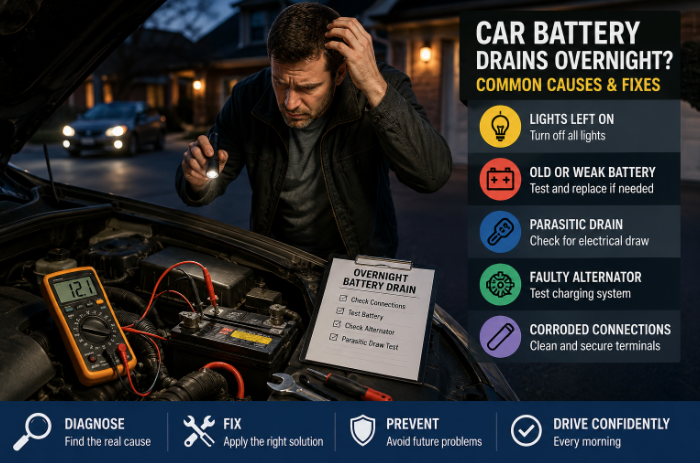
Discover why your car battery drains overnight and how to fix it. Learn common causes, warning signs, and practical solutions to prevent battery problems.
Few things are more frustrating than turning your key in the morning only to hear a weak click or complete silence. Your car was fine yesterday, but overnight the battery drained completely. This scenario plays out daily across Aldershot, Farnborough, Fleet, and throughout Hampshire, leaving drivers stranded and confused. Understanding why batteries drain overnight, recognising the warning signs, and knowing how to fix the problem saves time, money, and stress. Booking a professional car battery replacement in Aldershot can help identify weak batteries and electrical faults before they leave you stranded.
How Car Batteries Work and Why They Drain
Car batteries store electrical energy chemically and release it as needed to start your engine and power electrical systems. When the engine runs, the alternator recharges the battery, maintaining its charge level. At night, with the engine off, the battery should retain its charge with minimal loss.
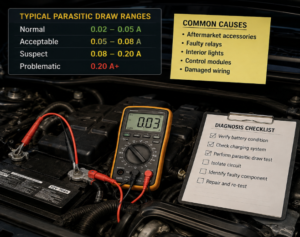
Modern vehicles have numerous electronic systems that draw small amounts of power even when parked. This parasitic drain is normal and expected. Computers, alarm systems, clocks, and keyless entry modules all need tiny currents to function. Properly designed electrical systems keep these draws minimal, typically under 50 milliamps, allowing batteries to sit unused for weeks without problems.
When something goes wrong, parasitic drain increases dramatically. A single faulty component or circuit can draw enough current to flatten a healthy battery in hours. For drivers around Farnham, Ash, or Tongham who park overnight and discover dead batteries come morning, identifying the culprit becomes essential.
Common Causes of Overnight Battery Drain
Numerous electrical faults and user errors cause batteries to drain while parked. Understanding these causes helps you diagnose and fix the issue quickly.
1. Interior Lights Left On
One of the simplest and most common causes is forgetting to turn off interior lights. Boot lights, glovebox lights, and dome lights can stay illuminated if doors don’t close properly or switches fail. Even a small bulb draws enough current to drain a battery overnight.
Modern vehicles often have automatic shutoff systems, but these can fail or be overridden. Check all interior lights before leaving your vehicle, especially after loading shopping or luggage around Fleet or Aldershot.
2. Faulty Door Switches
Door jamb switches tell your car’s computer whether doors are open or closed. When these switches fail or corrode, the system thinks a door remains open even when shut. This keeps interior lights on, prevents the vehicle from entering sleep mode, and drains the battery.
Corrosion is particularly common in the UK climate where moisture and road salt accelerate switch degradation. Drivers in coastal areas or those frequently driving through wet conditions around Hampshire face higher risks.
3. Parasitic Draw From Aftermarket Electronics
Aftermarket stereos, amplifiers, dash cams, phone chargers, and GPS units often draw power continuously. Poorly installed accessories bypass proper circuits and drain batteries even when the ignition is off. Some devices never truly power down, remaining in standby mode indefinitely.
If you’ve recently installed new electronics and noticed battery problems starting afterward, suspect the new equipment. Even factory fitted accessories can develop faults over time.
4. Faulty Alternator Diodes
Alternators contain diodes that convert AC current to DC for charging the battery. When diodes fail, they allow current to flow backward from the battery through the alternator at night, draining it. This creates significant parasitic draw, often several hundred milliamps or more.
Alternator diode failure is insidious because the alternator may still charge during the day, masking the problem. Only overnight does the drain become apparent.
5. Old or Weak Battery
Batteries naturally lose capacity as they age. Chemical reactions inside degrade over time, reducing the battery’s ability to hold a charge. While a healthy battery tolerates small parasitic draws, a weak battery drains quickly under the same load.
Most car batteries last 3 to 5 years in the UK. If your battery is approaching or exceeding this age, it may no longer handle normal overnight draws. Understanding car battery life helps you anticipate replacement needs before problems arise.
6. Glove Box and Boot Lights
Glove box and boot lights stay on if their switches stick or fail. Since these lights are hidden when compartments close, you won’t notice them illuminated. Over hours, they drain substantial power.
Test these lights by opening and closing compartments while watching the bulbs. Sticky switches or misaligned strike plates prevent proper shutoff.
7. Faulty Relays and Modules
Modern vehicles contain dozens of relays and control modules managing everything from fuel pumps to power windows. When relays stick closed or modules malfunction, they draw continuous power. Climate control modules, body control modules, and infotainment systems are common culprits.
Diagnosing faulty modules requires systematic testing because symptoms are often subtle. Modules may function normally during the day but fail to sleep properly at night.
8. Short Circuits in Wiring
Damaged wiring from rodents, corrosion, or wear can create short circuits that drain batteries. Wiring harnesses run throughout the vehicle, and a single damaged wire grounds current flow, drawing power constantly.
Short circuits are difficult to locate without proper diagnostic equipment. They often occur in hidden areas like under carpet, behind trim panels, or inside door jambs.
9. Alarm Systems and Immobilisers
Security systems draw power to monitor sensors and maintain readiness. When these systems malfunction, power draw increases dramatically. Aftermarket alarms are particularly problematic if installed improperly or if their components age and fail.
Even factory alarms can develop faults. Faulty door sensors, boot switches, or bonnet switches keep alarm modules active, draining batteries overnight.
10. Extreme Temperatures
Cold weather dramatically reduces battery capacity and increases the power needed to start engines. Batteries that perform fine in summer may struggle in winter. Similarly, extreme heat accelerates chemical degradation inside batteries, reducing lifespan and capacity.
Drivers across Hampshire experience seasonal battery problems, particularly during cold snaps when batteries lose up to 50% of their cranking power.
Warning Signs Your Battery Is Draining Overnight
Recognising symptoms early prevents being stranded and allows time for diagnosis and repair.
Slow or Weak Engine Cranking
If your engine cranks slowly in the morning but improves after driving, overnight drain is likely. The alternator recharges the battery while driving, temporarily masking the underlying problem. Come the next morning, the cycle repeats.
Clicking Sounds When Starting
A rapid clicking noise when turning the key indicates insufficient battery power to engage the starter motor. This symptom appears when batteries drain below critical voltage levels overnight.
Dim Interior and Dashboard Lights
Dashboard lights and interior illumination appear noticeably dimmer when the battery is weak. If lights brighten significantly once the engine starts and the alternator takes over, the battery isn’t holding charge properly overnight.
Warning Lights on the Dashboard
Battery warning lights, check engine lights, or other electrical fault indicators often illuminate when battery voltage drops too low. Modern vehicles monitor battery health closely and alert you to problems. Recognising signs your car battery is failing helps you address issues before they escalate.
Electrical Systems Behaving Erratically
Power windows operating slowly, radio settings resetting, or clock losing time all suggest voltage problems. These symptoms worsen overnight as drain continues.
Smell of Sulphur or Rotten Eggs
Overcharging or internal battery faults produce hydrogen sulphide gas, which smells like rotten eggs. If you notice this odour near your battery, investigate immediately as it indicates serious problems.
How to Diagnose Overnight Battery Drain
Pinpointing the source of parasitic draw requires systematic testing. While professional diagnosis is often best, understanding the process helps you make informed decisions.
1. Visual Inspection
Start with a thorough visual check. Look for interior lights left on, including boot, glovebox, and under seat lights. Check that all doors close properly and jamb switches click when pressed. Inspect the battery terminals for corrosion, which increases resistance and mimics drain symptoms.
Examine wiring near the battery for damage, particularly around areas where harnesses pass through metal body panels. Rodent damage is surprisingly common and creates parasitic draws.
2. Measure Battery Voltage
Use a multimeter to measure battery voltage before and after overnight periods. A healthy, fully charged battery reads 12.6 to 12.8 volts. If morning voltage drops below 12.4 volts after sitting overnight, significant drain is occurring.
Test voltage immediately after shutting off the engine, then again in the morning before starting. Document the difference to quantify drain severity.
3. Parasitic Draw Test
A parasitic draw test measures current flow when the vehicle is off. This requires a multimeter capable of measuring current in milliamps or amps.
Disconnect the negative battery cable and connect the multimeter in series between the cable and battery terminal. With the vehicle off, doors closed, and systems sleeping (wait 30 minutes after shutdown), measure the draw. Normal draw ranges from 20 to 50 milliamps. Anything over 50 milliamps warrants investigation, and draws exceeding 100 milliamps drain batteries overnight.
4. Fuse Pull Test
If parasitic draw is excessive, systematically pull fuses one at a time while monitoring the multimeter. When you remove the fuse powering the faulty circuit, current draw drops noticeably. This identifies which system is causing the drain.
Note which fuse reduces draw, then consult your vehicle’s manual to see what that fuse powers. This narrows diagnosis to specific components or modules.
5. Module Sleep Mode Check
Modern vehicles enter sleep mode 15 to 30 minutes after shutdown, reducing parasitic draw significantly. If modules fail to sleep, draw remains high. During the parasitic draw test, watch for current reduction after waiting 30 minutes. If draw stays constant, a module isn’t sleeping properly.
This scenario requires advanced diagnostics, often best left to professionals with manufacturer specific scan tools.
Practical Solutions to Fix Overnight Battery Drain
Once you’ve identified the cause, appropriate fixes restore normal operation.
Fix Interior Light Issues
If interior lights stay on, replace faulty bulbs, switches, or door jamb switches. Clean corroded switch contacts with electrical contact cleaner and apply dielectric grease to prevent future corrosion. Adjust door strike plates if doors don’t close firmly enough to activate switches.
Repair or Replace Alternator
Faulty alternator diodes require alternator repair or replacement. Testing diodes requires specialised equipment, so professional diagnosis is recommended. Replacing an alternator typically costs £200 to £500 depending on vehicle type, but it solves both charging and drain issues simultaneously.
Disconnect or Properly Install Aftermarket Electronics
Remove aftermarket devices temporarily to test whether they’re causing drain. If drain stops with a device disconnected, either reinstall it properly using correct wiring methods or replace it with a higher quality unit. Ensure all accessories use switched power sources that shut off with the ignition.
Replace Faulty Relays and Modules
Relays are inexpensive and easy to replace. Control modules cost more but often resolve persistent drain issues. Before replacing expensive modules, verify the diagnosis with professional testing to avoid unnecessary expenses.
Repair Wiring and Short Circuits
Damaged wiring requires careful repair or replacement. Locate the damaged section, remove corroded or chewed wires, and splice in new sections using proper connectors and heat shrink tubing. For extensive damage, replacing entire harness sections may be necessary.
Replace Old Batteries
If your battery is over 3 years old and testing shows reduced capacity, replacement is the most reliable solution. New batteries restore full capacity, handling normal parasitic draws without issues. Choose quality batteries suited to UK climates with good cold cranking amp ratings for winter reliability.
Install a Battery Disconnect Switch
For vehicles used infrequently or stored seasonally, battery disconnect switches allow you to isolate the battery completely when parked. This prevents any parasitic draw, ensuring the battery stays charged during long periods of non use.
Preventative Measures to Avoid Future Battery Drain
Proactive habits keep batteries healthy and reduce the risk of overnight drain problems.
Regular Battery Maintenance
Clean battery terminals every few months to prevent corrosion buildup. Apply terminal protectant spray or grease to slow corrosion. Check battery hold down brackets to ensure the battery doesn’t vibrate excessively, which damages internal components.
Annual Electrical System Checks
During routine car servicing, request electrical system checks including alternator output, battery load testing, and parasitic draw measurements. Catching problems early prevents inconvenient breakdowns.
Proper Use of Electrical Accessories
Turn off all lights, radios, and accessories before exiting the vehicle. Develop a shutdown routine checking interior lights, stereo, and any plugged in devices. Remove phone chargers and dash cams when not in use if they lack automatic shutoff.
Address Warning Signs Immediately
Don’t ignore slow cranking, dim lights, or warning indicators. These symptoms indicate developing problems that worsen over time. Early intervention prevents minor issues from becoming major failures.
Seasonal Battery Preparation
Before winter, have your battery tested to ensure it has sufficient capacity for cold weather starting. Weak batteries should be replaced before temperatures drop. In summer, check coolant levels and ensure the cooling system protects the battery from excessive heat.
Drive Regularly
Vehicles driven daily keep batteries charged naturally through alternator operation. If your car sits unused for extended periods around Aldershot, Fleet, or Farnham, consider using a trickle charger to maintain charge levels between drives.
When Professional Diagnosis Becomes Necessary
Some electrical issues require professional expertise and equipment to diagnose accurately.
Intermittent Problems
Faults that come and go are notoriously difficult to diagnose. Professionals have monitoring equipment that logs electrical behaviour over time, capturing intermittent issues that simple tests miss.
Complex Electrical Systems
Modern vehicles with extensive electronic systems, multiple modules, and networked components require manufacturer specific diagnostic tools. Trying to diagnose these systems without proper equipment wastes time and risks incorrect conclusions.
Persistent Drain After Basic Checks
If you’ve checked obvious causes like lights and accessories but drain persists, deeper electrical faults are likely. Professionals systematically test circuits, modules, and wiring to isolate problems efficiently.
Safety Concerns
Working with automotive electrical systems carries risks of short circuits, damaged components, and injury from sparks or acid. If you’re uncomfortable working with electrical systems, professional service is the safest option.
Reputable garages provide detailed diagnostics explaining what they found and what repairs are needed. Transparent communication helps you understand problems and make informed repair decisions.
Cost Considerations for Battery Drain Repairs
Repair costs vary widely depending on the underlying cause.
Simple Fixes
Replacing a faulty door switch, relay, or bulb typically costs £20 to £100 including parts and labour. These repairs are straightforward and quick.
Battery Replacement
New batteries range from £80 to £200 depending on size, capacity, and brand. Installation is usually free or minimal cost. Investing in quality batteries from reputable manufacturers ensures longer lifespan and better cold weather performance.
Alternator Replacement
Alternator replacement costs £200 to £500 for most vehicles. Premium or performance vehicles cost more due to complex installation and expensive parts.
Module and Wiring Repairs
Control module replacement ranges from £100 to £500 depending on which module and vehicle type. Wiring repairs vary dramatically based on damage extent, from £50 for simple splices to several hundred pounds for extensive harness replacement.
Professional Diagnostics
Diagnostic fees typically run £50 to £150 depending on complexity and time required. While this seems expensive, accurate diagnosis prevents wasting money on incorrect repairs or unnecessary part replacements.
Budget appropriately and prioritise fixes based on urgency and cost effectiveness. Sometimes a new battery temporarily masks underlying problems, but addressing root causes prevents recurrence.
The Role of MOT Tests in Electrical Health
Annual MOT testing includes checks on various electrical systems, though it doesn’t comprehensively test for parasitic drain. MOTs verify lights, indicators, horn, and wipers function correctly, catching some electrical faults.
However, overnight battery drain often goes undetected during MOTs because vehicles are tested running, with alternators charging batteries. Booking your MOT in Aldershot or elsewhere provides an opportunity to mention electrical concerns. Mechanics can perform additional tests beyond standard MOT requirements if you request them.
Regular MOTs combined with routine servicing catch many problems before they cause breakdowns. Use these opportunities to discuss any electrical symptoms you’ve noticed, even if they seem minor.
Conclusion
Waking up to a dead battery is frustrating, but understanding the causes and solutions empowers you to fix the problem quickly. Whether it’s a simple interior light left on, a faulty alternator diode, or an aging battery reaching the end of its life, identifying the culprit prevents repeated failures and restores reliable starting.
Regular maintenance, proper use of electrical accessories, and prompt attention to warning signs keep batteries healthy and reduce overnight drain risks. For drivers across Aldershot, Farnborough, Fleet, Farnham, and throughout Hampshire, building these habits into your routine ensures your vehicle starts reliably every morning, regardless of weather or season.
Don’t let overnight battery drain disrupt your schedule or leave you stranded. Take action at the first sign of trouble, invest in quality diagnostics and repairs, and enjoy the peace of mind that comes with a properly functioning electrical system. Your mornings will be smoother, your commutes more reliable, and your vehicle more dependable for years to come.
Frequently Asked Questions
What is normal parasitic drain for a car battery?
Normal parasitic drain ranges from 20 to 50 milliamps. This small current powers clocks, alarm systems, and computer memory. Draws exceeding 50 milliamps indicate problems that will drain batteries overnight.
How long does it take to drain a car battery overnight?
A healthy battery with excessive parasitic draw (200 to 300 milliamps) can drain significantly in 8 to 12 hours. Very high draws (500+ milliamps) flatten batteries in just a few hours.
Can a bad alternator drain a battery overnight?
Yes, faulty alternator diodes allow current to flow backward from the battery through the alternator when the engine is off. This creates substantial parasitic drain that flattens batteries overnight.
Why does my car battery only die overnight in winter?
Cold temperatures reduce battery capacity by up to 50%, and engines require more power to start in cold conditions. A battery handling normal draws in summer may lack sufficient capacity in winter, appearing to drain overnight when it’s actually just weaker.
How much does it cost to fix a parasitic battery drain?
Costs range from £20 for simple fixes like bulb or switch replacement to £500 or more for alternator replacement or module repairs. Diagnostic fees typically add £50 to £150.
Can I drive with a parasitic drain?
You can drive if the battery charges during operation, but the underlying problem persists. Every time you park, the drain continues, eventually leaving you stranded. Fix parasitic draws promptly to avoid inconvenient breakdowns.