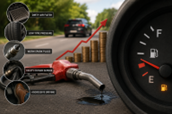
You fill up the tank, drive for a few days, and somehow the needle is already dropping faster than it should. Sound familiar? Poor fuel economy is one of the most common frustrations drivers across Aldershot and the surrounding Hampshire and Surrey areas deal with, yet most people have no idea what is actually causing it.
The truth is, a drop in fuel efficiency rarely happens for just one reason. It is usually a combination of small issues that quietly build up over time. Some are mechanical, some are behavioural, and some are as simple as how often you book your car servicing in Aldershot. Understanding what is draining your fuel is the first step towards doing something about it.
Why Your Car Is Using More Fuel Than It Should
Before diving into specific causes, it helps to understand what fuel economy actually means. Your car converts fuel into energy to move the vehicle. Any time that process becomes inefficient, whether through mechanical wear, driving habits, or ignored maintenance, your engine has to work harder and burn more fuel to do the same job.
Modern engines are designed to be remarkably efficient, but they only stay that way when everything is working as it should. The moment one component starts underperforming, others compensate, and that is when your fuel costs quietly start to climb.
The Most Common Causes of Poor Fuel Economy
1. A Dirty or Clogged Air Filter
Your engine needs a precise mixture of air and fuel to run efficiently. When the air filter becomes clogged with dirt, dust, and debris, it restricts airflow and throws that balance off. The engine ends up burning more fuel to compensate for the restricted oxygen supply.
Air filters are one of the cheapest and easiest components to replace, yet they are frequently overlooked between services. If yours has not been checked in over a year, it is worth having it inspected.
2. Worn or Faulty Spark Plugs
Spark plugs ignite the fuel and air mixture inside the engine. When they wear out or become fouled, the ignition process becomes inconsistent. Misfires occur, unburned fuel passes through the engine, and efficiency drops noticeably.
Drivers in North Camp, Tongham, and Ash Vale often report that a simple spark plug replacement made a noticeable difference to how their car felt and how often they were stopping at the pump.
3. Low or Degraded Engine Oil
Engine oil lubricates moving parts and reduces internal friction. When the oil level is low or the oil has degraded past its useful life, internal friction increases and the engine has to work significantly harder. That extra effort comes directly out of your fuel tank.
Checking and changing your oil on time is one of the simplest things you can do to protect both your fuel economy and your engine.
4. Under-Inflated Tyres
This is one of the most overlooked causes of poor fuel economy. When tyre pressure drops below the recommended level, the contact patch between the tyre and the road increases. That creates more rolling resistance, which means your engine needs to produce more power just to maintain speed.
Studies from motoring research bodies suggest that tyres even slightly under-inflated can increase fuel consumption by several percentage points. Check your tyre pressures monthly, including the spare.
5. A Failing Oxygen Sensor
The oxygen sensor monitors the exhaust gases leaving your engine and sends data back to the engine management system. This data is used to fine-tune the fuel and air mixture in real time.
When an oxygen sensor fails or starts sending inaccurate readings, the engine management system can inject too much fuel into the combustion cycle. The result is noticeably higher fuel consumption, and often a warning light on your dashboard. Ignoring dashboard lights is a habit that costs drivers more than they realise. If a light has come on, understanding what your dashboard warning light means could save you a significant repair bill.
6. A Clogged Fuel Injector
Fuel injectors spray a precise mist of fuel into the combustion chamber. Over time, deposits build up on the injector nozzles and disrupt that spray pattern. Instead of a fine mist, fuel enters the chamber in uneven droplets, which burns less efficiently.
Fuel injector cleaning is often included as part of a full service, which is another reason regular servicing pays for itself in saved fuel costs over time.
7. Driving Habits That Drain the Tank
Mechanical issues aside, how you drive has a significant impact on fuel economy. Aggressive acceleration, hard braking, and high-speed motorway driving all push fuel consumption up considerably.
Consider these habits and how they affect your tank:
- Rapid acceleration from standstill burns a disproportionate amount of fuel compared to gradual, smooth acceleration.
- Braking hard repeatedly means you are wasting the energy your engine already used to build speed.
- Driving at 80 mph uses significantly more fuel than driving at 60 mph due to aerodynamic drag increasing exponentially with speed.
- Leaving the engine idling for extended periods burns fuel with no forward movement whatsoever.
- Carrying unnecessary weight in the boot increases the load on the engine and raises consumption.
Small adjustments to driving style can produce meaningful savings without any mechanical changes at all.
8. Air Conditioning and Electrical Load
Running the air conditioning system places a mechanical load on the engine via the compressor, which requires power to operate. At lower speeds, this additional load can increase fuel consumption noticeably.
Similarly, running multiple high-draw electrical systems simultaneously, such as heated seats, rear demisters, and headlights, adds strain. At motorway speeds the impact is less significant, but in urban driving around Fleet, Guildford, or Farnborough, the effect is measurable.
9. A Dragging Brake Caliper
If a brake caliper seizes and fails to fully release after braking, the brake pad remains in partial contact with the disc. The vehicle is effectively being slowed by its own braking system even when you are not pressing the pedal.
This dramatically increases fuel consumption, causes uneven tyre wear, and generates heat that accelerates brake component wear. It is a fault that often goes undetected until a service or MOT inspection picks it up.
10. Coolant Temperature Sensor Issues
The engine management system uses the coolant temperature sensor to determine how much fuel to inject during warm-up. If the sensor is faulty and reports that the engine is always cold, the system will continuously inject excess fuel as though the engine is still warming up, even when it is fully up to temperature.
This is a relatively inexpensive component to replace, but the fuel waste it causes can be substantial if left unaddressed.
How a Failing MOT Can Signal Fuel Economy Problems
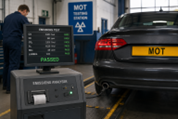
It is worth noting that many of the mechanical issues that harm fuel economy are also MOT failure points. Emissions tests carried out during an MOT in Aldershot measure exactly the kind of combustion inefficiency that results from faulty oxygen sensors, clogged injectors, and worn spark plugs. If your car produces higher than normal emissions, it is often a direct signal that fuel is not being burned as cleanly or efficiently as it should be.
A car that fails on emissions is frequently a car that has been quietly losing fuel economy for months. The MOT catches the problem before it worsens.
Seasonal and Environmental Factors
Fuel economy does not only depend on your car. The conditions you drive in play a significant role as well.
Cold weather has a measurable effect on fuel consumption. Engines take longer to reach operating temperature, petrol and diesel fuel have slightly lower energy density in cold conditions, and tyre pressures drop as the temperature falls.
Short journeys are particularly damaging to fuel economy because the engine never fully warms up to its efficient operating range. If most of your driving is short trips around Ash, Tongham, or North Camp, your real-world fuel consumption will be noticeably higher than the official figures suggest.
Stop-start urban traffic prevents the engine from operating in its most efficient rev range for any sustained period, burning more fuel per mile than smooth, consistent driving on an open road.
What Good Maintenance Actually Looks Like
| Maintenance Task | Recommended Frequency | Impact on Fuel Economy |
| Engine oil change | Every 6,000 to 10,000 miles or annually | High |
| Air filter replacement | Every 15,000 to 20,000 miles | Medium to High |
| Spark plug replacement | Every 30,000 to 60,000 miles | High |
| Tyre pressure check | Monthly | Medium |
| Fuel injector clean | Every 30,000 miles or as needed | Medium |
| Oxygen sensor check | As indicated by warning light | High |
Keeping on top of these tasks is not just about fuel economy. It protects the overall health and lifespan of the vehicle.
How to Check If Your Fuel Economy Has Dropped
You do not need diagnostic equipment to notice a problem. A simple method that works well is tracking your fuel consumption manually.
- Fill your tank completely and note the mileage on your odometer.
- Drive as normal until you next fill up.
- Note the mileage again and divide the miles driven by the litres used.
- Compare this figure against your car’s official fuel consumption rating.
If your real-world figure is significantly lower than the manufacturer’s figure, something is reducing your efficiency. Repeating this calculation over two or three fill-ups gives you a reliable baseline and makes it easy to spot when something changes.
Does Your Gearbox Play a Role?
Yes, and it is more significant than most drivers appreciate. A gearbox that is running low on fluid or using degraded fluid creates additional drivetrain resistance and can affect the efficiency of power transfer from the engine to the wheels.
Automatic gearboxes in particular are sensitive to fluid conditions. Checking and maintaining gearbox oil is a step that is often skipped entirely, yet it has a direct bearing on both performance and fuel economy. Understanding how to check your gearbox oil level is a straightforward process that any driver can learn.
Conclusion
Poor fuel economy is rarely a mystery when you know what to look for. From worn spark plugs and clogged air filters to under-inflated tyres and aggressive driving habits, the causes are well understood and in most cases straightforward to address.
The most effective thing you can do is combine good driving habits with consistent, thorough maintenance. A car that is serviced regularly, running on correctly inflated tyres, with clean filters and fresh oil, will always perform closer to its designed efficiency. Drivers across Aldershot, Farnham, Fleet, Ash, Farnborough, and Guildford who stay on top of this tend to spend noticeably less at the pump over the course of a year.
If you suspect your fuel economy has dropped and you are not sure why, a professional inspection is the quickest way to get a clear answer and a plan to put things right.
Frequently Asked Questions
What is considered poor fuel economy for a petrol car? If your real-world fuel consumption is more than 15 to 20 percent below the manufacturer’s official figure on a consistent basis, it is worth having the vehicle inspected. Occasional variation is normal, but a persistent gap usually points to a mechanical or maintenance issue.
Can dirty fuel cause poor mpg? Contaminated or degraded fuel can affect combustion efficiency, but in the UK this is uncommon from reputable forecourts. More often, poor combustion is caused by internal engine issues rather than fuel quality.
Does a blocked catalytic converter affect fuel economy? Yes. A partially blocked catalytic converter restricts exhaust flow, which creates back pressure in the engine and reduces its ability to breathe efficiently. This leads to increased fuel consumption and a noticeable drop in performance.
How much can tyre pressure affect fuel consumption? Research consistently shows that tyres running four to five PSI below the recommended pressure can increase fuel consumption by one to two percent. Across a full year of driving, that adds up to a meaningful amount.
Will a service improve my fuel economy? In most cases, yes. A full service addresses many of the components that directly affect combustion efficiency, including filters, spark plugs, and oil. Drivers frequently report improved mpg figures after a thorough service.
Can cold weather alone explain a big drop in mpg? Cold weather does reduce fuel economy, but typically by five to fifteen percent at most. A larger drop than this in winter conditions usually suggests an underlying mechanical issue rather than temperature alone.