Events have changed significantly in recent years. Attendees no longer want to simply sit through presentations, visit booths, or watch performances. They want to participate, share experiences, connect with others, and feel like part of the event.
This is where a social media wall can make a difference.
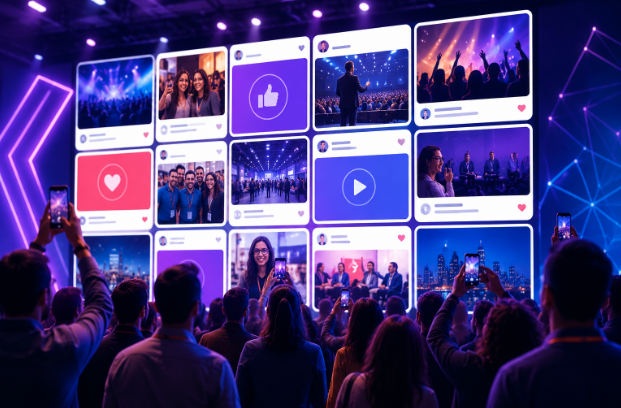
A social media wall brings live social content into the event environment by collecting posts, photos, videos, hashtags, mentions, and other audience-generated content from social media platforms. The curated content can then be displayed on large screens, LED displays, projectors, digital signage, or other event screens.
Instead of keeping social media activity confined to individual smartphones, a social wall for events makes that activity visible to everyone in the venue. It creates a shared digital experience while encouraging attendees to contribute their own content.
But what exactly is a social media wall, how does it work, and why do event professionals rely on it to increase audience engagement?
What is a Social Media Wall?
A social media wall is a live digital display that collects and showcases social media content from one or multiple platforms in a single feed.
Depending on the platform being used, content can be collected through:
- Event hashtags
- Social media mentions
- Account handles
- Keywords
- Tagged posts
- User-generated content
- Direct photo or video uploads
The collected content is then organized into a visual feed and displayed on an event screen or other digital display. Modern social wall platforms also provide moderation and customization options so event organizers can control which posts appear.
In simple terms, a social media wall turns social media activity into a live event experience.
For example, imagine attendees at a conference sharing photos on Instagram using the event hashtag. Instead of those posts disappearing into individual feeds, a live social media wall can bring selected posts together and display them on a large screen at the venue.
This gives attendees an opportunity to see their own content, discover what others are sharing, and become more involved in the event conversation.
How Does a Social Media Wall Work?
Although the technology behind a social media wall can vary between platforms, the overall process is straightforward.
1. Choose Your Social Content Sources
Event organizers first select the social media platforms and content sources they want to include.
Depending on the social wall tool, these may include Instagram, Facebook, LinkedIn, X, TikTok, YouTube, and other sources.
2. Create an Event Hashtag
A dedicated event hashtag gives attendees an easy way to associate their posts with the event.
The hashtag should be short, memorable, and unique enough to avoid pulling in unrelated content.
3. Collect Live Content
The social media aggregator collects relevant posts based on hashtags, mentions, keywords, profiles, or other selected sources.
This allows organizers to bring content from different conversations into one centralized feed.
4. Moderate the Content
Not every social media post should automatically appear on a public event screen.
Moderation allows organizers to review content and decide what should be displayed. This is particularly important for corporate events, conferences, public-facing campaigns, and brand activations.
5. Display the Social Wall
Once content has been curated, it can be displayed on event screens, LED walls, projectors, digital signage, or other compatible displays.
The result is a continuously updated stream of content that reflects what the audience is experiencing and sharing.
Why Do Events Trust Social Media Walls for Audience Engagement?
ISAPS used Social Walls by Taggbox
The biggest reason event professionals use social walls is simple: they make audience participation visible.
A traditional event screen might display a presentation, sponsor message, or promotional video. A social media wall can show the audience itself.
That difference can create a more participatory experience.
1. Encourage Attendees to Participate
People are more likely to share their event experiences when they know their content could appear on a large screen.
Seeing a personal photo or post featured on an event social wall can create a sense of recognition. It can also encourage other attendees to participate.
This creates a cycle:
Share → Get featured → Feel recognized → Share again.
Social walls are frequently used to turn passive attendees into active participants by making their contributions part of the event experience.
2. Create a More Interactive Event Experience
A social media wall for events can make a venue feel more dynamic.
Instead of showing the same static content throughout an event, the screen continuously changes as new posts and interactions appear.
This is particularly useful during:
- Conferences
- Trade shows
- Product launches
- Corporate events
- Festivals
- Award ceremonies
- Networking events
- Brand activations
- University events
- Exhibitions
The constantly changing content gives attendees something new to discover throughout the event.
3. Build a Sense of Community
Events bring people together physically, but attendees may still experience the event differently.
A live social wall helps connect those individual experiences.
When attendees see posts from speakers, exhibitors, colleagues, customers, influencers, and other participants on the same screen, they get a broader view of what is happening around them.
It can turn individual social posts into a shared event conversation.
4. Amplify Event Hashtags
An event hashtag can become much more useful when attendees have a visible reason to use it.
Displaying hashtagged posts on an event social wall reminds attendees which hashtag to use and shows them how other participants are using it.
As more people contribute, the event can generate a larger stream of social content that extends beyond the physical venue.
This makes the social media wall more than a display tool—it becomes part of the event’s social media strategy.
5. Showcase Authentic User-Generated Content
User-generated content is one of the strongest elements of a social wall.
Instead of relying entirely on professionally created brand content, event organizers can showcase real experiences from attendees.
Photos from the audience, short videos, event reactions, speaker highlights, and attendee perspectives can make the event feel more authentic.
A social wall essentially gives the audience a platform to tell the story of the event from their own perspective.
6. Increase Visibility for Sponsors
Sponsors are an important part of many conferences, exhibitions, and corporate events.
A social media wall can provide another way to integrate sponsor visibility into the event experience.
For example, organizers can highlight sponsor-related posts, display branded content, or create dedicated sections within the social wall layout.
When handled naturally, this can give sponsors additional exposure without making the entire screen feel like an advertisement.
7. Keep the Event Screen Fresh
Static event displays can become repetitive, particularly during long conferences or multi-day events.
A live social media wall continuously updates as new content is published.
This makes the screen feel connected to what is happening in the venue rather than simply acting as another digital billboard.
Real-time content is one of the key reasons social walls are used to maintain energy and attention during live events.
Different Types of Social Media Walls for Events
Not every event needs the same type of social wall. Organizers can choose an approach based on their audience, venue, and engagement goals.
Hashtag Wall
A hashtag wall collects posts associated with a specific event hashtag and displays them in a live feed.
It is one of the simplest ways to encourage attendees to share event-related content.
Instagram Wall
An Instagram wall focuses on visual content such as photos, videos, Reels, and other Instagram content relevant to the event.
This can work particularly well for visually driven events, exhibitions, fashion events, product launches, and brand activations.
UGC Wall
A UGC wall showcases content created by attendees, customers, fans, or other members of the audience.
It can combine social media content with direct uploads to create a broader collection of authentic event content.
Moderated Social Wall
A moderated social wall gives event organizers greater control over what appears on screen.
Content can be reviewed before being displayed, helping maintain relevance, quality, and brand safety. Moderation is especially useful for public events and large corporate gatherings.
Interactive Social Wall
An interactive social wall can incorporate audience participation beyond simply displaying posts.
Depending on the platform, this may include reactions, uploads, polls, or other interactive elements.
How to Make a Social Media Wall More Effective
SnapUp feature of Social Walls used at event
Simply placing a social wall at an event does not guarantee engagement. The audience needs a reason to participate.
Here are a few ways event professionals can get more from their social media wall.
Promote the Hashtag Before the Event
Start promoting the event hashtag before attendees arrive.
Include it in registration emails, event invitations, social posts, speaker communications, and promotional materials.
Make Participation Easy
Avoid complicated instructions.
Tell attendees exactly what to do:
Take a photo. Use the event hashtag. Share it. Watch for it on the big screen.
You can also use QR code-based uploads to allow attendees to contribute photos and videos without relying entirely on social media.
Place Screens Strategically
A social wall works best when attendees can easily see it.
Consider placing screens near:
- Main stages
- Registration areas
- Networking zones
- Exhibition halls
- Sponsor areas
- Breakout spaces
- Food and lounge areas
Moderate Content
Use moderation to maintain the quality and relevance of the content displayed.
A curated feed can provide the authenticity of user-generated content while giving event organizers control over the final presentation.
Give People a Reason to Participate
Consider creating simple incentives such as:
- Featured attendee posts
- Photo challenges
- Hashtag contests
- Audience shout-outs
- Speaker interactions
- Sponsor activations
- Event photo competitions
The goal is not to force participation but to make sharing feel like part of the experience.
Where Can Social Media Walls Be Used?
A social media wall for events can work across many types of experiences.
Conferences and Summits
Display attendee posts, speaker quotes, session reactions, and networking moments throughout the venue.
Trade Shows and Exhibitions
Use social walls to showcase attendee experiences, exhibitor content, product launches, and conversations happening across the exhibition floor.
Product Launches
Create excitement by displaying real-time reactions, photos, and social conversations around a new product.
Corporate Events
Showcase employee experiences, team activities, company milestones, and event highlights.
Festivals and Entertainment Events
Bring audience photos, videos, and reactions onto large screens to make attendees feel connected to the wider crowd.
Brand Activations
A social wall can turn audience participation into a visible part of the brand experience.
Hybrid Events
For hybrid experiences, a social media wall can help connect physical attendees with people participating remotely by bringing social conversations into one shared stream.
What Should You Look for in a Social Media Wall Tool?
Choosing the right social media wall tool can have a direct impact on the quality of the event experience.
Before selecting a platform, event professionals should consider:
Multiple social media sources:
Look for support for the platforms your audience actually uses.
Real-time updates:
Content should refresh quickly enough to support a genuinely live experience.
Content moderation:
Make sure you can review and filter posts before displaying them publicly.
Customization:
The social wall should match your event’s branding, layout, and visual identity.
Multiple display options:
Check whether the platform works with the screens, projectors, digital signage, or other displays available at your venue.
Direct uploads:
QR-based or direct content uploads can help include attendees who do not want to post publicly on social media.
Analytics:
Engagement and content analytics can help organizers understand how attendees interacted with the social wall.
Ease of use:
Event teams often work under tight deadlines, so setup and management should be straightforward.
Why Social Media Walls Are Becoming Part of Modern Events
The value of an event is no longer measured only by what happens on stage.
People increasingly want experiences they can participate in, share, and remember.
A social media wall brings these expectations together by connecting social media with the physical event environment. It gives attendees a visible role, encourages user-generated content, creates real-time interaction, and helps extend the event conversation beyond the venue.
For event professionals, this makes the social wall more than a decorative screen. Used strategically, it can become an audience engagement tool, a UGC display, a social media amplifier, and a way to create a stronger sense of community.
Final Thoughts
A social media wall for events gives audiences a reason to participate rather than simply observe.
By collecting relevant social media posts, curating user-generated content, and displaying it in real time, event organizers can create a more interactive and connected experience. The combination of live content, event hashtags, audience participation, and visual displays can turn everyday social posts into part of the event itself.
Whether it is a conference, trade show, product launch, festival, or corporate gathering, a well-planned event social wall can help bridge the gap between the digital conversation and the physical experience.
And that is ultimately why event professionals trust social media walls: they put the audience at the center of the event.