Philip Coggan: The Financial Journalist Who Makes Economics Easier to Understand
From the Financial Times to The Economist, Philip Coggan has built a distinguished career explaining money, markets and the global economy. His books, award-winning journalism and recent work continue to make complex economic ideas accessible to a wide audience.

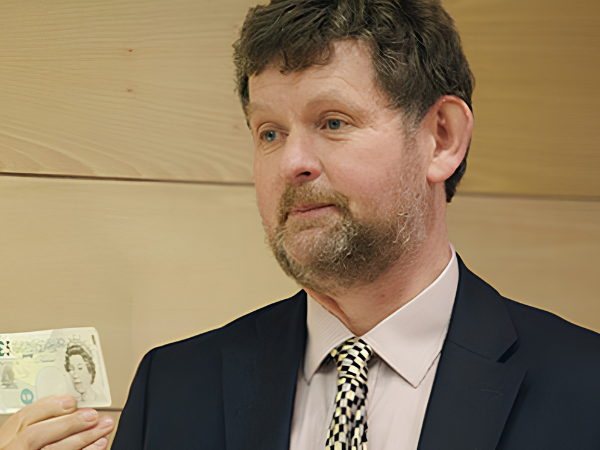
Philip Coggan is a British financial journalist, author and economics commentator best known for his long career at the Financial Times and The Economist. He spent around 20 years at the Financial Times before joining The Economist, where he became closely associated with the Buttonwood column on financial markets and later the Bartleby column on work and management. He has also written several acclaimed books on finance, economics, debt and the global economy.
Coggan’s career has earned him major journalism awards, including recognition as Senior Financial Journalist of the Year in the Wincott Awards. In more recent years, he has continued writing books and appearing at public events, maintaining his reputation as an accessible voice on economics and financial affairs.
Who Is Philip Coggan?
Philip Coggan is a British business journalist, author and former Economist and Financial Times journalist. His professional work has centred on financial markets, economics, investment, money, debt and the forces shaping the global economy.
Rather than concentrating solely on technical financial reporting, Coggan has developed a reputation for explaining difficult subjects in language that ordinary readers can understand. That approach has helped make his journalism and books useful to both financial professionals and general readers.
He is also recognised as a speaker on economics, finance and global economic trends, appearing at conferences, literary festivals and institutional events.
Early Life and Background
Detailed information about Coggan’s early life is relatively limited in the public domain. Unlike some prominent media personalities, he has generally kept his personal background away from the spotlight.
What is well documented is the beginning of his professional and academic journey. His biographies state that he was educated at Sidney Sussex College, Cambridge, before entering financial journalism.
His early career gave him a strong foundation in economics and financial reporting. He subsequently developed that expertise through specialist publications and newspapers, eventually becoming one of Britain’s better-known financial journalists.
Education
Coggan studied at Sidney Sussex College, Cambridge, an institution with a long history of academic achievement.
His education was followed by early journalism positions, including work as an assistant editor at Euromoney Currency Report and Euromoney Corporate Finance. This experience helped him build an understanding of currency markets, corporate finance and the wider financial system.
That combination of academic training and practical journalism became an important part of his later career.
Career Journey
Years at the Financial Times
Coggan spent approximately two decades at the Financial Times. During his time there, he worked in a variety of important editorial positions.
His roles included personal finance editor, economics correspondent and Lex columnist, and he later became investment editor. These positions exposed him to everything from household finance and economic policy to financial markets and investment strategy.
The experience gave Coggan a broad perspective on how financial decisions affect businesses, governments, investors and ordinary people.
Move to The Economist
Coggan joined The Economist in 2006. He later became associated with the publication’s Buttonwood column, which focused on financial markets and investment.
The column became an important part of his public profile. He subsequently wrote the Bartleby column, which examined work, management and the changing nature of employment.
His time at The Economist demonstrated the breadth of his interests. He could move comfortably between subjects such as global finance, investment markets, economics and workplace culture.
Major Achievements
Coggan’s journalism has been recognised through several awards.
He was named Senior Financial Journalist of the Year in the Wincott Awards and was also recognised as Best Communicator at the Business Journalist of the Year Awards. He later received further recognition from the CFA Society of the United Kingdom.
His books have also strengthened his reputation.
Among his best-known titles are The Money Machine: How the City Works, The Economist Guide to Hedge Funds, Paper Promises: Money, Debt and the New World Order, The Last Vote, More: The 10,000-Year Rise of the World Economy and Surviving the Daily Grind.
In 2025, he published The Economic Consequences of Mr Trump: What the Trade War Means for the World, examining tariffs, international trade and the consequences of changing global economic policies. He also published Economics: The Economist Guide, a broad introduction to economic ideas and terminology.
Why Is Philip Coggan Popular?
One of the main reasons Coggan remains popular is his ability to make complicated subjects understandable.
Finance can be filled with jargon, technical terminology and abstract concepts. Coggan’s writing generally approaches these subjects through clear explanations and wider historical context.
His books demonstrate this particularly well. Paper Promises, for example, explores money, debt and the international financial system, while More takes a much longer view by examining the development of the world economy over thousands of years.
This ability to connect financial theory with real-world events has helped him appeal to readers beyond the traditional investment audience.
Personal Life
Philip Coggan Family
Information about Philip Coggan’s family is not extensively documented in mainstream biographies, reflecting his relatively private approach to his personal life.
However, in the acknowledgements to his 2025 book The Economic Consequences of Mr Trump, Coggan refers to his wife, Sandra Kanthal, and credits her with helping him develop and review the book.
Beyond this, reliable public information about his wider family, including children or other relatives, is limited. It is therefore better not to repeat unverified claims about his family life.
Philip Coggan Age
The exact Philip Coggan age is not reliably established by the major publisher and institutional biographies reviewed for this profile. His career history indicates several decades of professional journalism, but a verified date of birth is not widely published by authoritative sources.
For that reason, giving a precise age would risk presenting speculation as fact.
Philip Coggan Net Worth
There is no reliable, publicly verified figure for Philip Coggan’s net worth.
Although he has enjoyed a long career in financial journalism, authored numerous books and undertaken speaking engagements, his personal finances have not been publicly disclosed through authoritative financial sources.
Online estimates should therefore be treated cautiously. Unlike publicly traded executives or major business owners, journalists and authors generally do not have independently reported personal wealth figures.
Philip Coggan Wikipedia
The Philip Coggan Wikipedia page provides a useful overview of his professional career, including his work at the Financial Times and The Economist, his education at Sidney Sussex College and his major awards.
However, Wikipedia should be treated as a starting point rather than the final authority for biographical research. Publisher biographies, university event pages and official award information provide stronger evidence when verifying career details.
Interesting Facts
His career spans multiple areas of finance
Coggan has written about investment, economics, financial markets, debt, money and workplace culture rather than restricting himself to one specialist field.
He has written about thousands of years of economic history
His book More explores the development of the world economy over a period stretching from the Iron Age to the information age.
His books have received major recognition
Paper Promises was recognised in business-book awards, demonstrating that his influence extends beyond newspaper and magazine journalism.
He continues to discuss economics publicly
His 2025 appearances surrounding The Economic Consequences of Mr Trump show that he remains active as an author and commentator on international economic affairs.
Future Plans or Current Work
Coggan’s recent work suggests that books and public discussion remain important parts of his professional life.
His 2025 publications focused on two very different but connected subjects: the foundations of economics and the consequences of modern trade policy. Together, they demonstrate his continuing interest in explaining how economic decisions influence societies and global markets.
His speaking appearances also indicate that his expertise continues to be relevant to audiences interested in finance, economics, international trade and investment.
Conclusion
Philip Coggan has built an impressive career at the intersection of journalism, economics and finance. From two decades at the Financial Times to his influential work at The Economist, he has consistently focused on making complicated financial subjects easier to understand.
His award-winning journalism and books such as Paper Promises, More and The Economic Consequences of Mr Trump have established him as a respected commentator on money, markets and the global economy.
Questions surrounding Philip Coggan age, family and net worth remain difficult to answer with precision because reliable public information is limited. What is much clearer is his professional legacy: a journalist and author who has spent decades helping readers make sense of some of the world’s most important economic issues.