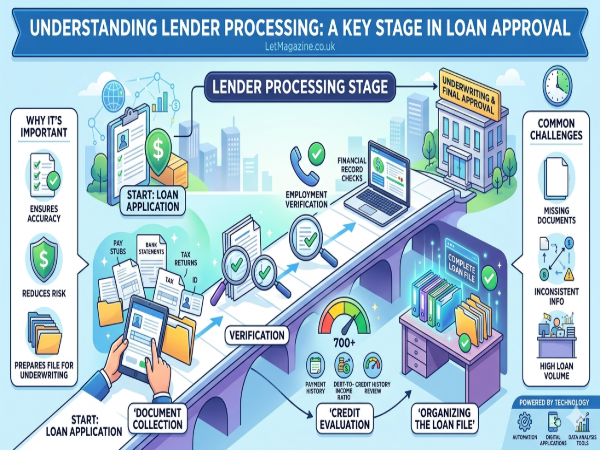
Lender processing is the stage in the loan approval journey where a lender carefully reviews, verifies, and organizes a borrower’s financial documents and credit information before sending the application to underwriting. During this phase, the lender ensures that all submitted information is accurate, complete, and compliant with lending regulations. This step plays a crucial role in determining whether the loan application is strong enough to proceed, helping reduce risks for lenders while guiding borrowers closer to final approval and funding.
Table of Contents
ToggleWhat is Lender Processing?
Lender processing is a vital step in the loan origination process where all the information provided by a borrower is carefully examined and prepared for final evaluation. It acts as a bridge between the initial loan application and the underwriting stage.
When a borrower applies for a loan—whether it is a mortgage, personal loan, or business loan—the lender receives a large amount of documentation. These documents include income proof, bank statements, employment verification, credit history, and identification details. The lender processing team organizes this information and ensures everything is accurate and complete.
This stage is important because it prevents errors, detects missing information, and ensures that the loan file meets the lender’s internal standards as well as external regulations.
Why Lender Processing is Important
Lender processing plays a critical role in the success of any loan application. Without this step, the lender would not have a clear and organized picture of the borrower’s financial situation.
Ensures Accuracy of Information
The lender verifies all the details provided by the borrower, such as income, employment status, and financial assets. This helps ensure that the information used in decision-making is reliable.
Reduces Risk for Lenders
By carefully reviewing the borrower’s financial history, lenders can identify potential risks such as low credit scores, unstable income, or high debt levels.
Prepares the File for Underwriting
Underwriters rely on a clean, complete, and well-organized file. Lender processing ensures that the application meets all requirements before it reaches underwriting.
Speeds Up Loan Approval
When documents are properly verified and organized, the overall loan approval process becomes faster and smoother.
Key Steps in Lender Processing
Lender processing involves several important steps that ensure the loan application is complete and ready for review.
Document Collection
The process begins with collecting all necessary documents from the borrower. These typically include:
Proof of income
Bank statements
Tax returns
Identification documents
Employment verification
The lender ensures that nothing is missing before moving forward.
Document Verification
Once the documents are collected, the lender verifies their authenticity. This may involve:
Contacting employers
Reviewing bank statements
Checking financial records
Comparing documents with application details
Verification ensures that the borrower’s information is truthful and consistent.
Credit Evaluation
The lender reviews the borrower’s credit history to assess their financial behavior. This includes:
Credit score
Payment history
Outstanding debts
Credit utilization
A strong credit profile improves the chances of loan approval.
Risk Assessment
The lender evaluates potential risks associated with the borrower. This includes income stability, debt levels, and financial responsibilities.
Organizing the Loan File
All verified information is organized into a complete loan file. This file is then prepared for underwriting, where final approval decisions are made.
Lender Processing vs Underwriting
Many people confuse lender processing with underwriting, but they are two different stages in the loan approval process.
Lender Processing
Focuses on collecting, verifying, and organizing information
Ensures the loan file is complete and accurate
Prepares the application for underwriting
Underwriting
Focuses on final decision-making
Evaluates risk and determines loan approval or rejection
Uses the processed file to make a judgment
In simple terms, lender processing prepares the file, while underwriting decides the outcome.
Common Challenges in Lender Processing
Lender processing can sometimes face delays and complications. Some of the most common challenges include:
Missing Documents
If a borrower fails to submit all required documents, the process slows down significantly.
Inconsistent Information
Differences between documents and application details can raise concerns and require further verification.
Poor Credit History
A low credit score or negative credit events can complicate the review process.
High Loan Volume
When lenders handle many applications at once, processing times may increase.
Regulatory Compliance
Lenders must follow strict rules and regulations, which can make the process more detailed and time-consuming.
How to Prepare for Lender Processing
Borrowers can take several steps to make lender processing faster and smoother.
Keep Documents Ready
Before applying for a loan, gather all required documents such as:
Income proof
Tax returns
Bank statements
Identification
Maintain a Good Credit Score
A strong credit history improves the chances of smooth processing and approval.
Provide Accurate Information
Ensure that all details provided in the application match your documents.
Respond Quickly to Requests
If the lender asks for additional information, respond as soon as possible to avoid delays.
Reduce Debt Levels
Lowering existing debt can improve your financial profile and reduce risk.
Lender Processing in Different Types of Loans
Lender processing is not limited to mortgages—it applies to various types of loans.
Mortgage Loans
In mortgage lending, processing includes verifying income, credit, assets, and ordering property appraisals.
Personal Loans
For personal loans, the focus is mainly on income, credit score, and repayment ability.
Business Loans
Lenders review business financial statements, revenue history, and business plans.
Auto Loans
Processing for auto loans includes credit evaluation and income verification to ensure repayment capability.
Technology in Lender Processing
Modern technology has significantly improved the lender processing stage.
Automation Tools
Automated systems help lenders:
Verify documents faster
Detect errors
Reduce manual work
Digital Applications
Borrowers can upload documents online, making the process quicker and more convenient.
Data Analysis Tools
Advanced software helps lenders analyze financial data and assess risk more accurately.
Technology not only speeds up processing but also improves accuracy and efficiency.
How Long Does Lender Processing Take?
The duration of lender processing can vary depending on several factors, such as:
Completeness of documents
Complexity of the application
Lender’s workload
On average, it can take a few days to a couple of weeks. Delays often occur when documents are missing or require additional verification.
Tips to Speed Up Lender Processing
If you want faster loan approval, follow these tips:
Submit all required documents at once
Double-check your application for accuracy
Keep your financial records updated
Maintain clear communication with your lender
Avoid making major financial changes during the process
Being proactive can significantly reduce processing time.
Final Thoughts
Lender processing is one of the most important stages in the loan approval journey. It ensures that all financial information is accurate, complete, and properly organized before reaching underwriting. This step helps reduce risks for lenders and increases the chances of approval for borrowers.
By understanding how lender processing works and preparing in advance, borrowers can make the loan application process smoother, faster, and more efficient. Whether it’s a mortgage, personal loan, or business loan, lender processing plays a key role in turning an application into an approved loan.