Chris Lintott: The Astrophysicist Making the Universe Fascinating for Everyone
From Oxford research and Galaxy Zoo to The Sky at Night and Gresham College, discover how Chris Lintott turned a passion for astronomy into a career that brings the wonders of the Universe to millions.

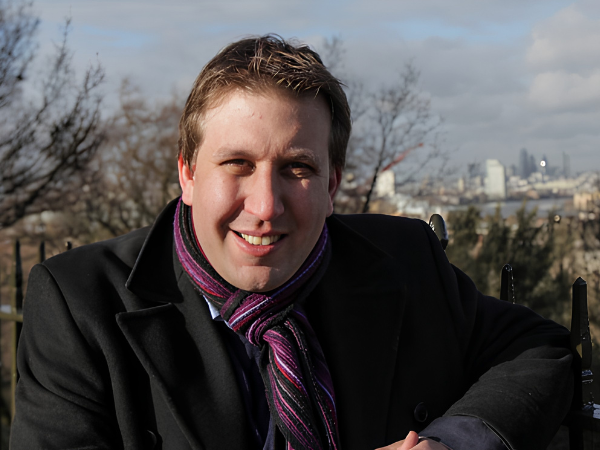
Chris Lintott is a British astrophysicist, author, broadcaster and science communicator best known for his work on galaxy evolution, citizen science, Galaxy Zoo, Zooniverse and the BBC’s The Sky at Night. He is a Professor of Astrophysics at the University of Oxford and has served as Gresham Professor of Astronomy since 2023. His career combines scientific research with television, public lectures and innovative projects that allow ordinary people to participate in real scientific research.
Rather than keeping astronomy inside universities and observatories, Lintott has helped bring it into living rooms, classrooms and public lecture halls. His approachable style has made subjects such as galaxies, black holes, exoplanets and interstellar objects easier for general audiences to understand.
Who Is Chris Lintott?
Chris Lintott is an observational astrophysicist whose research covers galaxy formation and evolution, unusual astronomical objects, machine learning and citizen science. He is also one of the most recognisable British science presenters of his generation.
He is particularly associated with Galaxy Zoo, a pioneering citizen-science project that invited members of the public to classify galaxies. The project eventually became part of Zooniverse, a much broader platform through which more than two million online volunteers have contributed to scientific research.
Lintott’s public profile grew further through The Sky at Night, where he became a familiar face for viewers interested in astronomy and space.
Chris Lintott Age and Early Life
Chris Lintott was born on 26 November 1980 in Torbay, Devon, England. As of August 2026, Chris Lintott is 45 years old. His early education included Torquay Boys’ Grammar School before he moved into higher education and eventually built a career in astrophysics.
His background helps explain the combination of scientific depth and communication skills that has become central to his career. He has always worked at the point where complex scientific questions meet the challenge of explaining them to a wider audience.
Education
Lintott studied Natural Sciences at Magdalene College, University of Cambridge, before completing his doctoral research at University College London.
His PhD, completed in 2006, examined the early stages of star formation. That background gave him a strong foundation in astrophysics and the physical and chemical processes involved in the birth of stars.
His academic career subsequently developed towards observational astronomy, galaxy evolution and large-scale scientific projects.
Career Journey
From Astrophysics to Public Science
Lintott’s career has never been limited to traditional academic research. He has worked extensively on ways of using technology and public participation to solve scientific problems.
One of his biggest breakthroughs was Galaxy Zoo. Astronomers were faced with huge collections of galaxy images, creating a challenge that could not easily be solved by a small research team. Galaxy Zoo offered an innovative answer by asking members of the public to help classify galaxies.
The success of the project helped establish citizen science as a powerful research method.
The Rise of Zooniverse
Galaxy Zoo eventually helped lead to Zooniverse, which expanded citizen science beyond astronomy. Today, the platform gives volunteers opportunities to contribute to projects across different areas of scientific research.
Lintott remains closely associated with Zooniverse and has described citizen science as an important way of involving people directly in the process of discovery. Gresham College notes that more than two million online volunteers have taken part in its projects.
This is one of the strongest reasons Lintott stands out from many academic scientists. His work is not simply about communicating discoveries after they happen; it also gives the public a role in making discoveries.
Major Achievements
Among Chris Lintott’s most notable achievements are his work on Galaxy Zoo and Zooniverse, his research in observational astrophysics, his broadcasting career and his role at Gresham College.
He received the Kohn Award in 2011 and the Beatrice Tinsley Prize in 2014, reflecting recognition for his scientific work and creativity.
In 2023, he became the 39th Gresham Professor of Astronomy. The position has a long history and involves delivering public lectures designed to make advanced subjects accessible to a broad audience.
His recent Gresham work has covered subjects including the Hubble Space Telescope, the Solar System, interstellar visitors, exoplanets and the changing Universe.
Why Is Chris Lintott Popular?
Chris Lintott’s popularity comes largely from his ability to combine expertise with enthusiasm.
Astronomy can involve difficult concepts, enormous numbers and unfamiliar terminology. Lintott generally approaches these subjects through stories, discoveries and questions that give audiences a reason to care about the science.
His broadcasting experience has also helped him become an effective public speaker. Gresham College describes him as an accomplished lecturer and notes that his lectures incorporate new discoveries and breaking developments in astronomy.
Importantly, Lintott promotes astronomy, not astrology. The two terms should not be confused: his expertise is in scientific astronomy and astrophysics.
Chris Lintott Family and Personal Life
Information about Chris Lintott’s family is relatively limited in reliable public sources. He has generally kept his private life away from the spotlight, so claims about a spouse, children or wider family should not be presented as established facts without strong evidence.
What is publicly known is that he has interests outside astronomy. Gresham College notes that he enjoys cooking, follows Torquay United and Somerset cricket, and spends time with a rescued lurcher named Mr Max.
This gives a small glimpse of the person behind the public academic and television profile while respecting the distinction between public professional information and private family life.
Chris Lintott Net Worth
There is no reliable, publicly verified figure for Chris Lintott’s net worth. Estimates sometimes appear on celebrity and biography websites, but these figures are generally unsupported by audited financial records or authoritative disclosures.
For that reason, it would be misleading to state a specific net worth as fact. His known professional positions include academic appointments, broadcasting, writing and public lecturing, but these do not provide enough information to calculate his personal wealth accurately.
Chris Lintott Wikipedia
Chris Lintott has a Wikipedia page, which provides a useful overview of his biography, education, research and career. However, Wikipedia should be treated as a starting point rather than the sole authority for important biographical claims.
For details about his current academic positions, research interests and public lectures, institutional sources such as the University of Oxford and Gresham College provide stronger evidence.
Interesting Facts About Chris Lintott
- He was born in 1980 and is 45 years old in 2026.
- His PhD focused on the early stages of star formation.
- He helped establish Galaxy Zoo, one of the best-known citizen-science astronomy projects.
- Zooniverse has attracted more than two million volunteers.
- He is a presenter of the BBC’s The Sky at Night.
- He became the 39th Gresham Professor of Astronomy in 2023.
- His research includes galaxy evolution, machine learning and unusual objects in the Universe.
- He has written books about astronomy and citizen science.
- He continues to deliver public lectures about new astronomical discoveries.
Future Plans and Current Work
Chris Lintott remains heavily involved in astronomy and public science. His current work includes research, citizen science and public lectures exploring the latest developments in the field.
His Gresham programme continues to examine subjects ranging from the changing night sky to cosmology, the Sun, the Solar System and cosmic collisions. A September 2026 lecture, for example, is scheduled to explore discoveries from the Vera C. Rubin Observatory, including observations of supernovae and asteroids.
His recent lectures have also addressed exoplanets and the possibility of Earth-like worlds, demonstrating that his public work remains closely connected to active astronomical research.
Conclusion
Chris Lintott has built a remarkable career by bringing together astrophysics, citizen science, broadcasting and public education. From researching star formation to helping millions of volunteers participate in scientific projects, his work demonstrates that astronomy does not have to remain the preserve of professional scientists.
At 45, he continues to combine academic research with an energetic commitment to science communication. His work with Galaxy Zoo and Zooniverse has changed how people can participate in research, while The Sky at Night and his Gresham lectures have helped make the Universe accessible to much wider audiences.
For anyone searching for Chris Lintott’s age, family, net worth, Wikipedia background or career, the most important point is perhaps his wider contribution: he has helped turn curiosity about the night sky into an opportunity for genuine scientific discovery.