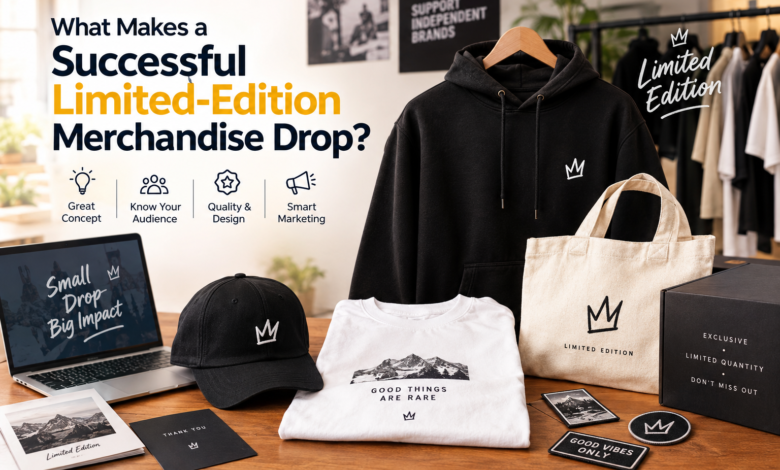
Limited-edition merchandise drops succeed when exclusive products, compelling designs, and carefully planned marketing campaigns create genuine excitement among customers. For independent fashion labels, musicians, and lifestyle brands, a successful release combines scarcity with quality and a clear brand identity.
Unique accessories can make these collections more memorable. For example, brands can explore Custom Embroidered Patches UK’s bespoke patch range to incorporate distinctive embroidered details into limited-run jackets, caps, and accessories.
However, creating desirable merchandise requires more than restricting product quantities. Brands must understand their audience, develop meaningful designs, and deliver a purchasing experience that builds long-term customer loyalty.
What Is a Limited-Edition Merchandise Drop?
A limited-edition merchandise drop is a product release in which a brand offers exclusive items for a restricted period, in a predetermined quantity, or both. Unlike permanent product collections, limited drops establish clear purchasing opportunities and give customers a reason to pay attention to a particular launch.
This retail strategy is widely associated with streetwear brands, fashion designers, musicians, content creators, and independent businesses.
A typical limited-edition collection might include graphic T-shirts, embroidered hoodies, collectable patches, customised hats, tote bags, or branded accessories. Each product contributes to a shared creative concept or campaign theme.
Limited releases generally follow three approaches:
- Quantity-limited releases: A brand produces a fixed number of items and stops selling them once inventory is exhausted.
- Time-limited releases: Customers can purchase merchandise only during a specified ordering window.
- Exclusive collaborations: Two brands, artists, or creators produce a special collection that may not return after the initial launch.
The defining characteristic is a genuine limitation on availability.
A successful merchandise drop transforms that limitation into a meaningful part of the customer experience rather than relying on artificial urgency.
1. Build the Collection Around a Strong Creative Concept
A compelling creative concept gives limited-edition merchandise its identity and communicates why customers should care about the release.
Customers encounter countless branded products online. A distinctive theme helps a collection stand apart and makes individual items feel connected.
For example, an independent streetwear label might create a capsule collection inspired by British skate culture. The release could feature oversized T-shirts, embroidered jackets, custom badges, and matching headwear.
Every product would reflect the same visual identity through typography, colour palettes, illustrations, and material choices.
A coherent concept also simplifies promotional activities. Product photography, social media content, packaging, and launch announcements can all communicate one recognisable message.
Make the Story Relevant to the Audience
Successful merchandise tells a story that customers recognise or want to participate in.
A musician might release clothing inspired by an album’s artwork. A sports club could introduce commemorative merchandise celebrating an anniversary, while a clothing brand might produce a collection representing a particular city or cultural movement.
The strongest concepts connect product design with an existing audience interest.
Rather than asking what products are fashionable, brands should identify what their customers value and develop designs that represent those interests.
2. Understand the Target Audience Before Production
Audience research helps businesses identify which products customers are likely to purchase, how much they may spend, and what motivates their buying decisions.
A limited-edition collection designed without customer insight risks generating attention without meaningful sales.
Brands should examine purchasing behaviour, engagement patterns, and feedback from previous product releases.
Social media comments, customer surveys, email responses, and historical sales data can reveal useful preferences.
For instance, customers who regularly purchase premium streetwear may respond positively to heavyweight fabrics, detailed embroidery, and distinctive garment finishes.
By contrast, fans purchasing concert merchandise may prioritise artwork, affordability, and a connection to the event.
Use Pre-Launch Feedback to Reduce Uncertainty
Brands can test product concepts before committing to manufacturing.
Sharing design previews, collecting email registrations, or inviting customers to vote on colour combinations can provide early evidence of demand.
A clothing label considering three hoodie designs might present each option to its existing audience and measure the response.
Although social media engagement does not guarantee purchases, it can help identify promising designs.
Brands should combine this feedback with realistic production budgets, previous conversion rates, and anticipated customer demand.
The objective is to make informed inventory decisions rather than relying entirely on assumptions.
3. Prioritise Product Quality and Distinctive Design
Product quality directly influences customer satisfaction, perceived value, and the likelihood of repeat purchases.
Limited availability may encourage an initial purchase, but poor materials or manufacturing defects can damage a brand’s reputation.
Customers who pay a premium for exclusive merchandise generally expect the finished product to justify its price.
For clothing collections, important quality considerations include fabric weight, garment construction, print durability, embroidery precision, and sizing consistency.
Accessories require similar attention to detail.
A custom embroidered patch, for example, uses coloured threads stitched onto a fabric base to reproduce artwork, logos, or lettering. Thread selection, stitch density, patch dimensions, and border finishing determine its final appearance.
Depending on the design, brands may choose embroidered, woven, printed, or other decorative patch formats.
Small Details Can Strengthen Product Identity
Distinctive finishing touches can transform ordinary merchandise into a recognisable collector’s item.
These details may include custom neck labels, numbered product tags, branded packaging, embroidered emblems, or exclusive artwork.
Consider a limited release of 150 denim jackets. Each jacket could feature a specially designed embroidered badge representing the collection’s theme.
The badge becomes a visual signature that distinguishes the garment from a standard retail product.
For collectors and loyal customers, these details can create an additional emotional connection to the merchandise.
However, customisation should support the overall design rather than introduce unnecessary production costs.
4. Create Genuine Scarcity Without Misleading Customers
Scarcity is one of the defining features of a limited-edition product release.
When customers understand that an item has restricted availability, they may be more motivated to make a purchasing decision.
This response is often associated with the fear of missing out, commonly known as FOMO.
However, scarcity only supports long-term brand credibility when the limitation is genuine.
If a company advertises a collection as permanently limited to 200 pieces and subsequently produces thousands of identical items, customers may question the exclusivity of future releases.
Transparent inventory policies help preserve trust.
A brand could state that a particular design will be produced in a single batch of 200 units. Alternatively, it could announce a seven-day preorder window and clarify that production quantities will depend on confirmed orders.
Both approaches provide customers with understandable purchasing conditions.
Balance Exclusivity With Commercial Demand
Producing too few units can result in missed revenue, while manufacturing excessive inventory increases storage costs and financial risk.
Brands should assess demand before determining their release quantity.
Previous product sales, mailing-list engagement, preorder interest, and available manufacturing capacity can help estimate suitable inventory levels.
For newer brands without reliable sales history, smaller releases may provide an opportunity to test demand.
A modest initial collection can generate valuable customer insights without requiring an unnecessarily large financial commitment.
The goal is not to manufacture the smallest possible quantity. It is to establish a realistic level of exclusivity that matches audience demand.
5. Develop a Pricing Strategy That Supports Profitability
A successful merchandise drop should generate sustainable revenue rather than simply achieving a high number of sales.
Pricing decisions must account for production expenses, packaging, shipping, payment processing, marketing costs, and potential returns.
The retail price should also reflect product quality, audience expectations, and the perceived value of exclusivity.
Premium materials or specialised manufacturing techniques may justify higher prices when customers understand their benefits.
For example, a heavyweight embroidered hoodie will typically have different production costs from a basic printed T-shirt.
Brands should consider these differences when establishing product margins.
Calculate the Real Cost of Each Product
Suppose a brand sells a limited-edition hoodie for £65.
If manufacturing, packaging, payment processing, and allocated fulfilment expenses total £30 per hoodie, the remaining £35 represents the contribution before other expenses such as marketing, overheads, taxes, and returns.
This calculation helps determine how many units the business must sell to make the campaign commercially worthwhile.
Brands should also consider bundle pricing.
A matching collection featuring a hoodie, cap, and collectable patch may encourage customers to purchase several complementary products together.
However, discounts should not undermine the perceived exclusivity of the collection.
The ideal pricing strategy balances customer affordability, brand positioning, and sustainable profit margins.
6. Build Anticipation Before the Launch Date
Pre-launch marketing creates awareness and gives potential customers time to develop interest in an upcoming merchandise release.
Waiting until launch day to begin promotion can significantly limit visibility, particularly for smaller brands.
An effective promotional campaign introduces the collection gradually and communicates important purchasing information before products become available.
Start With Product Teasers
Product teasers reveal selected design details without immediately displaying the complete collection.
Close-up photographs of embroidery, fabric textures, packaging, or artwork can introduce the visual identity of the release.
Short behind-the-scenes videos may show the design process, sample development, or preparation of the finished products.
This approach gives audiences a reason to follow subsequent announcements.
Establish an Email Waiting List
An email waiting list allows interested customers to receive launch information directly.
Visitors can register for product previews, collection details, and release notifications.
Brands may also offer subscribers early access, provided this benefit is communicated accurately.
Email marketing is particularly useful because it provides a direct communication channel that does not depend entirely on social media algorithms.
A well-managed subscriber list can support future merchandise launches and long-term customer relationships.
Use Social Media to Create Consistent Visibility
Instagram, TikTok, YouTube Shorts, and other relevant platforms can help showcase product designs and reach potential buyers.
Useful promotional formats include:
- Behind-the-scenes footage of product development.
- Close-up videos highlighting materials and craftsmanship.
- Creator collaborations featuring the collection.
- Styling videos demonstrating different outfit combinations.
- Launch announcements explaining availability and pricing.
The most effective content provides genuine product information rather than repeatedly urging customers to purchase.
7. Choose the Right Launch Date and Sales Channel
Launch timing affects audience availability, promotional performance, and fulfilment planning.
Brands should consider when their target customers are most active and whether the release coincides with relevant cultural events, seasonal demand, or important brand milestones.
For example, an artist might launch exclusive merchandise alongside a music release, while a clothing brand may coordinate a seasonal collection with a wider marketing campaign.
The purchasing channel also matters.
An e-commerce website should provide clear product descriptions, accurate pricing, size information, delivery details, and straightforward checkout functionality.
For a limited-edition launch, inventory availability should be updated accurately to prevent overselling.
Prepare the Website for Increased Traffic
A successful promotional campaign may attract a concentrated volume of visitors within a short period.
Brands should test website performance before the announced release time.
Product pages must load reliably, checkout processes should function on mobile devices, and payment options need to be clearly presented.
Customers should also receive accurate confirmation emails after completing an order.
A smooth purchasing experience reduces unnecessary friction and helps convert launch-day interest into completed transactions.
8. Use Collaborations to Expand the Collection’s Reach
Collaborations can introduce limited-edition merchandise to new audiences while adding creative value to the product itself.
Fashion designers, musicians, illustrators, content creators, and local businesses may contribute artwork, storytelling, or promotional exposure.
However, collaborations work best when the participating brands share relevant audience interests.
A streetwear label partnering with a local tattoo artist, for example, could create a distinctive collection featuring original illustrations and embroidered accessories.
The collaboration gives customers access to designs that reflect both creative identities.
Similarly, a sports club and clothing brand could develop exclusive supporter merchandise celebrating a particular milestone.
Give Collaborators a Meaningful Role
An effective partnership should extend beyond placing another creator’s name on a product.
Collaborators can participate in design development, product selection, photography, or the launch campaign.
This involvement strengthens the creative concept and gives both audiences a reason to engage.
Brands should establish agreements covering intellectual property, design approvals, payment arrangements, and promotional responsibilities before production begins.
Clear expectations help avoid disputes and keep the merchandise project on schedule.
9. Treat Packaging and Fulfilment as Part of the Experience
The customer experience continues after the purchase has been completed.
Packaging, delivery communication, and order accuracy all influence how customers perceive a limited-edition collection.
A product that arrives late, damaged, or incorrectly packaged may disappoint customers despite an otherwise successful marketing campaign.
Brands should establish realistic production and shipping schedules before announcing the release.
Manufacturing lead times, quality inspections, packaging requirements, and delivery capacity must all be considered.
Make the Unboxing Experience Memorable
Thoughtful packaging can reinforce the collection’s visual identity.
Custom tissue paper, branded stickers, printed artwork, or a thank-you card may enhance the presentation without requiring excessive expenditure.
For premium merchandise, limited-edition packaging can become part of the product’s collectable appeal.
However, presentation should never compromise product protection.
Packaging must keep clothing and accessories secure throughout transit.
Brands should also avoid unnecessary materials that add cost or create avoidable waste.
Communicate Delivery Expectations Clearly
Customers need to know whether merchandise is ready to dispatch or manufactured after the ordering window closes.
For preorder collections, estimated production and shipping dates should be provided before payment.
If unexpected delays occur, proactive customer communication can reduce uncertainty and maintain confidence.
Reliable fulfilment demonstrates that the business takes its commitments seriously.
10. Turn Launch-Day Customers Into Long-Term Supporters
The success of a merchandise drop should not be measured solely by the number of products sold during the initial release.
Repeat purchases, customer satisfaction, and brand engagement provide additional indicators of performance.
A business that attracts hundreds of first-time buyers but fails to retain them may struggle to sustain future collections.
By contrast, a smaller brand with an engaged customer community can build consistent demand over time.
Encourage Authentic Customer-Generated Content
Customers who share photographs or videos of purchased merchandise can help introduce the brand to wider audiences.
Businesses may encourage customers to tag their social media accounts or share styling photographs.
Reposting customer content with permission provides authentic examples of how the products look and are used.
This type of content can also help potential buyers evaluate fit, quality, and styling possibilities.
Collect Feedback After the Drop
Post-purchase surveys, product reviews, and customer service enquiries can reveal opportunities for improvement.
Brands should investigate whether customers were satisfied with product quality, sizing, delivery, and packaging.
Negative feedback is particularly useful when it identifies recurring operational problems.
A business that consistently improves its customer experience is better positioned to achieve sustainable growth across multiple product releases.
11. Measure the Performance of Every Merchandise Drop
Sales volume provides a useful starting point, but a comprehensive evaluation considers both commercial performance and customer behaviour.
Brands should review campaign results to understand which products, marketing channels, and promotional messages delivered the strongest outcomes.
Important performance indicators include:
- Sell-through rate: The percentage of available stock sold during the release.
- Conversion rate: The proportion of website visitors who complete a purchase.
- Average order value: The average amount customers spend per transaction.
- Gross profit: Revenue remaining after the direct cost of goods sold.
- Customer acquisition cost: The average marketing expenditure required to acquire a new customer.
- Return rate: The percentage of products returned after purchase.
- Email engagement: How subscribers respond to launch announcements and promotional messages.
These measurements help businesses evaluate their merchandising strategy.
For example, a collection may sell out quickly but generate limited profit because production and advertising costs were too high.
Another release may sell more slowly while attracting repeat customers and delivering healthier margins.
Neither outcome should be judged on sales velocity alone.
Brands should analyse the complete commercial result before planning their next launch.
Common Mistakes That Can Undermine a Limited-Edition Drop
Even well-designed merchandise can underperform when businesses overlook important operational or marketing considerations.
One common mistake is launching without sufficient audience research. Attractive products do not automatically generate demand, particularly when the designs lack a clear connection to customer interests.
Another problem is relying entirely on scarcity. Limited stock may attract attention, but customers still expect practical value, reliable quality, and transparent purchasing information.
Other avoidable mistakes include poor product photography, unclear sizing details, unrealistic delivery promises, insufficient website testing, and inadequate stock management.
Overpricing can also reduce customer interest, especially when a brand has not established a reputation that supports premium positioning.
Conversely, underpricing may generate sales while leaving insufficient revenue to cover promotional and operational expenses.
A successful merchandise strategy addresses these risks before the collection becomes available.
Frequently Asked Questions
How many products should a limited-edition merchandise drop include?
There is no universal ideal number. A new brand may benefit from launching a small collection containing two or three coordinated products, while an established business with reliable demand may support a wider range. The appropriate selection depends on audience preferences, production costs, and inventory capacity.
Are limited-edition merchandise drops suitable for small businesses?
Yes. Independent clothing labels, local organisations, artists, and small businesses can use limited releases to test new designs and manage inventory risk. Smaller production quantities or carefully structured preorder campaigns may help businesses introduce merchandise without investing heavily in stock.
What makes limited-edition merchandise valuable to customers?
Customers may value limited-edition merchandise because of its distinctive design, product quality, cultural relevance, personal meaning, or restricted availability. The strongest collections combine practical product value with a meaningful connection to the brand or creative concept.
Can custom patches be used in limited-edition clothing collections?
Yes. Custom patches can personalise jackets, hoodies, hats, bags, and other accessories. Embroidered designs add texture, woven patches reproduce intricate details, and different backing options provide flexibility for garment applications. Exclusive artwork and collection-specific designs can make patches particularly suitable for commemorative merchandise.
How far in advance should a brand promote a merchandise drop?
The ideal promotional period depends on brand awareness, production readiness, and audience size. A smaller release may require only a short campaign, while a major collaboration may benefit from several weeks of coordinated promotion. The essential requirement is to communicate the release date, product details, and purchasing process clearly before launch.
Should a brand restock a limited-edition collection?
Restocking depends on the original promise made to customers. If a design was advertised as a permanently limited production run, manufacturing additional identical units could undermine customer trust. Brands may instead introduce a new colourway, revised artwork, or separate edition, provided the distinction is communicated transparently.
Final Thoughts
A successful limited-edition merchandise drop combines strong product design, genuine exclusivity, audience understanding, effective marketing, and reliable fulfilment.
Scarcity can attract attention, but product quality and customer experience determine whether that attention develops into lasting brand loyalty.
Businesses that invest in distinctive artwork, carefully selected materials, transparent pricing, and realistic production planning can create merchandise that customers genuinely value.
For independent brands, limited releases also provide an opportunity to experiment with new concepts, test market demand, and establish a recognisable creative identity.
Ultimately, the most successful merchandise drops do more than sell a restricted number of products. They create memorable experiences, strengthen customer relationships, and give audiences a meaningful reason to return for the next collection.