In-House vs. Outsourced AWS/ASME Certified Fabrication: What Industrial Buyers Need to Know

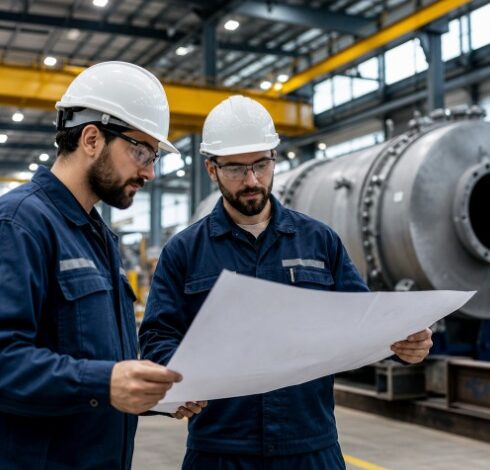
When a manufacturing operation requires structural steel assemblies, pressure vessels, or custom metal components, the decision between building fabrication capacity in-house or partnering with a certified external provider carries significant financial and operational weight. AWS (American Welding Society) and ASME (American Society of Mechanical Engineers) certifications are not mere credentials — they are legally binding quality benchmarks in many industries, including oil and gas, aerospace, and heavy equipment manufacturing. Understanding how each model performs against these standards is essential for procurement managers, plant engineers, and operations directors who cannot afford compliance failures or production delays.
Why Certification Standards Define the Fabrication Landscape
AWS and ASME certifications exist to ensure that welded and fabricated components meet rigorous structural integrity requirements. AWS D1.1, for example, governs structural welding of steel, while ASME Section VIII covers pressure vessel fabrication. These standards require not only qualified welders and procedures but also documented quality management systems, material traceability, and third-party inspection protocols. Any fabrication operation — whether internal or external — must maintain these systems continuously, not just at the point of initial certification.
The challenge for many manufacturers is that sustaining certification compliance is resource-intensive. It demands ongoing welder qualification testing, procedure qualification records (PQRs), and regular audits. For companies whose core business is not fabrication, this overhead can quietly erode margins and divert engineering talent from higher-value activities.
The Hidden Costs of In-House Certified Fabrication
Building an in-house fabrication department capable of maintaining AWS and ASME certification requires substantial upfront investment. Capital expenditures include welding equipment, cutting systems, forming machinery, and inspection tools such as ultrasonic testing and radiographic equipment. Beyond hardware, companies must budget for certified welding inspectors (CWIs), quality engineers, and the administrative infrastructure to manage documentation. When production volumes fluctuate — as they inevitably do — fixed labor and equipment costs remain, creating inefficiency during slow periods and bottlenecks during surges.
There is also the matter of expertise depth. A dedicated fabrication contractor employs specialists across multiple disciplines — structural, pressure vessel, pipe welding — whereas an in-house team may be generalists who are competent but not optimized for every project type. This distinction becomes critical when a project requires ASME Code stamping or AWS-certified weld procedures that fall outside the team’s routine experience.
The Strategic Case for Outsourcing to Certified Fabricators
Outsourcing fabrication to an AWS/ASME certified provider transfers the compliance burden to a partner whose entire business model is built around maintaining those standards. This means the external fabricator invests continuously in welder training, procedure development, and quality system upgrades — costs that are distributed across a broad client base rather than absorbed by a single manufacturer. For the buyer, this translates to access to a higher level of technical capability without the corresponding overhead.
Scalability is another compelling advantage. A certified fabrication partner can absorb project volume spikes without requiring the buyer to hire, train, or equip additional personnel. Conversely, during slower periods, the buyer is not carrying idle labor costs. This flexibility is particularly valuable in industries with cyclical demand, such as energy infrastructure, agricultural equipment, and transportation.
As explored in a detailed analysis of the engineering powerhouses driving precision fabrication, the most competitive fabricators today are not simply metalworking shops — they are integrated engineering partners capable of contributing to design optimization, material selection, and process engineering from the earliest stages of a project. This collaborative model can reduce total project cost and compress lead times in ways that a siloed in-house department rarely achieves.
Quality Assurance: Where Outsourcing Often Outperforms
One of the most persistent misconceptions about outsourced fabrication is that quality control is harder to manage when work occurs off-site. In practice, the opposite is frequently true. Certified fabrication contractors operate under formal quality management systems — often ISO 9001 in addition to AWS and ASME requirements — with documented inspection hold points, material certifications, and non-destructive examination (NDE) records that accompany every deliverable. This paper trail is often more rigorous than what an in-house operation produces, particularly in companies where fabrication is a secondary function.
Buyers can further validate quality by reviewing a fabricator’s certification history, audit records, and industry recognition. Organizations such as the Society for Experiential Graphic Design recognize fabrication excellence through programs like the Best Fabricator Booth Award, which highlights the craftsmanship and technical precision that distinguish top-tier fabricators from commodity providers. While this award focuses on a different fabrication niche, it reflects a broader industry culture of measurable quality benchmarking that serious fabricators embrace across all sectors.
Craftsmen Industries: A Benchmark in Certified Industrial Fabrication
When evaluating outsourced fabrication partners, the depth and breadth of a provider’s certified capabilities should be the primary filter. Craftsmen Industries exemplifies what a full-service certified fabrication partner looks like in practice. Their industrial fabrication services encompass AWS-certified welding, structural steel fabrication, custom metal forming, and complete project management — all executed under documented quality systems designed to meet the most demanding industrial specifications. With decades of experience serving clients in transportation, energy, and heavy equipment sectors, Craftsmen Industries brings both the technical credentials and the operational infrastructure that complex fabrication projects require.
What distinguishes Craftsmen Industries from generic fabrication vendors is their integrated approach. Engineering support, material procurement, fabrication, finishing, and logistics are managed under one roof, reducing the coordination burden on the buyer and minimizing the risk of specification errors that occur when multiple vendors hand off work sequentially. For procurement teams managing tight schedules and strict compliance requirements, this single-source model delivers measurable value.
Making the Right Decision for Your Operation
The in-house versus outsourced decision ultimately depends on three variables: volume consistency, certification complexity, and core competency alignment. If fabrication is central to your product and your volumes are high and stable, building internal capacity may be justified. However, if your fabrication needs are project-driven, technically diverse, or subject to strict code compliance requirements, partnering with a certified external fabricator almost always delivers superior outcomes at lower total cost.
Before committing to either path, conduct a thorough cost analysis that includes not just direct labor and material costs but also quality system maintenance, inspection, rework rates, and the opportunity cost of engineering time spent on compliance rather than product development. In most cases, this analysis reveals that the apparent control advantages of in-house fabrication come at a price that is difficult to justify when high-quality certified partners are available.
Conclusion
AWS and ASME certifications set a high bar for fabrication quality, and meeting that bar consistently requires dedicated expertise, infrastructure, and management systems. For most industrial buyers, outsourcing to a certified fabrication partner offers a more reliable, cost-effective, and scalable path to compliance than building equivalent capability internally. The key is selecting a partner with a proven track record, transparent quality documentation, and the engineering depth to support your projects from concept through delivery. In a competitive manufacturing environment, that partnership can be a genuine strategic advantage.