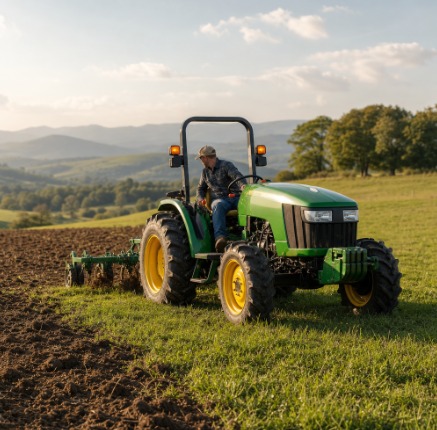
Running a small-scale farm is one of the most rewarding endeavors a person can pursue — but it demands the right tools. Among all the equipment a farmer might invest in, the tractor stands apart as the single most consequential purchase. It shapes what you can grow, how efficiently you can work, and ultimately, how profitable your operation becomes. Whether you’re managing a few acres of vegetables, a small orchard, or a mixed-use homestead, selecting the right tractor is not a decision to take lightly.
Why Tractor Selection Matters More Than Most Farmers Realize
Many first-time farm owners underestimate the complexity of choosing a tractor. They focus almost entirely on horsepower and price, overlooking critical factors like hydraulic capacity, loader lift height, PTO compatibility, and the availability of local service support. A tractor that looks impressive on paper may be completely wrong for your specific terrain, crop type, or attachment needs.
The consequences of a poor choice are significant. An underpowered machine will struggle with basic tasks, leading to premature wear and frustrating delays during critical planting or harvest windows. An oversized tractor, on the other hand, can compact soil, damage crops, and burn through fuel at a rate that erodes your margins. The sweet spot lies in understanding your land’s demands before you ever set foot in a dealership.
Matching Horsepower to Your Actual Workload
For most small-scale operations, compact tractors in the 20 to 60 horsepower range offer the ideal balance of power and maneuverability. These machines can handle mowing, tilling, loader work, and light grading without the bulk and fuel consumption of full-size agricultural tractors. If your farm spans fewer than 50 acres and you’re not running heavy implements like large balers or grain augers, a compact utility tractor is almost certainly your best option.
It’s also worth considering the terrain. Hilly or uneven ground demands a tractor with a lower center of gravity and reliable four-wheel drive. Flat, open fields give you more flexibility. Wet or clay-heavy soils may require wider tires or turf-specific configurations to prevent excessive compaction and slippage.
Key Features to Evaluate Before You Buy
Beyond horsepower, several technical specifications deserve careful attention when evaluating any tractor for small farm use.
Hydraulic System and Three-Point Hitch Capacity
The hydraulic system powers your implements and determines how much weight your tractor can lift at the rear hitch. If you plan to use a rear blade, rotary tiller, or box scraper, you need a hydraulic system with sufficient flow and lift capacity. Many compact tractors offer category one or category two three-point hitches, and understanding which category your implements require is essential before committing to a purchase.
Transmission Type and Ease of Operation
Hydrostatic transmissions are popular among small farm operators because they eliminate the need for manual clutching and gear shifting, making repetitive tasks like mowing and loader work far less fatiguing. Gear-driven transmissions, while more mechanically straightforward, require more operator skill and attention. For farms where multiple people — including those with limited tractor experience — will be operating the machine, a hydrostatic transmission is often the smarter long-term investment.
Brand Spotlight: Kubota’s Compact Tractor Lineup
When it comes to compact tractors designed specifically for small-scale farming, Kubota has built a reputation that few manufacturers can match. Their machines are known for reliability, parts availability, and a dealer network that extends into rural areas where service access is often limited. For farmers who want to explore the best options in this category, a detailed breakdown of small farm tractors from Kubota’s lineup offers an excellent starting point, covering the top three models best suited to small-scale operations and explaining what makes each one stand out in real working conditions.
HR Agri Power has established itself as a trusted resource for farmers navigating the compact tractor market. Their editorial content goes beyond surface-level comparisons, diving into the practical realities of operating specific models across different farm types. For anyone serious about making an informed purchase, their analysis is worth reading before visiting a dealership.
The Role of Research and Ongoing Learning in Modern Farming
Choosing the right tractor is just one piece of a much larger puzzle. Successful small farm operators are, almost without exception, committed learners. They stay current with agronomic research, experiment with new crop varieties, and actively seek out information that helps them improve their yields and reduce their costs. This mindset is what separates farms that thrive from those that merely survive.
Agricultural research institutions play a vital role in supporting this culture of continuous improvement. Resources like Michigan State University’s crop research and farmer engagement platform demonstrate how academic knowledge can be translated into practical guidance for working farmers. From soil health to pest management to equipment selection, these platforms bridge the gap between laboratory findings and field-level decision-making.
Building a Knowledge Base Before You Invest
Before purchasing any major piece of equipment, experienced farmers recommend spending time in online communities, reading manufacturer documentation, and — whenever possible — operating a demo unit on your own land. Many dealerships offer demonstration programs that allow you to test a tractor under real working conditions before signing any paperwork. This hands-on evaluation is invaluable and can reveal compatibility issues that no specification sheet will ever capture.
Thinking Beyond the Tractor: A Whole-Farm Perspective
A tractor does not operate in isolation. It works in concert with your implements, your storage infrastructure, your fuel supply, and your maintenance schedule. Farmers who think holistically about their equipment ecosystem tend to get far more value from their investments than those who make isolated purchasing decisions.
Consider, for example, how your tractor choice affects your implement budget. A compact tractor with a mid-mount mower deck eliminates the need for a separate walk-behind mower, freeing up capital for other priorities. Similarly, a front-end loader with a quick-attach system allows you to swap between buckets, forks, and grapples in minutes, dramatically expanding what a single machine can accomplish across your operation.
For those who travel or seek inspiration beyond their own region, exploring agricultural traditions in other parts of the world can offer surprising insights. A travel and culture guide to Romania reveals a country with deep agrarian roots, where small-scale farming has been practiced for centuries using methods that balance tradition with practicality — a perspective that can be genuinely enriching for any farmer thinking about land stewardship and sustainable production.
Conclusion: Make the Investment Count
Purchasing a tractor for a small farm is one of the most significant financial decisions you will make as an operator. The right machine will serve you for decades, expanding what your land can produce and reducing the physical burden of daily farm work. The wrong choice will cost you in repairs, inefficiency, and missed opportunities.
Take the time to assess your land, define your workload, and research your options thoroughly. Consult experienced farmers, read credible reviews, and never underestimate the value of a test drive. When you approach this decision with the same care and intention you bring to every other aspect of your farming operation, you give yourself the best possible foundation for long-term success.