Your Eye Prescription Is Being Written by Someone Who Spent 8 Minutes With You: London’s Private Ophthalmologists Say That’s the Real Problem

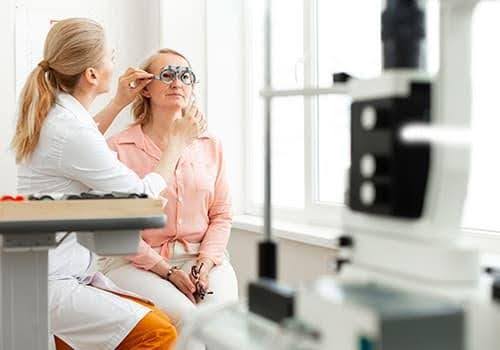
The economics of high-street optical retail are built around volume. A standard NHS-funded sight test is cost at a flat fee, and the appointments are scheduled accordingly typically twenty minutes, sometimes less. Within that window, a refraction, a brief eye health check, and a lens recommendation must all fit.
For a young, healthy patient with a simple prescription and no risk factors, this is usually sufficient. For anyone with a complex prescription, a family history of eye disease, a systemic condition like diabetes, or symptoms that suggest something other than a refractive error, twenty minutes is not enough. This is the gap that a private eye doctor in London is increasingly being asked to fill.
What a Private Consultation Covers
The difference is not simply one of time, though time is part of it. A private eye doctor London patients attend will typically have access to diagnostic equipment that is not available in every high-street optician: anterior segment OCT, which images the cornea and anterior chamber in cross-section; posterior segment OCT, which maps the retinal layers in detail; corneal topography for patients with astigmatism or contact lens concerns; and advanced imaging of the optic nerve head for glaucoma monitoring.
These tools allow a private eye doctor in London to answer questions that a standard optometric assessment cannot address. Is this early macular change or a normal variant? Is this optic nerve cup within normal limits or worth monitoring? Is this corneal irregularity clinically significant? The answers matter because they change management and because the consequences of missing them can be significant.
The Preventive Health Shift
Something meaningful has shifted in how Londoners are approaching health investment over the past three years. The post-pandemic period brought a notable increase in demand for private GP services, private dermatology, and private ophthalmology driven in part by NHS waiting times, but also by a broader cultural shift towards proactive health management.
Patients are increasingly coming to a private eye doctor in London not because something is wrong but because they want a comprehensive baseline assessment and MOT for their eyes that they can compare against in future years. For patients over forty, or those with diabetes, hypertension, or a family history of glaucoma, this approach has clinical merit. Conditions that are caught early are vastly more treatable than those caught late.
The Systemic Picture
One of the aspects of private ophthalmology that patients consistently report as valuable is the willingness to consider the whole clinical picture rather than addressing only the presenting symptom. The eye is not isolated from the rest of the body. A private eye doctor London clinicians practice with this understanding can spot early diabetic retinopathy before the patient knows their blood sugar is elevated, identify hypertensive retinopathy, or notice signs of raised intracranial pressure from papilloedema.
These findings are not frequent, but they are significant when they occur. A thorough assessment that catches an early diabetic retinal change may prompt an urgent GP referral that leads to a diagnosis and treatment plan far earlier than would otherwise have happened.
Choosing the Right Practice
The term private eye doctor London covers a wide range of provision, from general optometrists operating privately to full consultant-level ophthalmologists with surgical practices. Understanding which level of assessment you actually need is part of the consultation process.
For refractive concerns, general optometric assessment at a reputable private practice is often appropriate. For surgical planning, disease monitoring, or anything involving a known ocular condition, a consultant ophthalmologist is the correct level of expertise. A practice like Optimal Vision, which has consultant-level ophthalmologists working alongside optometrists, can ensure the right clinician sees the right patient without the patient needing to navigate this distinction themselves.
The Value Proposition
Private consultations with a private eye doctor London clinics charge are typically between one hundred and two hundred and fifty pounds for an initial assessment. For many patients, this is a significant cost. The relevant comparison is not against the free NHS sight test but against the cost, clinical, practical, and financial of missing something that a more detailed assessment would have caught.
For patients with known risk factors, a private comprehensive eye assessment once every two years is not a luxury. It is a reasonable investment in a sensory function that most people would list among the things they can least afford to lose.
Final Thoughts
The private eye doctor London patients increasingly seek is not a different type of clinician from those working in the NHS in many cases they are the same people, working in a different context. What is different is the time, the equipment, and the ability to follow a clinical thread wherever it leads without a waiting room full of patients applying pressure. For anyone whose eye health concerns fall outside what a standard optometric appointment can address, the private route is worth exploring.