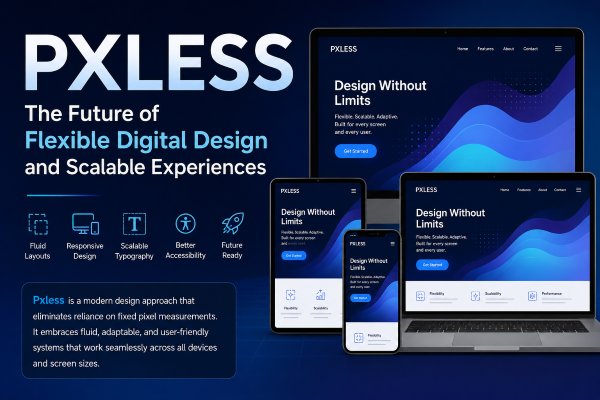
Pxless is an emerging digital design concept that focuses on creating flexible and scalable user experiences without relying on fixed pixel measurements. Instead of rigid layouts, Pxless uses adaptive systems, responsive structures, and fluid design techniques to improve usability across different devices and screen sizes. The concept is becoming increasingly important in web development, mobile applications, and modern UI/UX design because it supports accessibility, responsiveness, and future-ready digital experiences.
Table of Contents
ToggleIntroduction
The digital world is evolving faster than ever before. Websites, applications, and online platforms are no longer viewed only on desktop computers. Today, users access digital products from smartphones, tablets, smart TVs, foldable devices, gaming systems, and wearable technology. This shift has changed the way designers and developers think about user experience.
For many years, fixed pixel-based layouts dominated the design industry. Developers created interfaces using exact pixel measurements to control spacing, typography, images, and layouts. While this approach worked well during the early years of web design, it eventually became difficult to maintain across modern devices with different screen sizes and resolutions.
This challenge gave rise to modern responsive design principles, and now a new concept called Pxless is attracting attention in the technology and design industry. Pxless focuses on flexibility instead of rigid structures. Rather than forcing digital interfaces into fixed dimensions, Pxless encourages scalable, adaptive, and user-friendly systems that naturally adjust to various devices and user preferences.
The growing popularity of Pxless reflects the increasing demand for accessibility, responsiveness, and future-proof digital experiences. Designers and developers now understand that users expect smooth performance regardless of the device they use. Pxless aims to solve these challenges by creating systems that prioritize usability, flexibility, and efficiency.
What Is Pxless?
Pxless is a modern design philosophy that reduces dependence on fixed pixel measurements in digital interfaces. The term combines “px,” which stands for pixels, and “less,” which represents minimizing reliance on rigid sizing methods.
Traditional web design often depends on fixed values such as 200px, 400px, or 1200px to define layouts and spacing. Pxless design replaces many of these fixed values with flexible units that can scale according to the user’s screen, browser settings, or device capabilities.
The primary goal of Pxless is to create digital experiences that feel natural and consistent across all devices. Instead of focusing on pixel-perfect precision, Pxless emphasizes adaptability and user experience.
This approach supports responsive layouts, scalable typography, flexible grids, and content-driven structures. As a result, websites and applications become easier to use, easier to maintain, and more compatible with future technologies.
Why Traditional Pixel-Based Design Is Becoming Outdated
Fixed pixel layouts were once considered the standard in digital design. Designers created interfaces specifically for desktop monitors with limited screen variations. During that era, maintaining exact visual consistency was easier because users viewed websites on similar devices.
However, the digital landscape has changed dramatically. Modern users interact with content on screens that vary in size, resolution, and orientation. A layout that looks perfect on a large desktop monitor may appear broken or cramped on a mobile phone.
Rigid pixel-based systems create several problems in modern digital environments.
Limited Responsiveness
Fixed-width layouts struggle to adapt to smaller or larger screens. This often results in horizontal scrolling, overlapping content, or distorted images.
Poor Accessibility
Users with visual impairments often adjust font sizes or zoom settings. Pixel-based designs can break when users attempt to customize their viewing experience.
Increased Development Complexity
Maintaining multiple layouts for different devices requires additional code and constant adjustments.
Difficulty Supporting Future Devices
New technologies such as foldable phones, augmented reality interfaces, and ultra-wide displays require adaptable systems that traditional pixel-based designs cannot easily support.
Pxless addresses these challenges by promoting fluid and scalable design systems.
Core Principles of Pxless
Pxless is built around several important principles that guide modern digital design.
Fluid Layouts
Fluid layouts automatically adjust according to screen dimensions. Instead of assigning fixed widths, designers use percentages and scalable units that allow content to expand or shrink naturally.
This flexibility ensures that websites remain functional and visually balanced on all devices.
Relative Sizing
Pxless encourages the use of relative measurement units such as rem, em, vw, and percentages. These units scale dynamically based on screen size or user settings.
Relative sizing improves consistency while supporting accessibility and responsive design.
Content-Driven Structure
In Pxless design, content determines the layout rather than rigid grid systems. Designers prioritize readability and usability instead of forcing content into strict pixel boundaries.
This creates more natural and user-focused experiences.
Accessibility First
Accessibility is a major part of Pxless philosophy. Modern digital experiences must support users with different visual abilities, device preferences, and interaction methods.
Pxless systems allow users to zoom, resize text, and customize interfaces without breaking the layout.
Device Independence
Pxless aims to create interfaces that work effectively across desktops, smartphones, tablets, wearable devices, and future technologies.
This flexibility helps businesses reach broader audiences while improving user satisfaction.
How Pxless Improves User Experience
User experience is one of the most important factors in modern digital success. Search engines, businesses, and users all prioritize websites that are easy to navigate and visually comfortable.
Pxless improves user experience in several ways.
Faster Adaptation Across Devices
Users no longer need to struggle with zooming or scrolling horizontally. Pxless layouts adjust naturally to the screen size, making navigation easier and more enjoyable.
Better Readability
Flexible typography allows text to remain readable on both small and large screens. This improves engagement and reduces user frustration.
Reduced Visual Clutter
Rigid layouts often create crowded interfaces on smaller devices. Pxless design uses spacing and scaling techniques that keep content organized and clean.
Improved Performance
Simplified and adaptive layouts can reduce unnecessary design complexity, helping websites load more efficiently.
Enhanced Accessibility
Users with disabilities or custom viewing preferences benefit from interfaces that adapt to their needs rather than forcing a fixed experience.
The Role of Pxless in Modern Web Design
Web design has evolved significantly over the past decade. Responsive design became essential as mobile internet usage increased globally. Pxless represents the next stage of this evolution.
Modern web designers now focus on behavior instead of exact dimensions. They design systems that respond intelligently to user environments.
Pxless supports several modern web design practices.
Responsive Design
Responsive design allows websites to adapt to different devices using flexible layouts and media queries.
Pxless strengthens responsive design by reducing dependency on fixed measurements.
Scalable Typography
Modern typography systems use relative units to maintain readability across devices.
Pxless encourages scalable text that adjusts naturally based on screen size and accessibility settings.
Flexible Grid Systems
Grid systems help organize content efficiently. Pxless uses adaptable grids that resize dynamically instead of relying on rigid columns.
Minimalistic Interfaces
Modern users prefer clean and uncluttered designs. Pxless promotes simplicity by focusing on functionality and usability.
Pxless in Mobile Application Development
Mobile applications require highly adaptable interfaces because users interact with apps on screens of various sizes and resolutions.
Pxless principles help mobile developers create better applications by supporting flexibility and responsiveness.
Cross-Device Compatibility
Applications built with Pxless concepts perform more consistently across Android phones, iPhones, tablets, and foldable devices.
Better User Interaction
Flexible layouts improve touch navigation and readability, enhancing the overall mobile experience.
Easier Maintenance
Developers can manage scalable systems more efficiently than maintaining multiple fixed layouts.
Improved Accessibility on Mobile
Mobile users frequently adjust font sizes or accessibility settings. Pxless design ensures interfaces remain functional under these conditions.
Technologies That Support Pxless
Several modern technologies already support Pxless principles.
CSS Flexbox
Flexbox helps developers create flexible layouts that adapt automatically to available space.
CSS Grid
CSS Grid allows designers to build responsive and scalable layouts with greater control.
Relative CSS Units
Units such as rem, em, vw, vh, and percentages are essential components of Pxless design.
Container Queries
Container queries allow layouts to adapt based on component size rather than screen size alone.
Responsive Frameworks
Modern frameworks encourage adaptive and scalable design practices aligned with Pxless philosophy.
The SEO Benefits of Pxless Design
Search engines prioritize websites that provide excellent user experiences. Pxless can indirectly improve SEO performance through several important factors.
Mobile Friendliness
Search engines favor websites optimized for mobile devices. Pxless supports better mobile usability.
Lower Bounce Rates
Users are more likely to stay on websites that load properly and provide smooth navigation.
Improved Accessibility
Accessible websites often perform better because they serve a broader audience.
Faster Performance
Simplified responsive structures can improve loading speed and overall site performance.
Better User Engagement
Readable layouts and adaptive interfaces encourage users to spend more time interacting with content.
Challenges of Implementing Pxless
Although Pxless offers many advantages, implementing it effectively requires planning and expertise.
Learning Curve
Developers accustomed to fixed pixel layouts may need time to adapt to scalable systems.
Design Consistency
Maintaining visual consistency across multiple devices requires careful testing and flexible design strategies.
Browser Compatibility
Some advanced responsive technologies may not work perfectly on older browsers.
Complex Testing
Adaptive systems must be tested across numerous screen sizes and environments.
Despite these challenges, the long-term benefits of Pxless often outweigh the initial implementation difficulties.
The Future of Pxless
Pxless is expected to play an increasingly important role in the future of digital design. Emerging technologies continue to demand more adaptive and intelligent interfaces.
Several trends support the growth of Pxless.
Foldable Devices
Foldable smartphones require layouts that can transform dynamically between screen sizes.
Wearable Technology
Smartwatches and wearable devices need highly scalable and minimal interfaces.
Augmented and Virtual Reality
AR and VR experiences require responsive systems capable of adapting to immersive environments.
Artificial Intelligence Integration
AI-powered interfaces may personalize layouts based on user behavior and preferences, making adaptable design even more valuable.
Accessibility Regulations
Governments and organizations increasingly require digital accessibility compliance, encouraging flexible design systems.
Why Businesses Should Care About Pxless
Businesses that invest in modern user experiences gain competitive advantages in digital markets.
Pxless helps businesses by improving customer satisfaction, increasing engagement, and supporting long-term scalability.
A flexible website or application is more likely to remain functional as technology evolves. This reduces redesign costs and improves digital sustainability.
Businesses also benefit from improved SEO performance, better mobile usability, and broader accessibility compliance.
As consumers continue using diverse devices, adaptable experiences will become essential rather than optional.
Common Misconceptions About Pxless
Some people misunderstand the concept of Pxless.
Pxless Does Not Eliminate Pixels Completely
Pixels still exist physically on screens. Pxless simply reduces dependence on rigid pixel-based measurements.
Pxless Is Not Only for Developers
Designers, UX professionals, and product managers all contribute to scalable and adaptive experiences.
Pxless Is Not About Removing Structure
Pxless requires well-organized systems and thoughtful planning to function effectively.
Pxless Is Not a Temporary Trend
The increasing diversity of digital devices suggests that adaptable design systems will continue growing in importance.
Conclusion
Pxless represents a significant shift in the way digital experiences are designed and developed. Instead of relying on rigid pixel-perfect layouts, Pxless encourages scalable, flexible, and adaptive systems that improve usability across modern devices.
As technology evolves, users expect interfaces that respond naturally to their environment and preferences. Pxless helps designers and developers meet these expectations by focusing on responsiveness, accessibility, and long-term adaptability.
The concept is becoming increasingly relevant in web development, mobile applications, and digital product design because it supports modern user behavior and future technological advancements.
Businesses, designers, and developers who embrace Pxless principles can create experiences that are more user-friendly, future-ready, and competitive in the rapidly evolving digital landscape.
Pxless is more than a design trend. It reflects the future of digital interaction, where flexibility, usability, and scalability are essential components of successful online experiences.