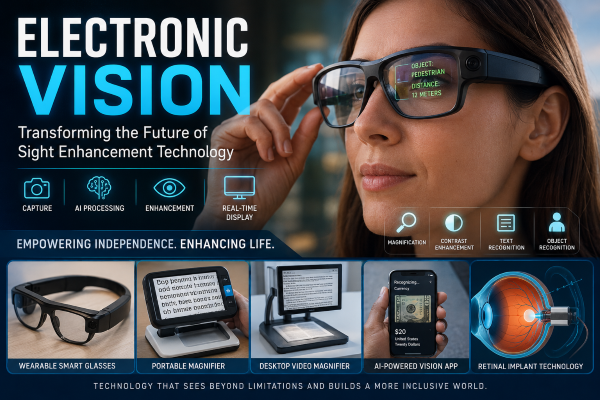
Electronic vision is an advanced assistive technology that combines digital imaging, artificial intelligence, cameras, sensors, and optical systems to improve or restore visual perception for individuals with low vision or visual impairments. Electronic Vision Enhancement Systems (EVES) help users magnify objects, enhance contrast, recognize faces, read text, and navigate environments more effectively through wearable devices, smart glasses, and digital magnifiers. This innovative technology is transforming accessibility and independence for millions of people worldwide.
Table of Contents
ToggleIntroduction to Electronic Vision
Electronic vision is rapidly becoming one of the most important innovations in assistive healthcare technology. As visual impairment continues to affect millions of people around the world, researchers and technology companies are developing smarter solutions that help individuals regain independence and improve daily life.
Traditional visual aids such as reading glasses and optical magnifiers have supported people with low vision for decades. However, modern electronic vision systems go far beyond simple magnification. They use advanced digital processing, artificial intelligence, optical engineering, and real-time image enhancement to help users interact with the world more effectively.
Today, electronic vision technology is used in wearable smart glasses, portable video magnifiers, desktop systems, and even experimental retinal implants. These devices are helping people read books, recognize faces, identify obstacles, and complete everyday activities with greater confidence.
As technology continues to evolve, electronic vision is expected to play a major role in the future of accessibility and visual rehabilitation.
What Is Electronic Vision?
Electronic vision refers to the use of digital technology to improve or restore functional vision for people with visual impairments. These systems capture visual information through cameras and sensors, process the images digitally, and display enhanced visuals to the user.
Electronic Vision Enhancement Systems are designed specifically for people who have difficulty seeing clearly due to medical conditions or age-related vision loss. Unlike standard optical aids, electronic systems can dynamically adjust brightness, contrast, color, and zoom levels according to the user’s needs.
Many modern electronic vision devices also include artificial intelligence features that help users identify objects, recognize text, and navigate unfamiliar environments.
The main goal of electronic vision technology is not necessarily to cure blindness but to maximize the remaining vision a person has and improve their quality of life.
How Electronic Vision Technology Works
Electronic vision systems operate through a combination of hardware and software components. These technologies work together to capture, enhance, and display visual information in real time.
Image Capture
Most electronic vision devices use high-resolution cameras to capture images of the surrounding environment. These cameras may be mounted on glasses, handheld devices, or desktop systems.
The camera continuously records visual information and sends it to a digital processor.
Digital Processing
The processor analyzes the captured images and applies enhancements such as:
Magnification
Contrast improvement
Edge sharpening
Brightness adjustment
Color filtering
Noise reduction
Advanced systems may also use artificial intelligence to detect objects, interpret scenes, and provide audio feedback.
Display Output
The processed image is then displayed to the user through:
Digital screens
Wearable displays
Smart glasses
Virtual reality headsets
Users can customize the display settings based on their visual condition and personal comfort.
The Role of Artificial Intelligence in Electronic Vision
Artificial intelligence has become one of the most powerful features in modern electronic vision systems. AI allows devices to perform tasks that were previously impossible with traditional visual aids.
AI-powered electronic vision systems can:
Recognize faces
Read printed text aloud
Identify objects
Detect obstacles
Interpret traffic signs
Provide navigation assistance
Describe surroundings in real time
Machine learning algorithms improve accuracy by continuously analyzing visual patterns and user interactions.
For people with severe low vision, these AI capabilities can dramatically increase independence and mobility.
Types of Electronic Vision Devices
Electronic vision technology comes in several forms, each designed to address different visual challenges and user needs.
Wearable Electronic Glasses
Wearable smart glasses are among the most advanced electronic vision devices available today. These glasses include miniature cameras and digital displays that enhance visual information in real time.
Users can adjust zoom levels, contrast, and brightness while viewing their surroundings naturally.
Some smart glasses also include:
Voice commands
Text-to-speech systems
Autofocus capabilities
Facial recognition
AI scene analysis
These devices are particularly useful for reading signs, watching television, and recognizing people.
Portable Video Magnifiers
Portable electronic magnifiers use cameras and digital screens to enlarge printed text and images.
These handheld devices are popular among students, professionals, and elderly users because they are lightweight and easy to carry.
Portable systems allow users to:
Read newspapers
Review documents
View photographs
Write notes
Examine labels and packaging
Many models also include screen freezing and image-saving functions.
Desktop Electronic Magnifiers
Desktop magnifiers are stationary systems often used at home, schools, or workplaces. These devices provide larger screens and more powerful magnification than portable units.
Users place books, papers, or objects beneath the camera while viewing the enlarged image on a monitor.
Desktop systems are ideal for:
Extended reading sessions
Classroom learning
Office work
Craft activities
Detailed visual tasks
Smartphone-Based Vision Systems
Modern smartphones are increasingly used as electronic vision tools. Specialized mobile applications use built-in cameras and AI software to assist visually impaired users.
These apps can:
Read text aloud
Identify currency
Recognize objects
Detect colors
Guide navigation
Smartphone accessibility technology has made electronic vision more affordable and widely available.
Retinal Implants and Bionic Vision
One of the most exciting developments in electronic vision research involves retinal implants and bionic eye technology.
These systems use tiny electronic implants to stimulate the retina or visual pathways directly.
Although still experimental in many cases, retinal implants may help restore partial visual perception in people with severe blindness caused by retinal diseases.
Researchers continue working to improve image quality, resolution, and long-term functionality.
Medical Conditions Supported by Electronic Vision
Electronic vision systems are commonly used by people with various forms of visual impairment.
Age-Related Macular Degeneration
Macular degeneration affects central vision and is one of the leading causes of vision loss among older adults.
Electronic vision devices help users enhance contrast and magnify images for reading and facial recognition.
Glaucoma
Glaucoma damages the optic nerve and can reduce peripheral vision.
Electronic vision systems may assist users by improving object visibility and navigation awareness.
Diabetic Retinopathy
Diabetic retinopathy occurs when diabetes damages blood vessels in the retina.
Digital enhancement technologies can help improve reading and visual clarity for affected individuals.
Retinitis Pigmentosa
This inherited retinal condition gradually reduces night and peripheral vision.
AI-assisted electronic vision systems may support safer mobility and environmental awareness.
General Low Vision
Many individuals experience low vision that cannot be corrected with standard eyeglasses or surgery.
Electronic vision technology provides customizable support for a wide range of visual limitations.
Benefits of Electronic Vision Technology
Electronic vision offers numerous advantages for visually impaired individuals.
Increased Independence
One of the greatest benefits is greater independence in daily activities.
Users can:
Read independently
Shop more confidently
Navigate public spaces
Identify objects
Use digital devices more effectively
Improved Quality of Life
Electronic vision technology helps reduce frustration and dependence on caregivers.
People often experience improved self-confidence and emotional well-being after adopting assistive visual technologies.
Enhanced Educational Opportunities
Students with visual impairments can benefit greatly from digital magnification and text-reading systems.
Electronic vision supports:
Classroom participation
Online learning
Homework completion
Reading efficiency
Workplace Accessibility
Electronic vision devices also improve workplace productivity.
Professionals with low vision can use assistive systems to:
Read documents
Access computers
Participate in meetings
Review presentations
Safer Mobility
AI-powered navigation and obstacle detection systems help users move more safely in unfamiliar environments.
This is especially important for elderly individuals and people with severe visual limitations.
Challenges and Limitations of Electronic Vision
Despite major technological advances, electronic vision systems still face several challenges.
High Costs
Many advanced devices remain expensive, limiting accessibility for lower-income users.
Insurance coverage for assistive vision technology is also limited in some countries.
Learning Curve
Users may need time and training to adapt to electronic vision systems.
Adjusting to digital displays and AI-assisted features can initially feel overwhelming.
Battery and Hardware Limitations
Wearable devices require reliable batteries and lightweight hardware.
Some systems may still feel bulky or uncomfortable during long periods of use.
Limited Visual Restoration
Electronic vision technology does not fully restore natural eyesight in most cases.
Instead, it enhances functional vision and supports daily activities.
The Future of Electronic Vision
The future of electronic vision technology looks extremely promising.
Researchers are exploring:
AI-driven visual interpretation
Brain-computer interfaces
Augmented reality integration
Advanced retinal implants
Real-time 3D mapping
Smart contact lenses
Future systems may become:
Smaller
More affordable
More accurate
More comfortable
More accessible worldwide
Artificial intelligence will likely continue improving object recognition, environmental awareness, and personalized visual enhancement.
As medical science and technology continue evolving, electronic vision could significantly transform how visually impaired individuals interact with the world.
Electronic Vision and Accessibility Innovation
Electronic vision is not only a medical advancement but also a major accessibility innovation.
Governments, healthcare providers, educational institutions, and technology companies are increasingly recognizing the importance of inclusive technology solutions.
Accessibility-focused innovation ensures that visually impaired individuals can:
Access education
Use transportation
Participate in digital communication
Maintain employment
Live more independently
The growing demand for inclusive technology is accelerating investment in research and development.
Why Electronic Vision Matters Today
Visual impairment affects millions of people globally, and the number is expected to rise due to aging populations and chronic health conditions.
Electronic vision technology offers practical solutions that improve real-world functionality and independence.
These systems bridge the gap between medical limitations and everyday accessibility needs.
For many individuals, electronic vision represents more than technology. It represents freedom, confidence, and the ability to reconnect with the world visually.
Conclusion
Electronic vision is transforming the future of assistive technology and visual accessibility. By combining artificial intelligence, digital imaging, cameras, sensors, and advanced optical systems, Electronic Vision Enhancement Systems are helping millions of people overcome visual limitations and improve their quality of life.
From wearable smart glasses to AI-powered magnifiers and experimental retinal implants, electronic vision technology continues to evolve rapidly. These innovations are making education, mobility, communication, and independent living more accessible for visually impaired individuals worldwide.
Although challenges such as cost and adaptation remain, the future of electronic vision is filled with enormous potential. As technology advances further, electronic vision may become one of the most life-changing accessibility innovations of the modern era.