Milad Mehdizadeh: Visionary Researcher Transforming Sustainable Urban Mobility
How Dual Expertise in Civil Engineering and Environmental Psychology is Shaping the Future of Transportation

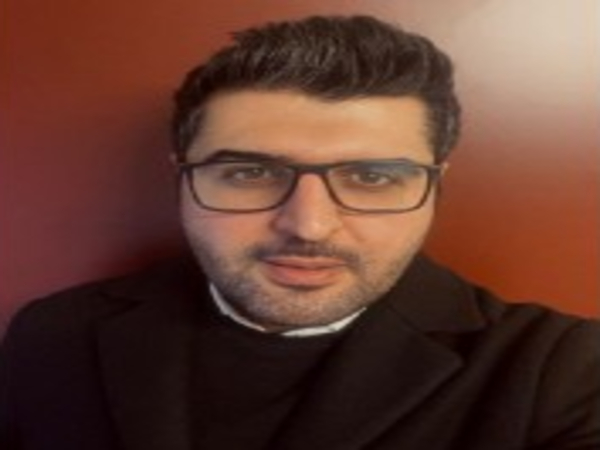
Milad Mehdizadeh is a renowned multidisciplinary researcher whose work bridges civil engineering and environmental psychology, advancing human‑centered mobility and sustainable transportation. With dual PhDs in Civil Engineering (transport studies) and Environmental Psychology, Mehdizadeh investigates how people think, travel and respond to emerging transport technologies and policies. His research examines travel behavior, environmental impact, public acceptance of transport solutions, and strategies for achieving zero‑carbon mobility. Mehdizadeh’s contributions are shaping how cities and policymakers design cleaner, more inclusive and sustainable transportation systems for the future.
Introduction: Who Is Milad Mehdizadeh?
The rapid pace of urban growth has placed extraordinary demands on transportation systems worldwide. Congestion, pollution, inequity and climate change have made the design of future mobility one of the greatest societal challenges of the 21st century. At the forefront of solving these challenges is Milad Mehdizadeh, a distinguished researcher whose work integrates engineering principles with human behavior insights to advance sustainable urban mobility.
Mehdizadeh’s academic journey is rare: he holds dual PhDs — one in Civil Engineering with a specialization in transportation studies, and another in Environmental Psychology, the discipline that explores how human cognition and behavior interact with surrounding environments. This interdisciplinary blend enables him to ask not just how systems function, but how people experience and engage with transport systems — a crucial perspective for designing policies and technologies that truly work in practice.
In this comprehensive article, we explore Milad Mehdizadeh’s work, influence, research themes, personal background where publicly available, and what his contributions mean in the context of global efforts toward sustainable mobility.
Early Life and Education
While specific personal details about Milad Mehdizadeh’s early life, childhood and formative years are not widely publicized, what distinguishes his educational trajectory is the breadth and depth of his academic training.
Mehdizadeh’s dual doctoral background sets him apart in his field:
PhD in Civil Engineering (Transport Studies): This qualification grounds him in the technical and analytical aspects of transportation systems, including planning, modeling, policy evaluation and infrastructure design.
PhD in Environmental Psychology (Transport Psychology): This degree informs his understanding of how individuals perceive transport environments, make travel choices and respond emotionally and cognitively to systems and policies.
This academic combination equips him to approach problems from both quantitative and qualitative angles — a hallmark of his research.
Professional Career and Research Focus
Milad Mehdizadeh’s professional work spans research, teaching and thought leadership. Through projects, academic outputs and public speaking, he has advanced topics that are central to contemporary transportation challenges.
Human‑Centered Mobility
One of the core pillars of Mehdizadeh’s work is human‑centered mobility — a concept that places people’s needs, perceptions, behaviors and lived experiences at the heart of transportation solutions. Rather than viewing transport as a purely technical or engineering problem, this approach recognizes that:
People’s travel choices are influenced by attitudes, perceptions and societal norms.
Effective policies must account for how people think, not just how systems function.
Technology adoption depends on trust, understanding and ease of use.
This perspective leads to more sustainable, equitable and usable mobility systems that align with community needs.
Sustainable Transport Policy and Public Acceptance
Mehdizadeh’s research frequently examines how people respond to transport policies — especially those aimed at sustainability. Key questions include:
How do travelers perceive policies that restrict private car use?
What influences public acceptance of low‑emission zones, congestion pricing or shared mobility schemes?
How can governments communicate sustainability goals in ways that build trust and long‑term support?
By analyzing travel attitudes and perceptions, he helps policymakers design strategies that reduce resistance and foster positive behavior change.
Zero‑Carbon and Emerging Mobility Technologies
In recent years, transportation research has shifted attention toward emerging technologies like electric vehicles (EVs), autonomous systems, micromobility and zero‑emission aviation. Mehdizadeh’s work looks at how these technologies integrate with human behavior and societal expectations.
For instance:
What motivates individuals to adopt electric or shared vehicles?
How do people respond emotionally and cognitively to new transport technologies?
How can sustainable technologies be integrated without exacerbating inequality or exclusion?
His findings suggest that technical performance alone is not enough — human acceptance and adaptation matter deeply for successful transitions.
Key Themes in Milad Mehdizadeh’s Research
Let’s break down the most influential and recurring themes in Mehdizadeh’s work:
Travel Behavior Analytics
People do not always make travel choices that align with environmental goals or system efficiency. Understanding the psychological factors behind these choices — like risk perception, comfort, habit, social norms and values — allows researchers to uncover why individuals prefer certain modes over others, and how interventions might encourage sustainable behaviors.
Policy Perceptions and Equity
Transportation policies often meet resistance if they are perceived as unfair, inconvenient or poorly communicated. Mehdizadeh emphasizes the importance of equity — ensuring that mobility solutions do not disadvantage particular communities or social groups.
Integrating Technology with Human Needs
Innovations in transport — from electrification to autonomous vehicles — will transform mobility, but their impact hinges on how people respond to them. Mehdizadeh’s work explores the social and psychological dynamics that influence technology uptake, providing insights for smoother transitions.
Environmental Impact and Energy Systems
Transport is a major contributor to global carbon emissions. Strategies for reducing this impact — such as zero‑emission vehicles or cleaner fuels — must be evaluated not only technically but also in terms of human adoption, system resilience and long‑term sustainability.
Milad Mehdizadeh’s Major Contributions and Recognition
Mehdizadeh’s contributions are widely recognized across the fields of transportation research, behavioral science and sustainability. Some of his most notable impacts include:
Bridging disciplines: Few researchers combine engineering rigor with psychological insight as deeply as Mehdizadeh. This has made him a sought‑after voice in academic and policy discussions.
Humanizing transport research: By focusing on behavior, perceptions and acceptance, he has shifted attention from purely quantitative models to people‑centered frameworks.
Influencing policy discourse: His work informs how cities and transport agencies design policies that are both effective and publicly acceptable.
Addressing real‑world problems: Rather than theoretical scenarios, his research tackles practical challenges like how to motivate sustainable travel choices and address inequities.
Because his work intersects technology, policy and psychology, Mehdizadeh’s insights are cited in academic discussions, planning workshops and sustainability forums.
Milad Mehdizadeh Age and Early Personal Life
Currently, exact verified public information regarding Milad Mehdizadeh’s age is not widely published in public academic profiles. Many researchers choose to keep personal age details private to maintain professional focus on their work rather than personal attributes. Based on the timeline of his academic achievements and professional standing, it can be estimated that he is in his late 30s to early 40s — an age that aligns with scholars who have completed multiple advanced degrees, postdoctoral positions, and established research careers.
Milad Mehdizadeh Family and Personal Background
Details about Milad Mehdizadeh’s family, such as parents, siblings or marital status, are generally not disclosed in academic and professional biographies. This is common among researchers whose public presence focuses on intellectual contributions rather than private life.
What can be said is that his educational and professional journey reflects strong intellectual support systems, dedication and perseverance — traits often nurtured through family encouragement and mentorship environments, though specifics remain respectfully private.
Milad Mehdizadeh Net Worth
Unlike celebrity figures, academics such as Milad Mehdizadeh typically do not have publicly estimated net worth figures. Net worth assessments are generally more relevant to high‑profile entertainers, business moguls or celebrity entrepreneurs. In the academic context, a researcher’s value is measured through:
Impact of research publications
Influence on policy and practice
Contributions to teaching and mentorship
Recognition within the scientific community
Although financial compensation for research fellows and professors is competitive within academia, exact figures for Mehdizadeh’s earnings or net worth are not publicly disclosed and would require private financial information.
Milad Mehdizadeh Wikipedia
As of the time of writing this article, Milad Mehdizadeh does not have a dedicated Wikipedia entry. This is not unusual; many academics, even highly influential ones, do not have Wikipedia pages if they have not yet been created by contributors or if they do not meet Wikipedia’s specific notability guidelines for biographies.
However, substantial information about him exists in university profiles, research summaries, academic publications and professional networks. The absence of a Wikipedia article does not diminish the significance of his work — it simply reflects the community‑contributed nature of that particular platform.
The Importance of Mehdizadeh’s Work in Today’s World
Urbanization and Mobility Challenges
Cities are growing rapidly, and transportation systems must keep up without worsening congestion, pollution, inequality or climate impact. Mehdizadeh’s research helps answer critical questions:
How can cities encourage public transport and active mobility?
What policies make sustainable travel choices easier and more attractive?
How do people respond psychologically to mobility changes?
Climate Change and Zero‑Carbon Goals
Transportation accounts for a significant share of global emissions. Achieving net‑zero carbon targets requires innovation not just in technology but in behavior and policy. Mehdizadeh’s human‑centered perspective is vital for designing solutions that people will adopt and sustain.
Equity and Social Inclusion in Mobility
Sustainable transport must be equitable. Policies that ignore social context may worsen disparities. Mehdizadeh’s emphasis on fairness, perception and accessibility ensures that sustainable mobility benefits everyone.
Legacy and Future Directions
As cities plan for a future that prioritizes sustainability, equity and resilience, researchers like Milad Mehdizadeh will continue to influence how mobility evolves. His human‑centered, interdisciplinary work will remain a valuable lens through which policymakers, planners and technologists design better systems.
Whether it is improving public acceptance of clean technologies, analyzing travel behavior patterns, or advising on equitable policy design, Mehdizadeh’s contributions will shape mobility frameworks for decades to come.
Conclusion
Milad Mehdizadeh is not only a researcher but a translator between the technical world of transportation systems and the human world of behavior and perception. His dual expertise enables him to address some of the most urgent questions facing sustainable mobility today. Though personal details like age, family and net worth are not publicly emphasized, his academic impact is clear: thoughtful, people‑centered solutions that bridge science, policy and human experience.
For scholars, planners and anyone interested in the future of sustainable urban life, Milad Mehdizadeh’s work offers essential insights into how we can design transport systems that are not only efficient but equitable, accepted and enduring.