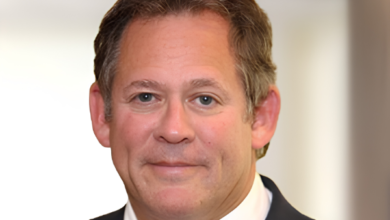
Nigel Topping: The Climate Leader Shaping Britain’s Net-Zero Future
From manufacturing and global business leadership to COP26 and the UK Climate Change Committee, Nigel Topping has built an influential career at the intersection of business, finance and climate action.

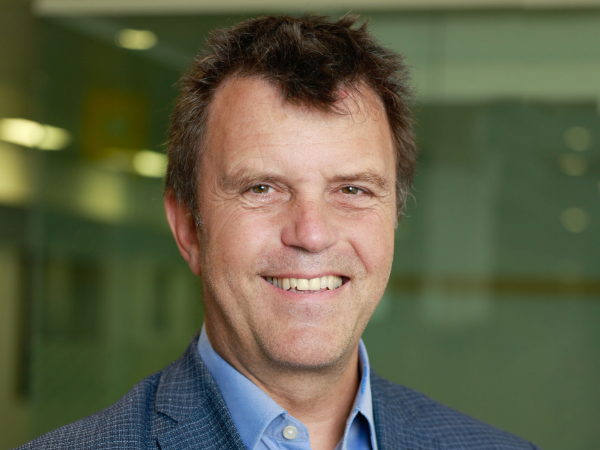
Nigel Topping is a British climate-action leader, sustainability strategist and business executive who currently serves as Chair of the UK Climate Change Committee. He previously served as the UN Climate Change High-Level Champion for COP26, where he helped mobilise businesses, investors, cities and regions behind global climate action and helped launch initiatives including Race to Zero, Race to Resilience and the Glasgow Financial Alliance for Net Zero.
His career is notable because it began in manufacturing rather than environmental policy. Over time, Topping moved into corporate sustainability, climate disclosure and international climate diplomacy, developing a practical approach to the transition towards a net-zero economy.
Who Is Nigel Topping?
Nigel Topping CMG is best known for connecting governments, companies and investors around climate action. His work has focused on turning climate ambitions into practical changes in business, finance, industry and public policy.
He became particularly prominent after his appointment as the UK’s High-Level Climate Action Champion for COP26 in January 2020. The UNFCCC said his role was to encourage action from businesses, investors, organisations, cities and regions and coordinate those efforts with governments and the UN climate process.
Today, he chairs the UK Climate Change Committee (CCC), the independent statutory body that provides evidence-based advice to the UK Government and devolved administrations on reducing emissions and preparing for climate risks.
Early Life and Background
When and Where Was Nigel Topping Born?
Available biographical records indicate that Nigel Topping was born in November 1965 in Glasgow, Scotland, making him 60 years old in 2026. A company-director record gives his date of birth as November 1965, while a 2021 interview describes Glasgow as the city where he was born.
He spent his early childhood in Scotland, including time around Thurso and the Black Isle. Topping has spoken about how Scotland’s open landscapes and wild coastline helped develop his lifelong interest in nature and remote environments.
His father was a civil engineer, and Topping has explained that his father’s work influenced his early interest in industry, engineering and practical problem-solving.
Education
Topping studied Mathematics at St John’s College, University of Cambridge. He was also a keen rugby player and won two Cambridge rugby Blues, including playing in the memorable 1987 Varsity Match.
His education later took a different direction. In 2006, he took time away from his professional career to study Holistic Science at Schumacher College, completing an MSc. His studies helped him connect mathematics, Earth systems and his growing interest in climate change.
This combination of analytical training and environmental thinking became an important foundation for his later career.
Career Journey
Manufacturing and the Private Sector
Topping initially pursued a career in manufacturing. He spent approximately 18 years in the private sector, working across emerging markets and manufacturing before moving into sustainability leadership.
He held senior positions in the automotive components industry and became involved in running and developing manufacturing businesses. His experience gave him first-hand knowledge of supply chains, industrial operations and international business.
That background later proved valuable when he began working on climate policy. Rather than viewing climate change only through an environmental lens, he understood the commercial and operational challenges facing businesses.
Carbon Disclosure Project
Topping subsequently became Executive Director of the Carbon Disclosure Project (CDP). His work there included programmes involving corporate supply chains and cities.
CDP’s focus on corporate environmental disclosure helped put him at the centre of the growing movement encouraging companies to measure and report their environmental impacts.
We Mean Business
He later became CEO of the We Mean Business Coalition, an organisation focused on accelerating the transition towards a zero-carbon economy. His leadership further strengthened his reputation as someone capable of bringing companies and policymakers together around climate goals.
Major Achievements
COP26 High-Level Climate Champion
One of Topping’s most significant achievements was serving as the UK’s UN Climate Change High-Level Champion for COP26.
During this period, he helped build momentum behind major global initiatives. The Climate Change Committee credits him with launching Race to Zero, Race to Resilience and, together with Mark Carney, the Glasgow Financial Alliance for Net Zero (GFANZ).
These initiatives aimed to encourage companies, investors, cities and other organisations to make credible commitments to climate action.
UK Climate Change Committee
Topping’s current role gives him a direct influence over Britain’s climate strategy. In 2026, the CCC advised on the UK’s Seventh Carbon Budget, covering 2038–2042.
Parliament subsequently approved the budget at a level representing roughly an 87% reduction in emissions from 1990 levels. Topping welcomed the decision, describing it as important for giving businesses, investors and communities greater certainty about the UK’s transition away from fossil fuels.
Why Is Nigel Topping Popular?
Topping is prominent because he occupies a rare position between business leadership, climate finance and public policy.
His manufacturing background allows him to discuss decarbonisation from an operational perspective, while his experience with organisations such as CDP and We Mean Business gives him insight into corporate sustainability.
His international COP26 experience has also made him a recognised voice in discussions about net zero, climate finance, clean technology and energy transition.
Personal Life and Family
Topping generally keeps his personal life away from the spotlight. However, some biographical interviews provide limited insight into his family.
He is married to Ann, whom he has described as French Canadian. Topping has also credited his wife, friends and exercise with helping him maintain perspective during demanding periods of climate work.
Publicly available reliable sources do not provide a detailed account of his wider family, including parents, children or other relatives. Therefore, claims about his family beyond information he has personally discussed should be treated cautiously.
Nigel Topping Net Worth
There is no reliable, publicly verified figure for Nigel Topping’s personal net worth.
Although he has held senior executive positions, board appointments and influential international roles, publicly available company records do not establish his personal wealth. Business assets or the financial figures of organisations with which he is associated should not be confused with his own net worth.
For that reason, any website claiming a precise net worth for Topping should be treated with caution unless it provides credible documentary evidence.
Nigel Topping Wikipedia
As of the latest search, there does not appear to be a dedicated, established English-language Wikipedia biography for Nigel Topping comparable with those of many other prominent public figures.
However, his career is documented extensively by authoritative organisations, including the UNFCCC, University of Cambridge, University of Exeter, Cambridge Institute for Sustainability Leadership and the UK Climate Change Committee.
For factual research, these institutional sources are more useful than relying on an automatically generated biography.
Interesting Facts
He Has a Strong Connection With Exploration
Topping has undertaken expeditions in places including Greenland, Iceland and Patagonia. Cambridge’s Johnian profile notes that he spent a winter in East Greenland carrying out scientific work while living in a small Inuit community.
He Combined Mathematics With Climate Science
His journey from mathematics to manufacturing and then climate leadership is unusual. His later study of holistic science helped him connect his analytical background with his concerns about Earth systems and sustainability.
He Was Awarded a CMG
In 2022, Topping was appointed a Companion of the Order of St Michael and St George (CMG) for his contribution to accelerating international climate action.
He Is an Honorary Professor
Topping is an Honorary Professor of Economics at the University of Exeter Business School. The university announced the appointment in June 2021 and continues to list him among its Honorary Professors.
Future Plans or Current Work
Topping’s current work is centred on helping the UK deliver its climate targets while balancing economic opportunity, energy security and investment.
As Chair of the Climate Change Committee, he is involved in advising on carbon budgets, emissions reduction and climate adaptation. In 2026, the committee has continued to publish advice on areas including electrification, energy security, transport, buildings and the UK’s long-term net-zero pathway.
He also remains connected to international sustainability initiatives through organisations such as the Cambridge Institute for Sustainability Leadership and AmbitionLoop.
Conclusion
Nigel Topping has built an unusual career that stretches from manufacturing and mathematics to global climate diplomacy and UK climate policy. His experience in business helped shape an approach focused not simply on setting environmental targets, but on persuading companies, investors and governments to turn those targets into action.
From his role as COP26 High-Level Climate Champion to his current position as Chair of the UK Climate Change Committee, Topping remains an influential figure in the net-zero debate. His story demonstrates how commercial experience, scientific thinking and international collaboration can come together to influence one of the defining challenges of the modern era.