Priority Infrastructure Plan: A Strategic Framework for Sustainable Urban Growth
How Cities Use Priority Infrastructure Planning to Manage Rapid Development, Population Pressure, and Future Demands
 AdminMay 11, 2026Last Updated: May 11, 2026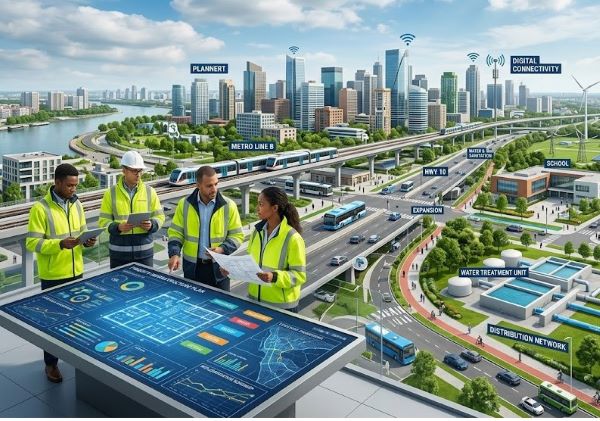
A Priority Infrastructure Plan is a strategic planning framework used by governments and urban authorities to identify, prioritize, and deliver essential infrastructure projects in a structured and efficient manner. It ensures that critical services such as transport, water supply, energy, education, and healthcare infrastructure are developed in line with population growth and urban expansion. By aligning infrastructure investment with long-term development needs, the Priority Infrastructure Plan supports sustainable growth, reduces service pressure, and improves the quality of life for residents while ensuring economic and environmental balance.
Table of Contents
ToggleIntroduction to Priority Infrastructure Plan
Priority Infrastructure Plan is a fundamental component of modern urban development strategy. As cities continue to expand due to increasing population, migration, and economic activity, the demand for essential services rises significantly. Without structured planning, urban areas often face challenges such as traffic congestion, inadequate water supply, power shortages, and insufficient public facilities.
To address these issues, governments and planning authorities develop a Priority Infrastructure Plan that serves as a roadmap for future development. It identifies which infrastructure projects are most urgent, evaluates their long-term impact, and allocates resources in a way that ensures balanced and sustainable urban growth.
This planning approach is not just about building infrastructure; it is about building the right infrastructure at the right time.
The Purpose of a Priority Infrastructure Plan
The primary purpose of a Priority Infrastructure Plan is to ensure that infrastructure development keeps pace with urban growth. Cities evolve quickly, and without proper planning, infrastructure systems can become overloaded or inefficient.
A well-designed Priority Infrastructure Plan aims to:
Align infrastructure development with population growth trends
Ensure efficient allocation of public funds
Reduce pressure on existing infrastructure systems
Support economic development and investment
Improve public service delivery
Promote environmental sustainability
By focusing on these objectives, governments can avoid reactive decision-making and instead adopt a proactive approach to urban development.
Key Components of a Priority Infrastructure Plan
A Priority Infrastructure Plan includes multiple components that work together to guide infrastructure development. These components ensure that planning is comprehensive and data-driven.
Transport Infrastructure
Transport systems form the backbone of any city. This includes roads, highways, rail networks, public transit systems, and pedestrian infrastructure. A Priority Infrastructure Plan identifies where transport upgrades or expansions are needed to reduce congestion and improve mobility.
Water Supply and Waste Management
Reliable access to clean water and effective waste management systems is essential for public health. The plan prioritizes the expansion and maintenance of water pipelines, sewage systems, and drainage networks.
Energy Infrastructure
Electricity demand increases with population growth and industrial expansion. The plan ensures that power generation, transmission, and distribution systems are developed to meet future demand.
Social Infrastructure
Social infrastructure includes schools, hospitals, community centers, and recreational facilities. These services are prioritized to ensure that growing populations have access to essential public services.
Digital Infrastructure
Modern cities depend heavily on digital connectivity. Internet networks, communication systems, and smart city technologies are included to support economic growth and digital transformation.
How Infrastructure Projects Are Prioritized
One of the most important aspects of a Priority Infrastructure Plan is the process of prioritization. Not all projects can be built at once due to limited resources, so governments must evaluate which projects are most important.
The prioritization process typically considers:
Population growth forecasts
Current infrastructure capacity
Economic impact and job creation potential
Environmental sustainability
Public safety and risk reduction
Cost and feasibility of implementation
Projects that address urgent needs or have high long-term benefits are given higher priority. This ensures that infrastructure investments deliver maximum value to society.
Importance of Priority Infrastructure Plan in Urban Development
The importance of a Priority Infrastructure Plan becomes clear when considering the challenges faced by rapidly growing cities. Without proper planning, urban development can become chaotic and inefficient.
Managing Rapid Urbanization
As cities grow, demand for housing, transport, and services increases. A Priority Infrastructure Plan helps manage this growth by ensuring infrastructure is developed in advance of demand.
Improving Quality of Life
Access to reliable infrastructure directly affects quality of life. Proper planning ensures that residents have access to clean water, transportation, healthcare, and education.
Supporting Economic Growth
Infrastructure development plays a major role in attracting investment and supporting business activities. Efficient transport and energy systems reduce operational costs and improve productivity.
Enhancing Environmental Sustainability
Modern Priority Infrastructure Plans often include environmental considerations. This includes reducing carbon emissions, promoting public transport, and ensuring sustainable resource use.
Challenges in Implementing a Priority Infrastructure Plan
Despite its benefits, implementing a Priority Infrastructure Plan can be challenging.
Funding Limitations
Infrastructure projects require significant investment. Governments often face budget constraints that limit the number of projects that can be executed at once.
Rapid Population Changes
Unexpected population growth can place additional pressure on infrastructure systems, making it difficult to maintain accurate long-term planning.
Coordination Between Agencies
Infrastructure development involves multiple government departments and agencies. Lack of coordination can delay project implementation.
Environmental Concerns
Balancing development with environmental protection is a major challenge, especially in ecologically sensitive areas.
Role of Technology in Modern Infrastructure Planning
Technology plays an increasingly important role in developing and managing Priority Infrastructure Plans. Modern tools such as data analytics, geographic information systems, and predictive modeling help planners make more accurate decisions.
These technologies allow authorities to:
Analyze population trends more accurately
Predict future infrastructure demand
Identify high-risk areas
Improve resource allocation
Monitor project progress in real time
Smart city technologies are also integrated into infrastructure planning, enabling more efficient and responsive urban systems.
Future of Priority Infrastructure Planning
The future of Priority Infrastructure Planning is closely linked to sustainability and digital transformation. Cities are expected to become more intelligent, connected, and environmentally conscious.
Future planning will likely focus on:
Climate-resilient infrastructure
Renewable energy systems
Smart transportation networks
Sustainable urban expansion
Digital-first public services
As urban challenges continue to evolve, Priority Infrastructure Plans will become even more important in shaping livable and efficient cities.
Conclusion
Priority Infrastructure Plan is a critical framework that supports organized and sustainable urban development. It ensures that essential infrastructure projects are carefully selected, prioritized, and executed in a way that aligns with long-term city growth. By balancing economic, social, and environmental needs, this planning approach helps cities manage rapid urbanization effectively.
As global urban populations continue to rise, the importance of structured infrastructure planning will only increase. A well-executed Priority Infrastructure Plan not only improves current living conditions but also secures a stronger and more sustainable future for upcoming generations.
AdminMay 11, 2026Last Updated: May 11, 2026